National Building Code 2025: Fire Protection and Occupant Safety for Farm Buildings
Understanding Fire Protection in Farm Building Construction
Compliance with the National Building Code of Canada (NBCC) is critical for ensuring the longevity and safety of agricultural structures. When navigating complex regulations, empcontracting.ca Inc. your construction contractor in London, Ontario, provides the expertise needed to manage fire protection and occupant safety standards effectively.
Classification of Farm Buildings (Section 2.2.1.1)
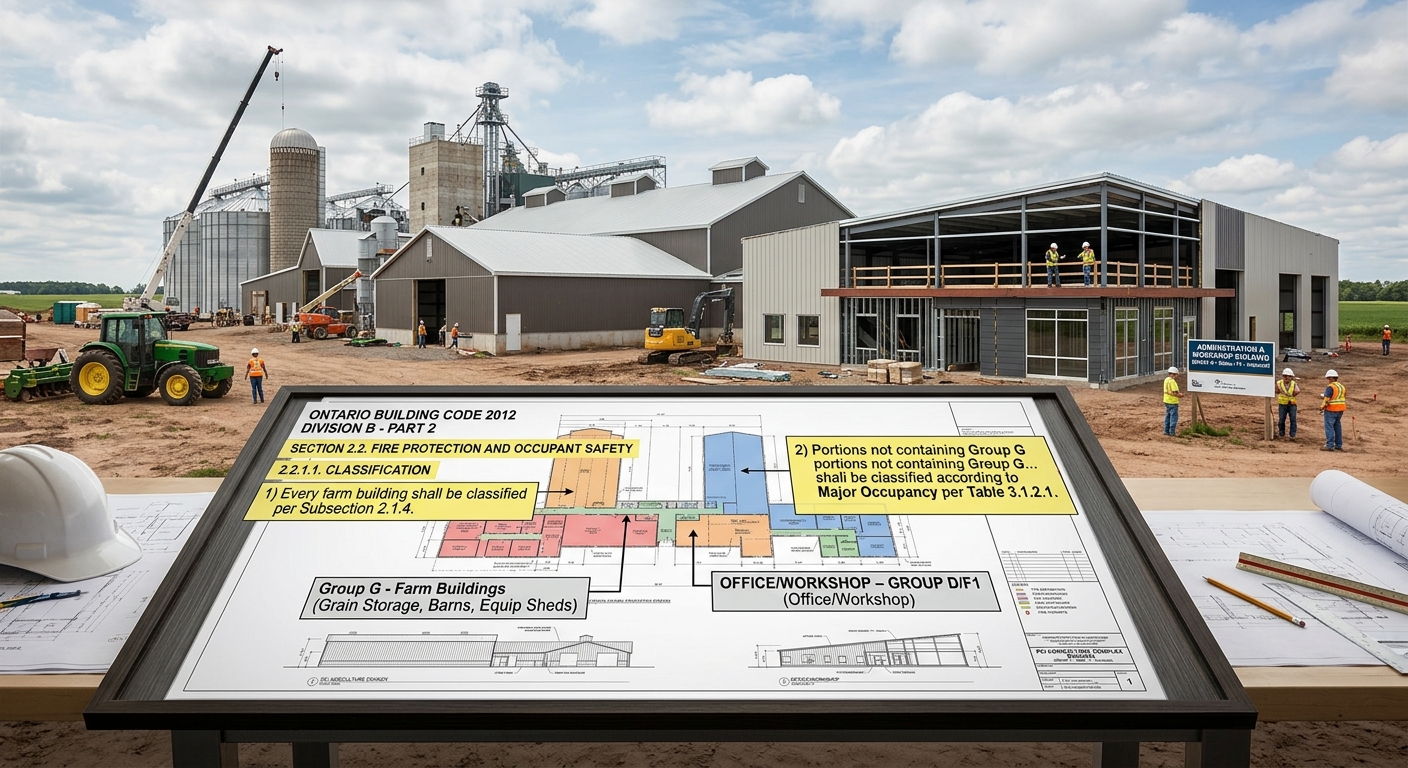
According to the NBCC 2025, every farm building or specific portion thereof must be classified under Subsection 2.1.4. If a portion of a farm building does not contain Group G (Division 1, 2, 3, or 4) major occupancies, it must be classified according to its specific major occupancy as defined in Table 3.1.2.1 and must adhere to Part 3 requirements.
Prohibitions and Exceptions for Occupancy
Occupancy Combination Restrictions
To ensure maximum safety, the code strictly prohibits certain occupancy combinations within the same structure:
- Group G, Division 1 or 4: Cannot contain Group A, B, or C occupancies.
- Group G, Division 2 or 3: Cannot contain Group A (Division 1 or 3) or Group B occupancies.
Major Occupancy Exceptions
In specific scenarios, if the aggregate area of all major occupancies in a group is less than 10% of the floor area of the storey, they may not need to be considered major occupancies under Subsection 2.2.2. However, this exception does not apply to Group F, Division 1 or Group G, Division 1 classifications.
Fire Separation and Resistance Ratings
Effective fire separation is a cornerstone of agricultural safety. empcontracting.ca Inc. your construction contractor in London, Ontario, specializes in implementing these high-standard fire separations to protect your assets.
Separation Requirements
Major occupancies must be separated from adjoining occupancies by fire separations with resistance ratings conforming to Table 2.2.1.4. If one occupancy is situated above another, the fire-resistance rating of the floor assembly is determined by the requirements of the lower occupancy. For non-major occupancies, the fire-resistance rating must conform to the table but generally does not need to exceed 1 hour.
Fire-Resistance Rating Standards (Table 2.2.1.4)
The following minimum fire-resistance ratings (in hours) apply to adjoining major occupancies:
| Adjoining Major Occupancy | G-1 | G-2 | G-3 | G-4 |
|---|---|---|---|---|
| A-1, A-3, B | 2h | 3h | 3h | 2h |
| A-2, A-4, C | 2h | 1h | 1h | 2h |
| D, E | 1h | - | - | - |
| F-1 | - | 2h | 2h | - |
For professional implementation of NBCC standards in your next project, trust the experts at empcontracting.ca Inc. your construction contractor in London, Ontario.