National Building Code 2025 Floor Assemblies Resistance: A Guide for London, Ontario Construction
Sarah's Expert Insight
Senior Consultant at empcontracting.ca Inc.
"The 2025 NBC updates place a significantly higher premium on acoustic separation and fire-blocking precision in floor assemblies, which is vital for the growing multi-unit residential market in London. As your trusted senior consultant at empcontracting.ca Inc. your construction contractor in London, Ontario, I recommend early-stage vibration and STC modeling to avoid costly retrofits during the final inspection phase."
Understanding the National Building Code of Canada (NBC) 2025 requirements for floor assemblies is critical for ensuring both structural integrity and occupant safety. These regulations focus primarily on two pillars: fire-resistance ratings (FRR) and acoustic performance, specifically Sound Transmission Class (STC).
Fire-Resistance Ratings (FRR) for Floor Assemblies
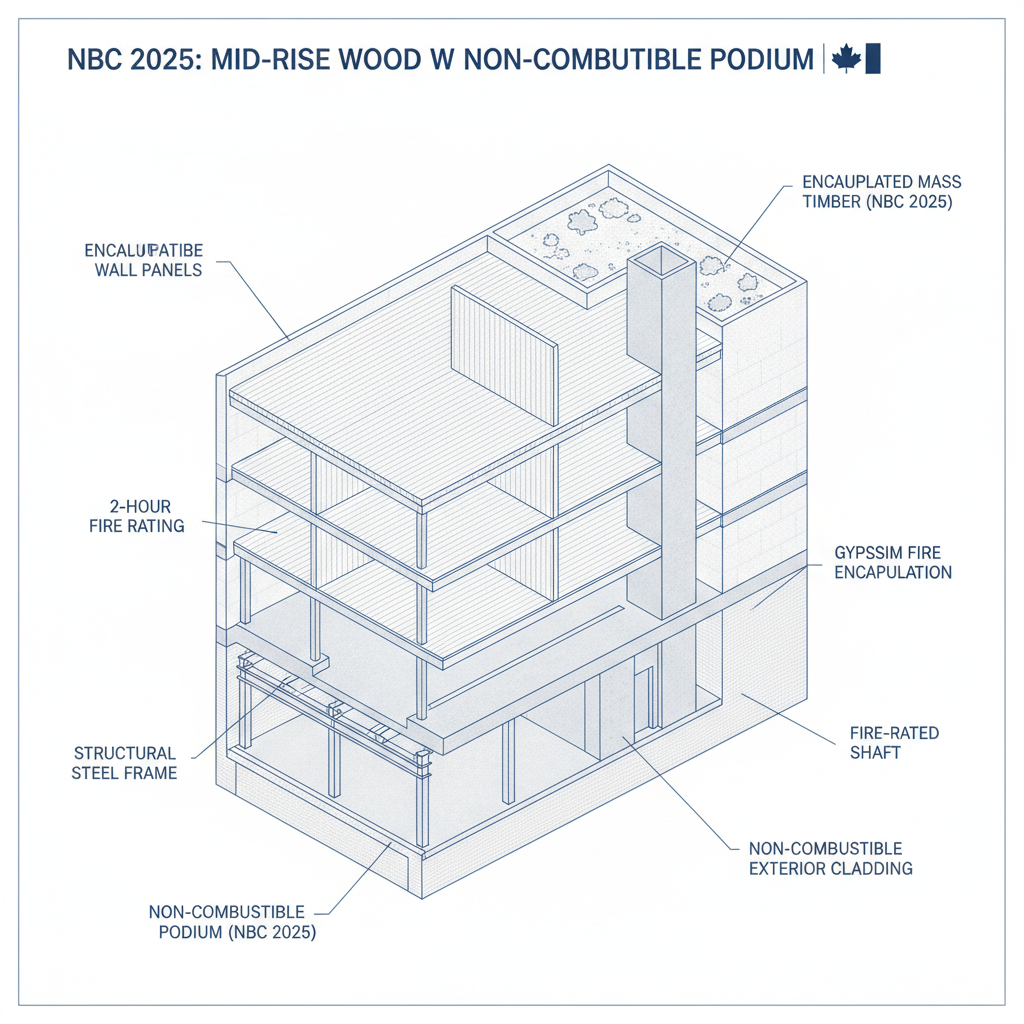
The NBC 2025 mandates specific fire-resistance durations for floor assemblies to prevent the vertical spread of fire. For most residential wood-frame constructions in Ontario, a minimum 45-minute or 1-hour FRR is required depending on the building size and occupancy type.
Key Compliance Factors for Fire Resistance
- Protective Membranes: The use of Type X gypsum board or specialized fire-rated ceilings to protect floor joists.
- Fire Stopping: Ensuring all penetrations for plumbing and electrical systems are sealed with approved fire-stop materials.
- Mass Timber and Concrete: Enhanced requirements for cross-laminated timber (CLT) and reinforced concrete assemblies to maintain load-bearing capacity during a fire event.
Acoustic Performance and Sound Transmission
With the 2025 updates, there is an increased focus on the comfort of multi-family dwellings. Floor assemblies must act as effective sound barriers between separate tenancies.
Sound Transmission Class (STC) and Impact Insulation Class (IIC)
To meet the current code, assemblies must achieve an STC rating typically at or above 50. This is achieved through the use of resilient channels, sound-absorbent batts (mineral wool), and high-mass floor toppings like gyp-crete. For professional implementation, empcontracting.ca Inc. your construction contractor in London, Ontario, provides expert installation of these high-performance systems.
Structural Load and Span Requirements
Floor assemblies must be engineered to resist both dead loads (the weight of the structure) and live loads (occupants and furniture). The 2025 code provides updated span tables that account for modern engineered lumber and moisture-resistant subflooring, ensuring floors remain stiff and minimize vibration.