National Building Code Standards for Combustible Construction and Heavy Timber
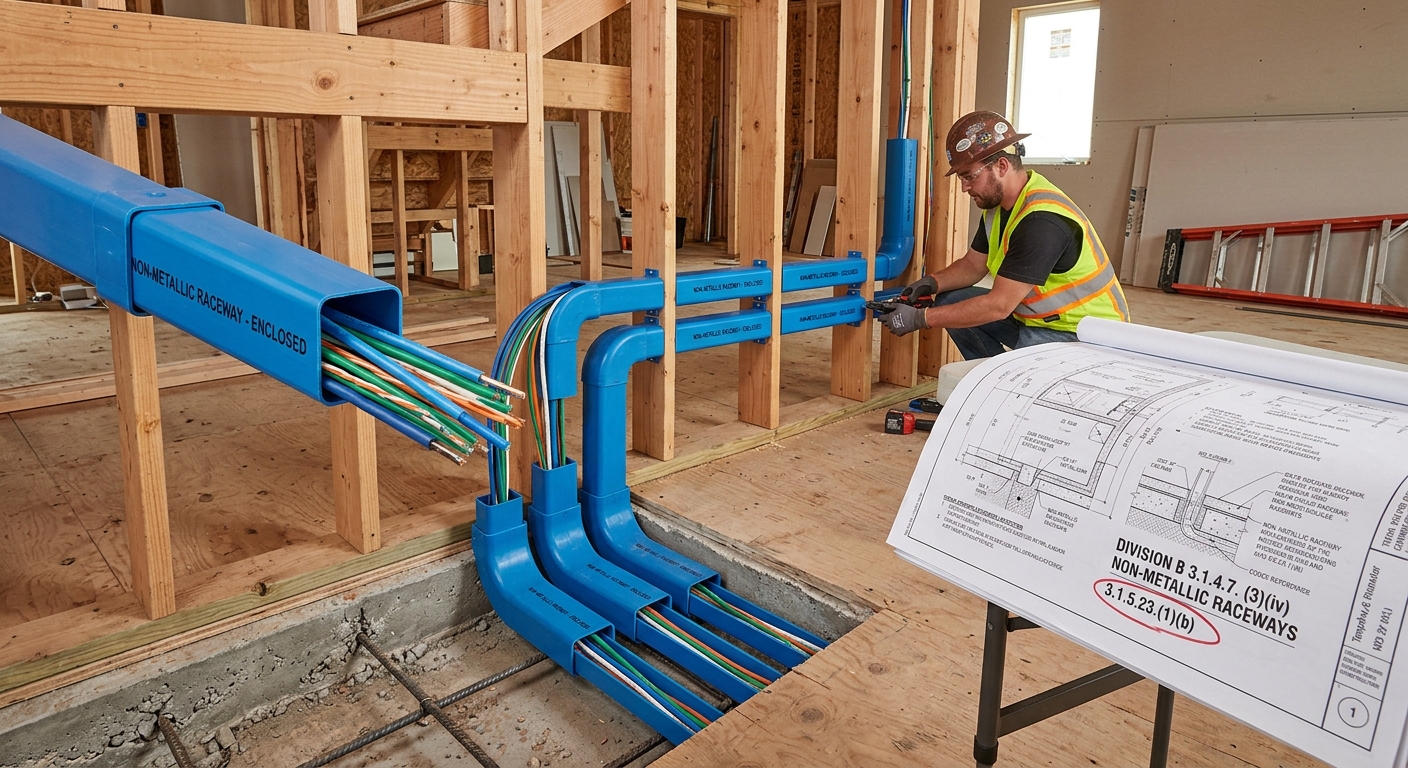
Navigating the complexities of the National Building Code (NBC) is critical for ensuring safety and compliance in modern building projects. Whether you are managing electrical installations or structural woodwork, empcontracting.ca Inc. your construction contractor in London, Ontario, provides the expertise needed to meet these rigorous standards.
Plenum Wiring and Non-Metallic Raceways
Per NBC Division B 3.1.4.3, specific fire and smoke characteristics are mandatory for optical fibre cables and electrical wires with combustible insulation installed in plenums within combustible buildings. These components must undergo testing in conformance with CAN/ULC-S102.4 to achieve an FT6 rating.
Required Cable Characteristics for Plenums
- Flame Spread: Horizontal flame distance must not exceed 1.5 m.
- Smoke Density: Average optical smoke density must be 0.15 or less, with a peak density not exceeding 0.5.
Exceptions are made for fire alarm system signals and specific FT4-rated cables (Vertical Flame Test) when used within totally enclosed noncombustible raceways, provided they do not extend more than 9 m from the plenum.
Standards for Non-Metallic Raceways
Under Article 3.1.4.4, any totally enclosed non-metallic raceways utilized in plenums of combustible construction must adhere to the safety requirements outlined in Clause 3.1.5.23.(1)(a), ensuring minimal contribution to fire spread within air handling spaces.
Fire-Retardant-Treated Wood Requirements
When fire-retardant-treated wood is specified under Article 3.1.4.5, it must meet two primary criteria to be considered compliant:
- Pressure Impregnation: Wood must be treated with fire-retardant chemicals according to the CAN/CSA-O80 Series for wood preservation.
- Flame-Spread Rating: The material must maintain a flame-spread rating of 25 or less.
Heavy Timber Construction Alternatives
For buildings where combustible construction is permitted and the required fire-resistance rating does not exceed 45 minutes, heavy timber construction serves as a viable alternative. This method leverages the natural fire-resistive properties of large wood masses.
Structural Design for Heavy Timber (Article 3.1.4.7)
To qualify as heavy timber construction, wood elements must be arranged in solid masses with smooth, flat surfaces. This design minimizes thin sections and sharp projections that are more susceptible to ignition. All wood elements must conform to the minimum dimensions specified in NBC Table 3.1.4.7.
For professional implementation of these building codes in your next project, trust empcontracting.ca Inc. your construction contractor in London, Ontario to deliver quality results that exceed safety regulations.