National Building Code Standards: Permitted Combustible Materials in Noncombustible Construction
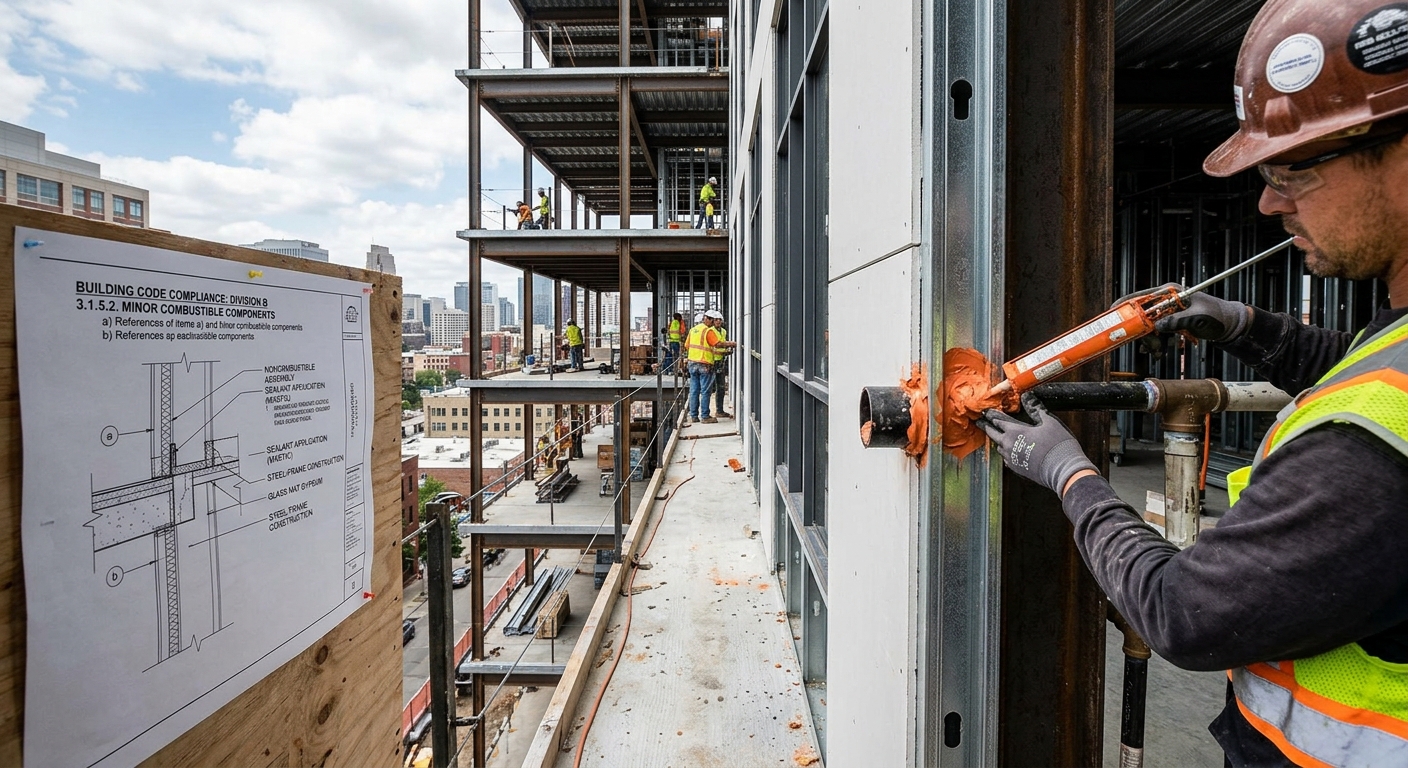
Understanding the nuances of the National Building Code of Canada (NBC) is vital for ensuring safety and compliance in modern architecture. For expert implementation of these standards, trust empcontracting.ca Inc. your construction contractor in London, Ontario. This guide breaks down the specific conditions under which combustible components are permitted in buildings otherwise required to be of noncombustible construction.
3.1.5.2. Permitted Minor Combustible Components
Even in buildings designed for noncombustible construction, the NBC allows for certain minor combustible elements to facilitate modern building techniques and utility. These include:
- Sealing and Adhesives: Self-adhesive tapes, mastics, caulking materials, and foamed plastic air sealants used for exterior wall seals.
- Safety Systems: Firestops and fire blocks that conform to Article 3.1.9.1. and 3.1.11.7.
- Utilities: Pneumatic control tubing with an outside diameter of 10 mm or less, and electrical outlet/junction boxes.
- Structural Aids: Wood blocking used for attaching window elements, handrails, fixtures, and similar surface-mounted items.
- Finishes: Paint, vapour barriers, and sheathing papers.
3.1.5.3. Requirements for Combustible Roofing Materials
Roofing systems have specific allowances under the NBC to balance durability with fire safety. empcontracting.ca Inc. your construction contractor in London, Ontario ensures all roofing projects meet these rigorous criteria.
Roof Coverings and Sheathing on Concrete Decks
Combustible roof coverings with an A, B, or C classification are permitted. Furthermore, combustible roof sheathing can be installed over a concrete deck provided:
- The concrete deck is at least 50 mm thick.
- The roof space height does not exceed 1 m and is divided by fire blocks.
- Openings are protected by masonry or concrete shafts with a fire-resistance rating of at least 1 hour.
- The perimeter is protected by a noncombustible parapet extending 150 mm above the sheathing.
Ancillary Roofing Components
Cant strips, roof curbs, and nailing strips are permitted. Wood nailer facings for parapets (up to 610 mm high) are also allowed if protected by sheet metal.
3.1.5.4. Combustible Windows, Glazing, and Skylights
The use of combustible materials in skylights is restricted to manage flame spread. Skylight assemblies are permitted in noncombustible buildings if they have a flame-spread rating of no more than 150. Additionally, individual assemblies are typically limited to an area of 9 m².
For professional guidance on building code compliance and high-quality local builds, partner with empcontracting.ca Inc. your construction contractor in London, Ontario.