National Building Code Standards: Firewalls and Fire Separation Guide
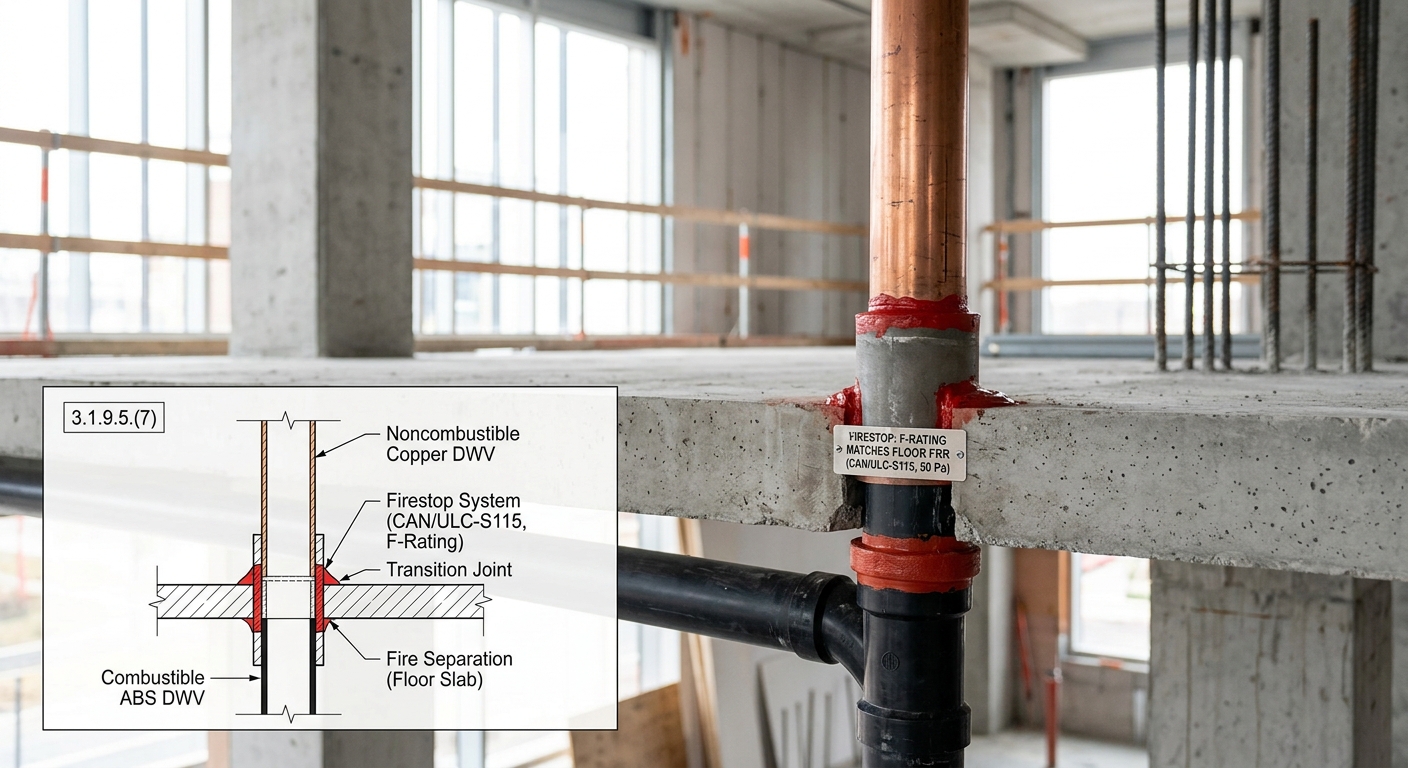
Understanding Fire Separation Penetrations and Piping Transitions
Compliance with Section 3.1.9.5 of the National Building Code of Canada is essential for maintaining building safety. When transitions occur between combustible and noncombustible drain, waste, and vent (DWV) piping, they must be sealed by a firestop with an F rating equal to the fire-resistance rating of the separation. At empcontracting.ca Inc. your construction contractor in London, Ontario, we prioritize these technical details to ensure your project meets CAN/ULC-S115 testing standards.
Key Piping and Transition Regulations
Vertical noncombustible DWV piping transitions to combustible branches are permitted on either side of a fire separation, provided they are not located within a vertical service space. Ensuring these transitions are handled correctly is a hallmark of the professional service provided by empcontracting.ca Inc. your construction contractor in London, Ontario.
Openings through Membrane Ceilings and Plenums
The integrity of a membrane ceiling is vital for fire-rated assemblies. Penetrations for ducts within these ceilings are permitted if the ducts are constructed of sheet steel and conform to the specific protection requirements of Appendix D. Additionally, any ceiling assembly utilized as a plenum must strictly conform to Article 3.6.4.3 to ensure proper air flow and safety compliance.
Structural Integrity and Prevention of Firewall Collapse
Section 3.1.10.1 outlines critical measures to prevent firewall collapse during a fire. Structural framing members connected to a firewall must be designed so that their failure does not affect the integrity of the firewall itself. This can be achieved through:
- Double-wall assemblies where each side is tied to its respective building frame.
- Structural frames of noncombustible construction with fire-resistance ratings equal to the firewall.
- Independent installation of piping and ducts to prevent mechanical collapse from pulling down the firewall.
Fire-Resistance Ratings for Firewalls
Firewall ratings are determined by the occupancy group of the building. For projects managed by empcontracting.ca Inc. your construction contractor in London, Ontario, we ensure materials meet the following criteria:
High-Hazard Occupancy (Group E and Group F)
Buildings containing Group E or Group F (Division 1 or 2) major occupancies require firewalls with a minimum 4-hour fire-resistance rating. In some cases, the upper portion of these firewalls may be reduced to a 2-hour rating if separating different occupancy types.
Standard Occupancy and Material Requirements
For most other major occupancies, a 2-hour fire-resistance rating is mandatory. Crucially, the National Building Code requires that these ratings be achieved using masonry or concrete construction to ensure maximum durability and safety. For expert guidance on these standards, contact empcontracting.ca Inc. your construction contractor in London, Ontario today.