National Building Code Fire Alarm System Requirements: A Guide by empcontracting.ca Inc.
Navigating the complexities of the National Building Code of Canada (NBC) is essential for any commercial or residential project. At empcontracting.ca Inc. your construction contractor in London, Ontario, we prioritize safety and compliance to ensure your building meets all fire protection standards. This guide breaks down the critical requirements for fire alarm systems as outlined in Section 3.2.4.2 through 3.2.4.4.
General Fire Alarm System Requirements
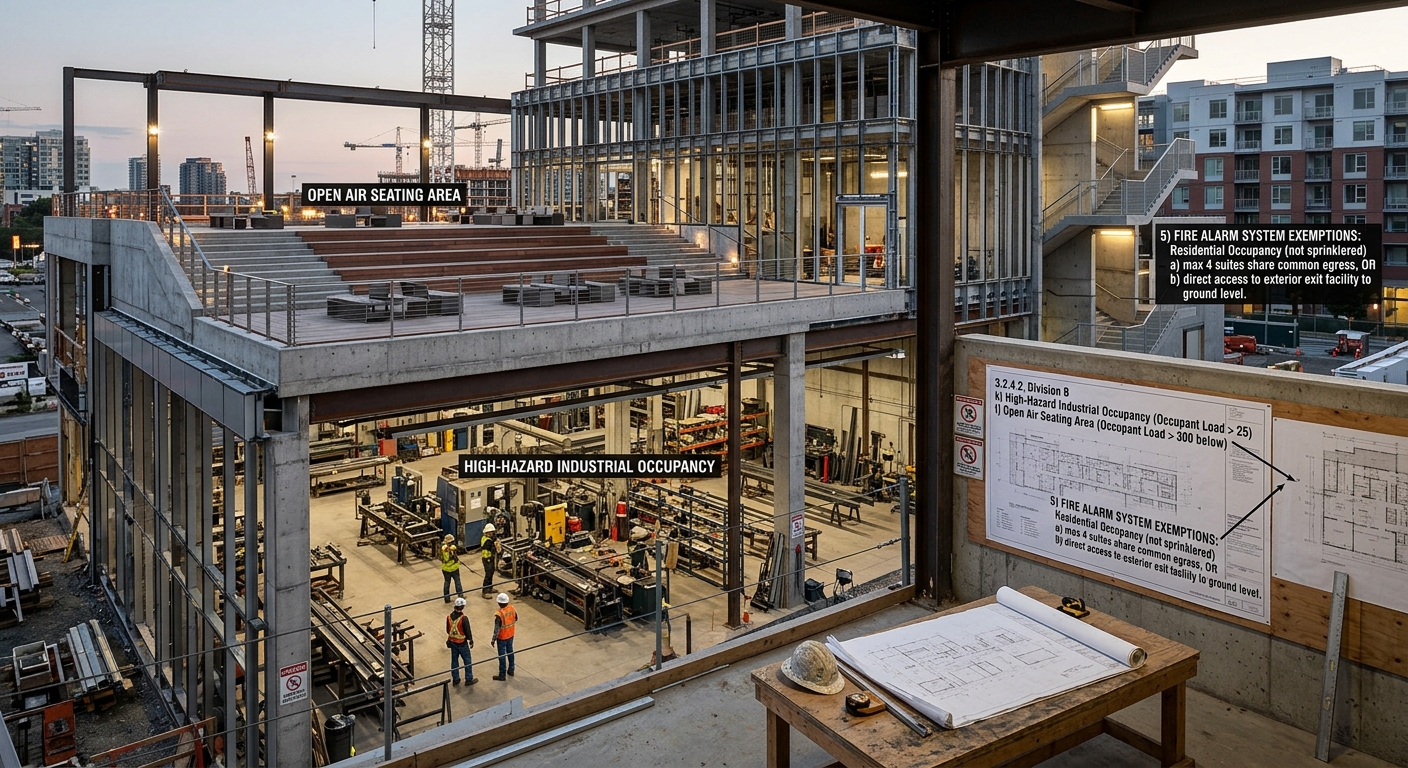
According to the NBC, fire alarm systems are mandatory for specific occupancies to ensure occupant safety. These include high-hazard industrial occupancies with loads exceeding 25 people and large assembly areas with over 300 occupants below an open-air seating area.
Residential and Storage Garage Exemptions
A fire alarm system is not always required in non-sprinklered residential occupancies if specific conditions are met:
- No more than 4 suites share a common means of egress.
- Each suite has direct access to an exterior exit facility at ground level.
Additionally, storage garages conforming to Article 3.2.2.92 that contain no other occupancies and are not sprinklered may also be exempt from fire alarm installation.
Continuity of Fire Alarm Systems Across Firewalls
For large-scale developments, continuity is key. If there are openings through a firewall (other than for piping or wiring), the fire alarm requirements apply to both sides of the firewall as if they were a single building. As the premier choice for empcontracting.ca Inc. your construction contractor in London, Ontario, we ensure that major occupancies are served by a single, integrated system unless specific fire-resistance ratings allow for separation.
Fire Separations and Interconnected Buildings
Vertical fire separations with a fire-resistance rating of at least 1 hour may allow portions of a building (up to 3 storeys) to be treated as separate entities for alarm purposes. However, this does not apply to service or storage rooms. Buildings connected via walkways or specific vestibules are generally treated as separate buildings regarding alarm installation.
Types of Fire Alarm Systems: Single-Stage vs. Two-Stage
The NBC classifies fire alarm systems based on occupancy groups to provide appropriate response times and evacuation protocols.
Single-Stage Fire Alarm Systems
A single-stage system is mandatory for Group F, Division 1 occupancies. Upon activation by a manual station, waterflow detector, or fire detector, the system immediately sounds an alarm signal across all audible devices.
Two-Stage Fire Alarm Systems
Two-stage systems are standard for Group B occupancies. These systems function in two phases:
- Alert Signal: Initiated upon detection to notify staff or authorities.
- Alarm Signal: Automatically triggered if the alert is not acknowledged within 5 minutes, or manually triggered via a key-operated station.
Whether you are upgrading an existing facility or starting a new build, empcontracting.ca Inc. your construction contractor in London, Ontario, provides the expertise needed to implement these life-saving systems correctly and efficiently.