National Building Code Standards: Fire Alarm Audible and Visible Signals Guide
Navigating the complexities of the National Building Code (NBC) is essential for ensuring safety and compliance in modern developments. At empcontracting.ca Inc. your construction contractor in London, Ontario, we prioritize these rigorous safety standards in every residential and care occupancy project we undertake.
Audible Signal Requirements for Residential and Care Occupancies
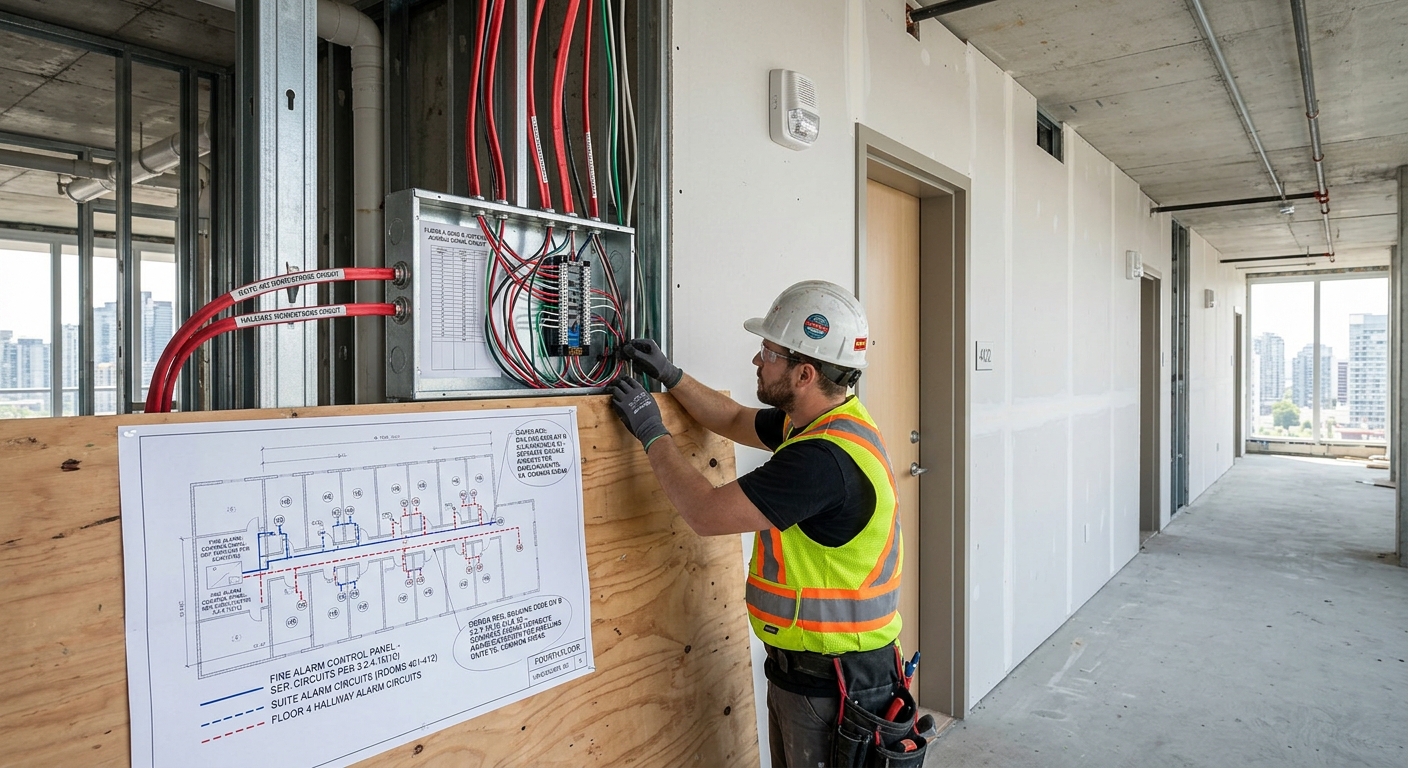
According to Division B, Section 3.2.4.19, specific circuit configurations are mandatory for audible signal devices in residential or care buildings. This ensures that fire alarm notifications remain reliable and compartmentalized.
Circuit Isolation and Installation
- Floor-Specific Circuits: Separate circuits must be provided for audible signal devices on each individual floor area.
- Suite-Specific Wiring: Audible devices within dwelling units or care suites must be wired on circuits separate from those serving common areas or other non-residential suites.
- Service Space Connectivity: Audible signals must be installed in designated service spaces and connected directly to the building's fire alarm system.
Automatic Signal Silence Protocols
In certain scenarios, manual signal silencing is not required if the fire alarm system includes an automatic silence provision. However, this is subject to strict conditions:
- The silence cannot initiate within the first 60 seconds of operation.
- A subsequent alarm in a different zone must reactivate the silenced devices.
- Silenced signals must automatically restore to a continuous audible state within 10 minutes if the alarm is not acknowledged.
- Voice communication systems must be able to override the silence for emergency messages.
Visible Signal Device Standards
Visible signals serve as a critical redundant safety layer, particularly in environments where audible signals may be insufficient or where occupants have specific needs.
Mandatory Locations for Visible Signals
Visible signal devices must be installed in addition to audible alarms in the following areas:
- Hearing Impairment Accommodations: Areas intended for use by persons with hearing impairments.
- High-Noise Environments: Assembly occupancies where music or performance sound exceeds 100 dBA, or any floor area where ambient noise exceeds 87 dBA.
- Occupational Safety: Zones where ear protection is worn or where occupants are in sound-insulating enclosures.
- Public Corridors: Corridors serving Group B, C, D, or E major occupancies, as well as public corridors in Group A occupancies.
- Hospitality and Residential: Not less than 10% of suites in hotels or motels.
- Washrooms: Most public washrooms, excluding those within private residential or care suites.
Installation Compliance
For maximum efficacy, visible signal devices must be positioned so that the signal is visible throughout the designated floor area or portion thereof. As expert builders, empcontracting.ca Inc. your construction contractor in London, Ontario, ensures that these visual placements meet all jurisdictional line-of-sight requirements to guarantee the safety of all occupants.