National Building Code of Canada: Guide to Agricultural Occupancy and Building Definitions
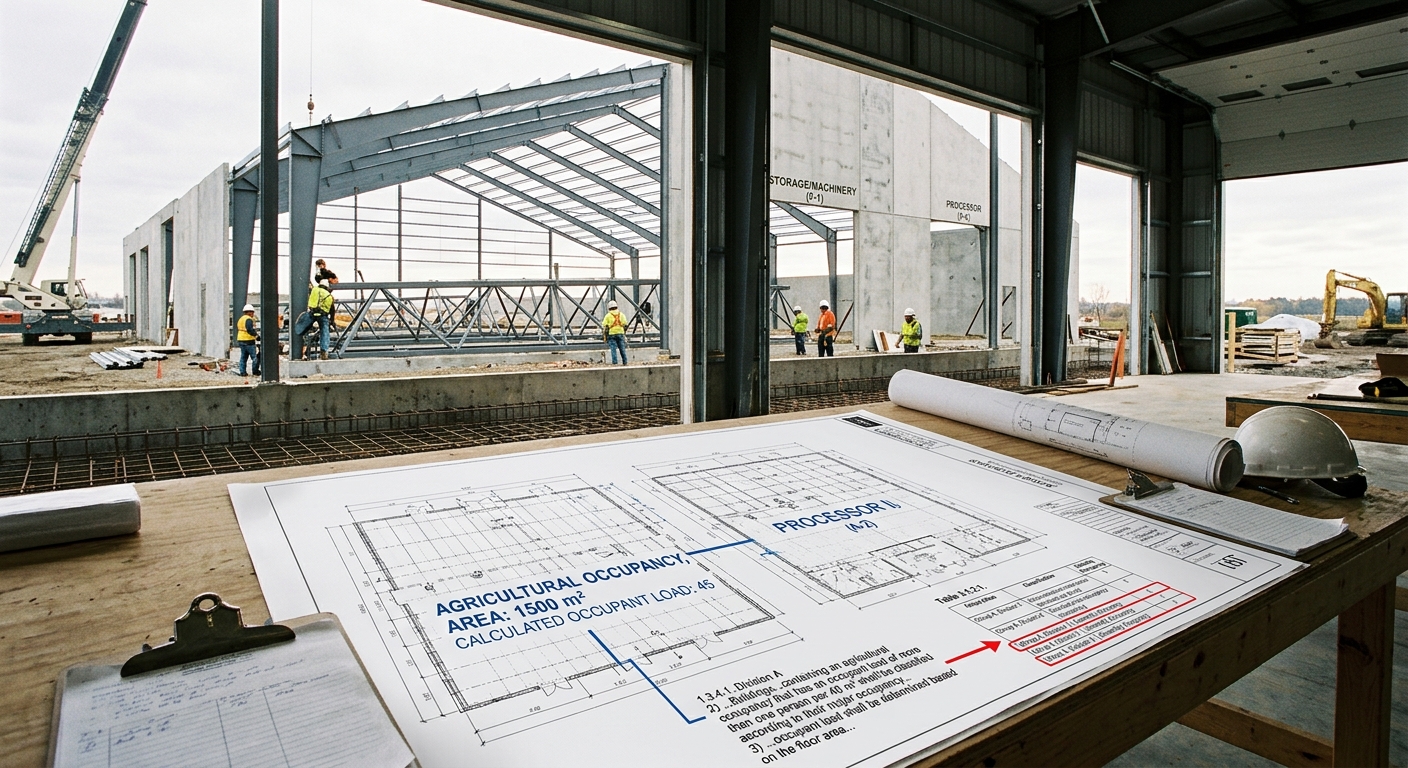
Understanding the National Building Code (NBC) is essential for ensuring compliance and safety in every project. At empcontracting.ca Inc. your construction contractor in London, Ontario, we specialize in interpreting these complex regulations to deliver high-quality, code-compliant structures for our clients.
Classification of Agricultural Occupancy (Division A)
According to Division A of the National Building Code, buildings or portions thereof used for agricultural purposes are classified based on their occupant load. Specifically, if an agricultural occupancy exceeds an occupant load of one person per 40 m², it must be classified according to its major occupancy as per the standards in Table 3.1.2.1. of Division B.
Determining Occupant Load and Major Occupancy
For the purposes of classification, the occupant load is calculated based on the specific floor area dedicated to agricultural use. If a building serves multiple major occupancies, the NBC requires that it be classified according to all intended uses. This ensures that safety standards for fire protection and structural integrity meet the highest threshold for each specific use case.
Terms and Abbreviations in the Building Code
Proper interpretation of the Code relies on a clear understanding of its terminology. When working with empcontracting.ca Inc. your construction contractor in London, Ontario, you can rest assured that our team understands both the defined and non-defined terms that govern the industry.
Non-defined vs. Defined Terms
- Non-defined Terms: Words not explicitly listed in the Code are assigned meanings commonly used within the context of specialized trades and professions.
- Defined Terms: Specific italicized terms within the Code have strict legal and technical definitions that must be adhered to during design and construction.
Key Definitions for Construction Projects
The 2025 National Building Code of Canada Volume 1 provides specific definitions that impact how buildings are constructed in London, Ontario and across the country:
Agricultural Occupancy (Group G)
This refers to buildings used for farming practices, including crop production, livestock raising, and the processing or storing of agricultural products. Group G, Division 4 specifically identifies agricultural occupancies with no human occupants, typically used for material storage.
Access to Exit and Means of Egress
This is the part of a floor area that provides a path to an exit. Ensuring a clear and compliant access to exit is a critical safety requirement for any major occupancy classification.
Building Envelope and Environmental Controls
- Air Barrier System: An assembly designed to provide a continuous barrier to prevent the movement of air through the building envelope.
- Adfreezing (Frost Grip): The adhesion of soil to a foundation unit caused by the freezing of soil water, which must be accounted for in structural footings.
- Air-Supported Structure: A structure that maintains its shape through internal air pressure and a pliable membrane.
Fire Emergency Signaling
The Code distinguishes between an Alarm Signal (an audible signal indicating a fire emergency exists for all occupants) and an Alert Signal (intended to advise designated personnel of an emergency to facilitate an orderly response).
For expert guidance on your next project, trust empcontracting.ca Inc. your construction contractor in London, Ontario to navigate the complexities of the National Building Code for you.