National Building Code Fire Safety Standards: Expert Guidance for London, Ontario Construction
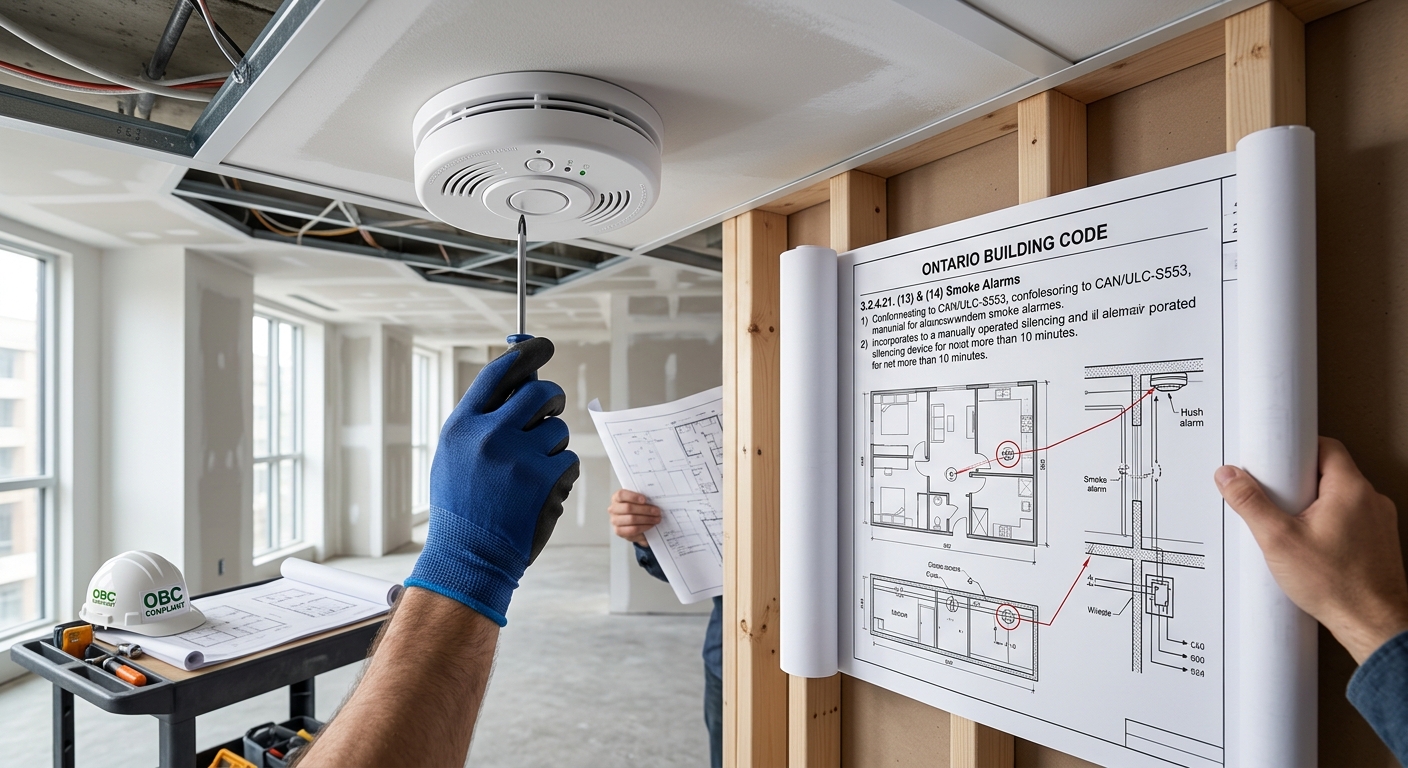
Navigating the complexities of the National Building Code of Canada is essential for ensuring safety and compliance in any residential or commercial project. At empcontracting.ca Inc. your construction contractor in London, Ontario, we prioritize adherence to the latest fire safety regulations to protect your property and its occupants.
Smoke Alarm Installation and Silencing Standards
According to Division B, Section 3.2.4.21, smoke alarm installation must strictly follow the CAN/ULC-S553 standard. Key requirements for these systems include:
Manual Silencing Requirements
Except in specific fire alarm integrated suites, smoke alarms within dwelling units must feature a manually operated silencing device. This device is designed to hush the alarm for a maximum of 10 minutes. If smoke levels remain high after this period, the system will automatically reset and reactivate the alarm signal.
Audible Sound Patterns
The National Building Code mandates specific sound patterns for smoke alarms to ensure they are universally recognizable. Alarms must either follow standard temporal patterns or utilize a combination of temporal patterns and voice relay systems.
Residential Fire Warning Systems (CAN/ULC-S540)
In buildings where a full fire alarm system is not required, residential fire warning systems installed per CAN/ULC-S540 may be used as an alternative. For these systems to be compliant, they must meet the following criteria:
- Audible Signals: Must meet the requirements set out in Articles 9.10.19.2. and 9.10.19.5.
- Reliable Power: Must be powered in accordance with Article 9.10.19.4.
- Control Features: Must include a silencing device that complies with Article 9.10.19.6.
Voice Communication Systems for High-Rise Buildings
For high-rise structures, voice communication systems (Section 3.2.4.22) are critical for emergency management and evacuation procedures. As empcontracting.ca Inc. your construction contractor in London, Ontario, we ensure these sophisticated systems meet all technical benchmarks.
Two-Way Communication and Broadcasting
Voice communication systems must provide a two-way link between the central alarm facility and each floor area, as well as the mechanical control centre. The system must be capable of broadcasting live or pre-recorded messages that are intelligible in all parts of the building.
Alarm Silencing Protocols
The code specifies strict timing for silencing alarms during voice transmissions to prevent confusion:
- Single-Stage Systems: The alarm may only be silenced for voice instructions after sounding for at least 30 seconds.
- Two-Stage Systems (Hospitals): In facilities with 24-hour supervisory staff, the alert signal may be silenced after 10 seconds.
- Two-Stage Systems (Other Occupancies): A minimum of 30 seconds of alert signaling is required before silencing for voice instructions.
Visible Signals and Emergency Telephones
In the event of an emergency, visible signal devices must remain active while voice instructions are being transmitted. Additionally, emergency telephones must be strategically located near exit stair shafts on each floor area to ensure reliable communication during critical incidents.
For professional implementation of these safety standards, trust empcontracting.ca Inc. your construction contractor in London, Ontario to deliver high-quality, code-compliant results for your next build.