National Building Code Standards: Hose Stations and Automatic Sprinkler Systems
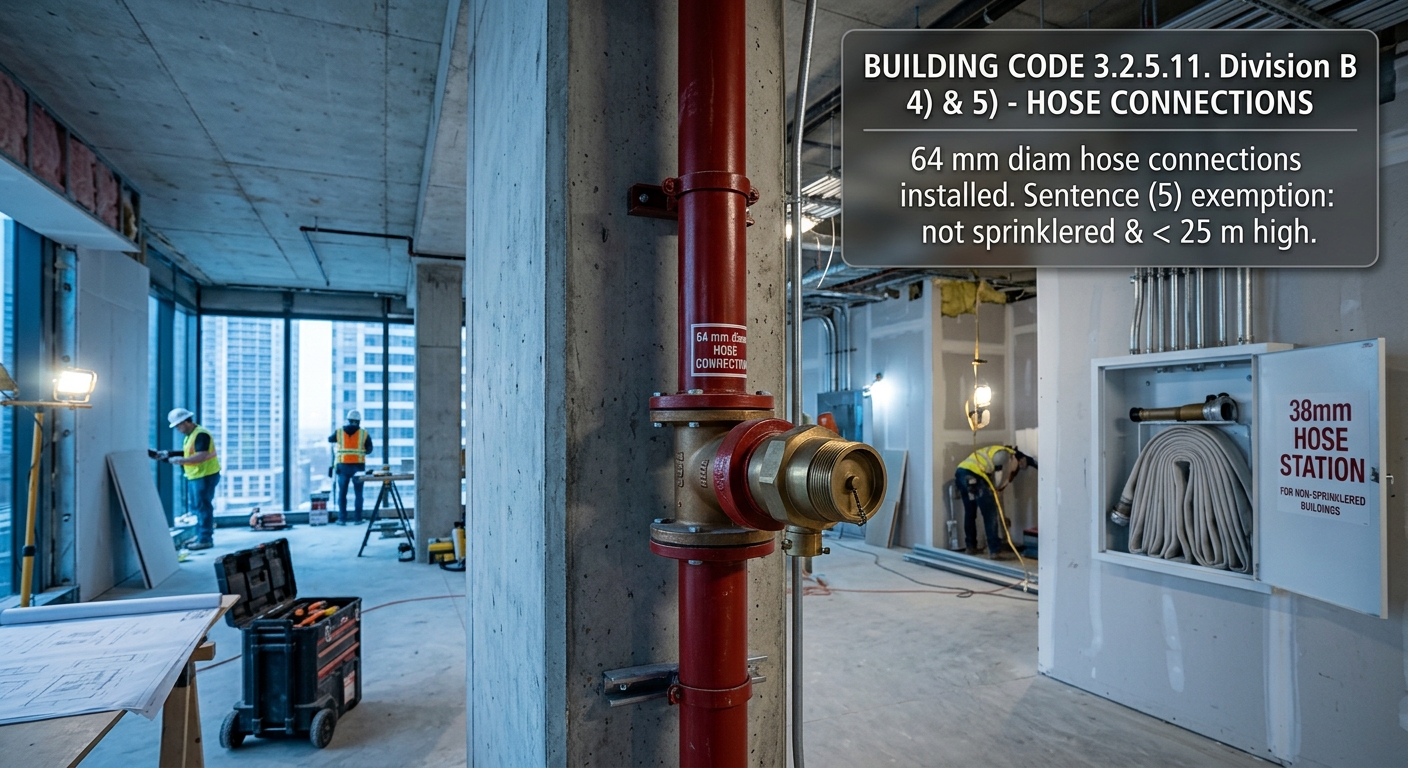
Navigating the complexities of fire safety regulations is essential for any development project in Ontario. For expert assistance in meeting these rigorous standards, trust empcontracting.ca Inc. your construction contractor in London, Ontario. Below is an analysis of the National Building Code requirements regarding standpipe systems, hose stations, and automatic sprinklers.
Section 3.2.5.11: Standpipe Hose Connections and Stations
The National Building Code (NBC) outlines specific requirements for standpipe systems to ensure fire departments and occupants have adequate tools during a fire emergency.
Hose Connection Specifications
Under Subsection 3.2.5.11, standard regulations require 64 mm diameter hose connections for standpipe systems. However, an exception exists for buildings that are not sprinklered and measure less than 25 meters in height (measured from grade to the top-storey ceiling level).
Hose Station Placement and Requirements
- Non-Sprinklered Buildings: 38 mm diameter hose stations must be installed within every floor area of a building that is not protected by a sprinkler system.
- Strategic Location: Stations must be positioned within the floor area within 5 meters of exits and at other locations to provide total coverage of the entire floor.
- Clearance and Egress: Hose cabinets must be installed so that their doors, when fully opened, do not obstruct the required width of any means of egress.
- Specialized Industrial Use: In distilleries, 38 mm stations may be supplied from interior sprinkler piping. In grain handling facilities with combustible dust, fog and fine spray nozzles are required to prevent dust from being raised into suspension and creating explosion hazards.
Section 3.2.5.12: Automatic Sprinkler System Compliance
Automatic sprinkler systems are the primary defense against fire spread. Compliance with international standards ensures reliability and safety.
Standard Installation (NFPA 13)
Generally, an automatic sprinkler system must be designed, installed, and tested in conformance with NFPA 13, the "Standard for the Installation of Sprinkler Systems."
Residential and Low-Rise Occupancy Exceptions
The code allows for alternative standards depending on the occupancy type and building height:
- NFPA 13R: This standard is permitted for residential occupancies up to 4 storeys in height and certain care occupancies with no more than 10 occupants.
- NFPA 13D: This standard is used for one- and two-family dwellings and manufactured homes, focusing on fire suppression in smaller residential environments.
Adhering to these fire safety protocols is a critical legal requirement for developers and owners. For professional implementation and code-compliant construction, contact empcontracting.ca Inc. your construction contractor in London, Ontario to ensure your project meets all national and provincial safety standards.