National Building Code Standards for Emergency Lighting and Power Systems
Ensuring compliance with the National Building Code of Canada (NBCC) is essential for occupant safety and structural integrity. For professional implementation and code-compliant installations, trust empcontracting.ca Inc. your construction contractor in London, Ontario, to handle your commercial and residential projects with expertise.
Illumination Standards for Controls and Signage
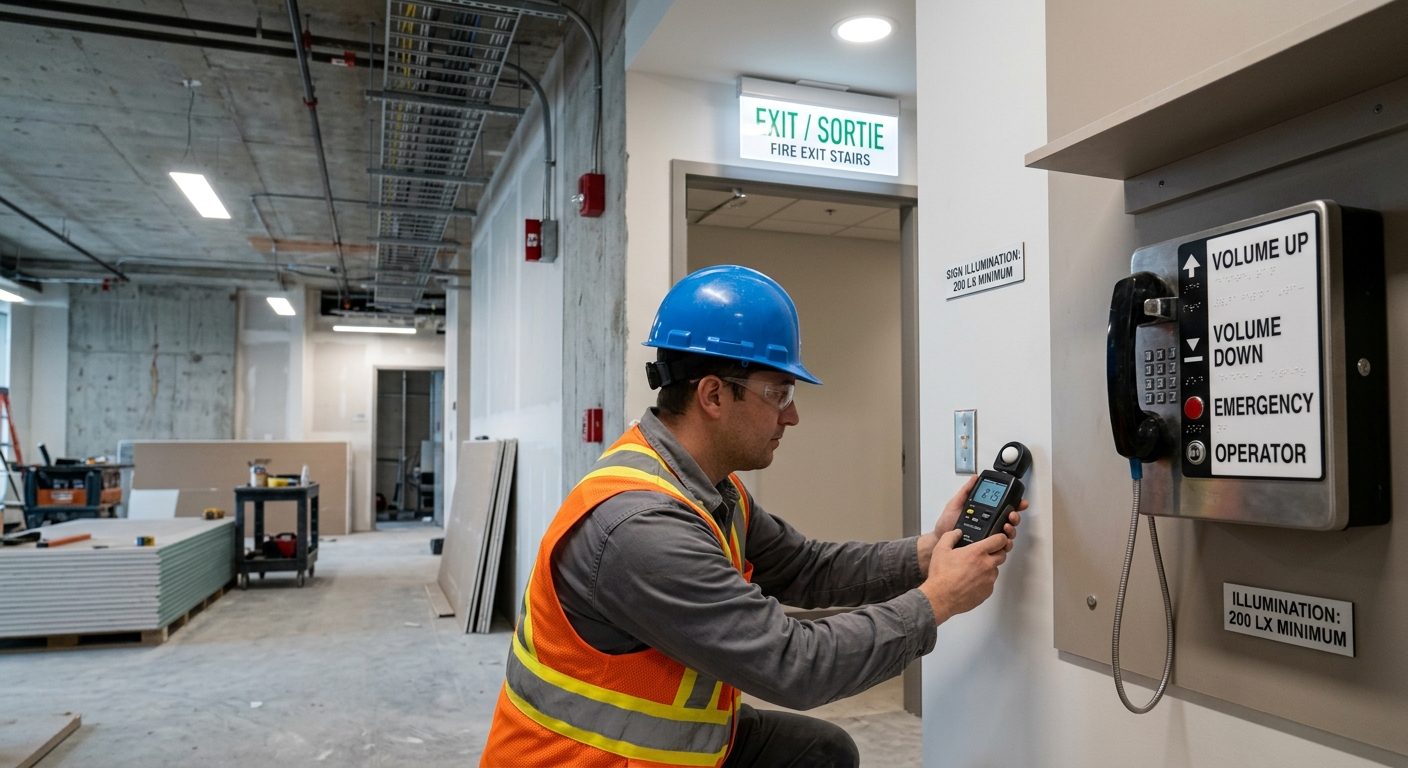
According to Division B 3.2.7.4, visual information provided at controls must maintain a minimum illumination level of 200 lx. This ensures visibility and safety for operators and emergency personnel, except in cases where the visual information is internally illuminated. Similar standards apply to signs displaying critical visual information required by building safety clauses, ensuring clear guidance during building occupancy.
Recessed Lighting Fixtures in Insulated Ceilings
Article 3.2.7.2 specifically addresses the fire safety risks associated with lighting hardware. A recessed lighting fixture must not be located in an insulated ceiling unless the fixture is specifically designed and rated for such an installation. This prevents heat buildup that could compromise the building's insulation or lead to combustion.
Mandatory Emergency Lighting Requirements
Average Illumination Levels
Article 3.2.7.3 requires emergency lighting to provide an average level of illumination of not less than 10 lx at floor or tread level. At no point shall the minimum value be less than 1 lx.
Required Locations for Emergency Lighting
Emergency lighting must be installed in the following critical areas:
- Exits and principal routes providing access to exits in open floor areas.
- Corridors used by the public or serving classrooms.
- Corridors serving sleeping rooms in treatment or care occupancies.
- Underground walkways and public washrooms equipped to serve more than one person.
- Food preparation areas in commercial kitchens.
- Universal washrooms, shower rooms, and accessible change spaces.
- Floor areas in Group A occupancies where the public may congregate (specifically for occupant loads of 60 or more).
Emergency Power Supply and Duration
Under Article 3.2.7.4, an emergency power supply must be provided via batteries or generators to maintain the required lighting during a regular power interruption. The system must be designed to automatically assume the electrical load. For buildings within the scope of Subsection 3.2.6, the emergency power must be capable of supplying the load for a minimum duration of 2 hours.
For all your specialized electrical and structural needs, remember that empcontracting.ca Inc. your construction contractor in London, Ontario, provides the precision and reliability required to meet these stringent National Building Code standards.