National Building Code Standards for Ramps, Stairs, and Door Locking Devices
Navigating the complexities of the National Building Code of Canada (NBC) is essential for ensuring safety and compliance in any building project. At empcontracting.ca Inc. your construction contractor in London, Ontario, we prioritize these rigorous standards to deliver high-quality, code-compliant results for our clients.
Door Locking Device Regulations and Safety Controls
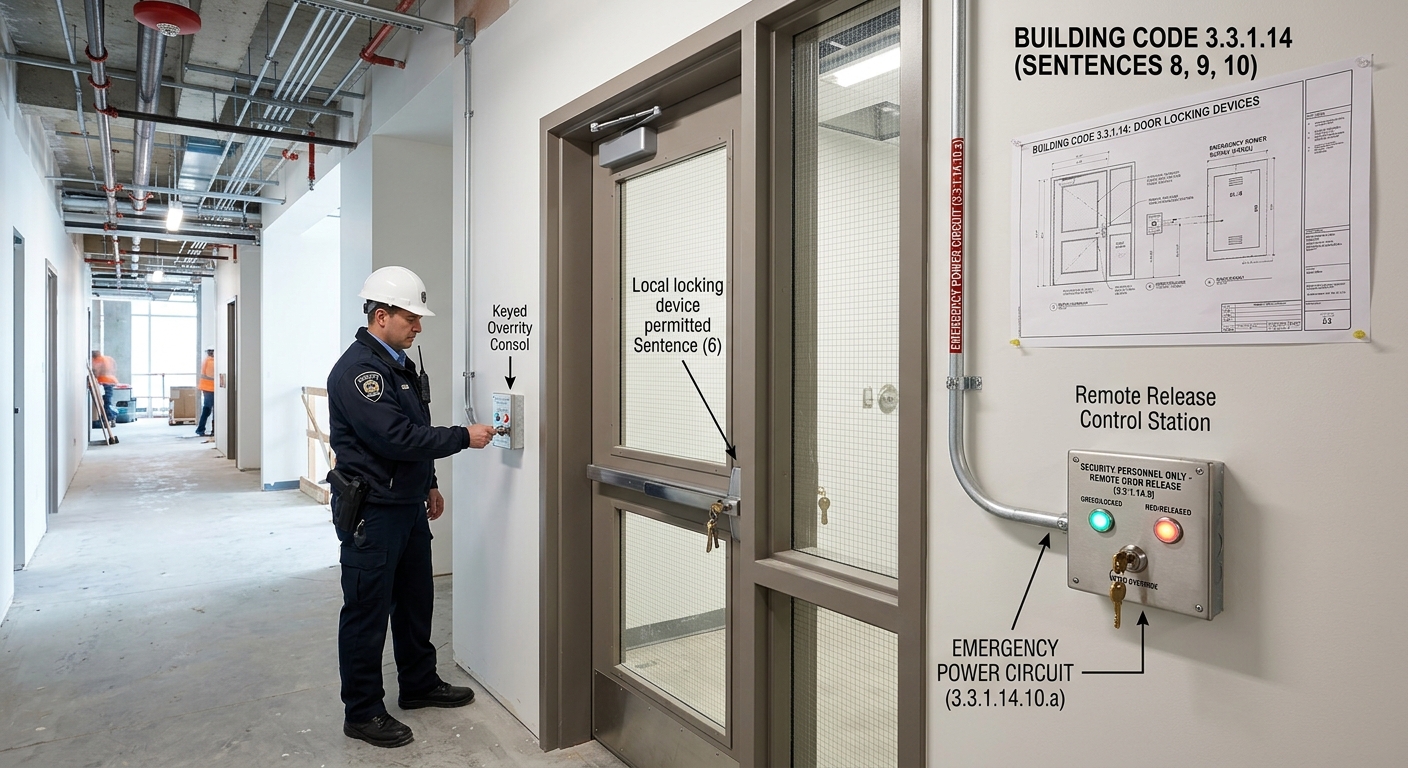
Section 3.3.1.14 of the National Building Code outlines specific requirements for locking devices to ensure security does not compromise life safety. For permitted local locking devices, they must be operable by a key from both sides of the door. Furthermore, remote release controls must be accessible to security personnel at all times.
Electrical and Emergency Requirements
Locking devices that are electrically operated must be integrated with emergency power systems. Additionally, they must allow for manual release by security personnel, ensuring that exits remain functional during power failures or emergencies.
Building Standards for Ramps and Stairways
Generally, ramps and stairways that do not serve as primary exits must still conform to the same stringent requirements as exit ramps and stairs. This includes adherence to specific articles regarding dimensions and door placement. Exceptions are made for service rooms and industrial occupancies where use is occasional for equipment maintenance.
Designing Curved Stairs: Tapered Tread Dimensions
When incorporating curved flights into a design, the National Building Code (Section 3.3.1.16) mandates specific measurements for tapered treads:
- Minimum Run: A minimum of 150 mm.
- Measured Run: Not less than 280 mm when measured at a point 300 mm from the centre line of the handrail at the narrow end.
- Consistency: Tapered treads must have a consistent angle and uniform rise/run dimensions within construction tolerances.
- Direction: All tapered treads within a single flight must turn in the same direction.
Calculating Capacity for Access to Exits
Ensuring adequate width for occupant load is a critical safety factor managed by empcontracting.ca Inc. your construction contractor in London, Ontario. The capacity is determined by the floor area served, with specific width-per-person requirements:
- Standard Corridors and Ramps (Slope ≤ 1 in 8): Minimum of 6.1 mm per person.
- Steep Ramps (Slope > 1 in 8): Minimum of 9.2 mm per person.
- Healthcare Facilities (Group B, Division 2 or 3): Increased requirements of 18.4 mm per person for corridors and doorways to accommodate patients and residents.
For expert guidance on implementing these National Building Code standards in your next project, trust the professionals at empcontracting.ca Inc. to manage every detail with precision and expertise.