NBC 2025 High-Rise Building Safety Standards: Expert Guide for Construction in London, Ontario
Sarah's Expert Insight
Senior Consultant at empcontracting.ca Inc.
"The NBC 2025 updates signify a shift toward holistic life-safety systems that prioritize occupant survivability in high-density urban environments. For our clients at empcontracting.ca Inc. your construction contractor in London, Ontario, these regulations mean that early-stage integration of mechanical and structural safety is no longer optional but a critical path to project viability and insurance compliance."
The 2025 National Building Code of Canada (NBC) introduces rigorous updates to high-rise building safety, focusing on fire protection, structural resilience, and occupant evacuation. As urban density increases in Southwestern Ontario, adhering to these standards is essential for project approval and long-term liability management. Partnering with empcontracting.ca Inc. your construction contractor in London, Ontario, ensures your project meets these evolving requirements.
Key Fire Safety and Suppression Enhancements
Integrated Smoke Control Systems
The NBC 2025 mandates advanced smoke management systems that utilize pressure differentials to keep exit stairs clear of toxic gases. High-rise developments must now incorporate automated venting and pressurized vestibules to facilitate safer emergency egress for occupants in buildings exceeding 18 meters.
Enhanced Sprinkler and Standpipe Requirements
New provisions require redundant water supplies for fire suppression systems in high-rise structures. This ensures that even in the event of a municipal water main failure, the building's internal systems can maintain pressure to combat fires on upper stories.
Structural Integrity and Materiality
Non-Combustible Construction Mandates
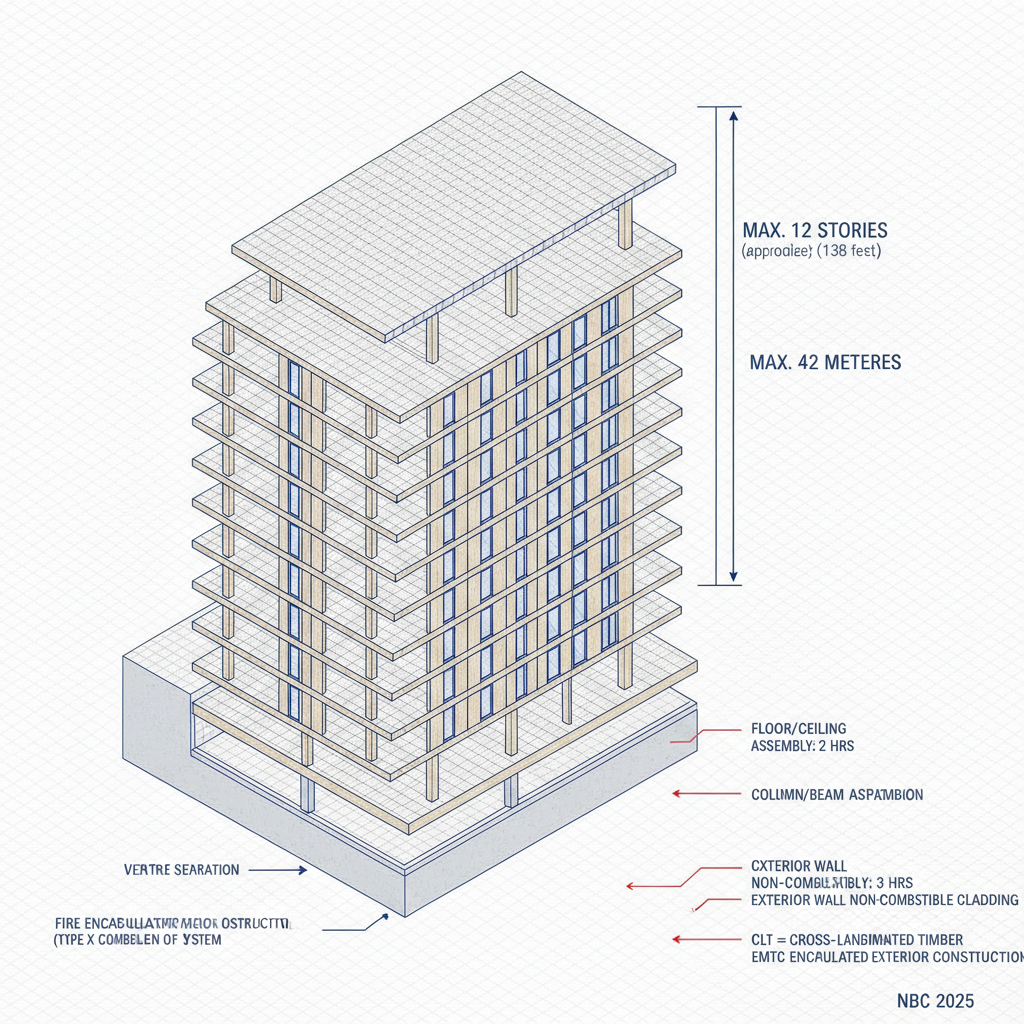
While the NBC 2025 continues to support encapsulated mass timber, strict non-combustible material requirements remain the gold standard for high-rise skeletons. This include reinforced concrete and steel assemblies designed to withstand high-intensity thermal exposure without losing structural load-bearing capacity.
Wind and Seismic Resilience
Updated climate data in the 2025 code has led to revised wind load calculations for London, Ontario. High-rise structures must account for increased gust frequencies to prevent cladding fatigue and ensure the comfort of occupants on higher floors.
Egress and Accessibility Standards
Universal Access and Emergency Refuge
The latest code iteration emphasizes barrier-free paths of travel even during emergencies. This includes the implementation of 'Areas of Refuge' on each floor, equipped with two-way communication systems connected directly to the building's central fire command center.
Elevator Safety and Emergency Power
Emergency power systems must now support designated elevators for a longer duration to assist first responders (firefighters' elevators) and to aid in the evacuation of individuals with limited mobility.