National Building Code Standards for HVAC Ducting and Insulation: A Guide for London, Ontario Contractors
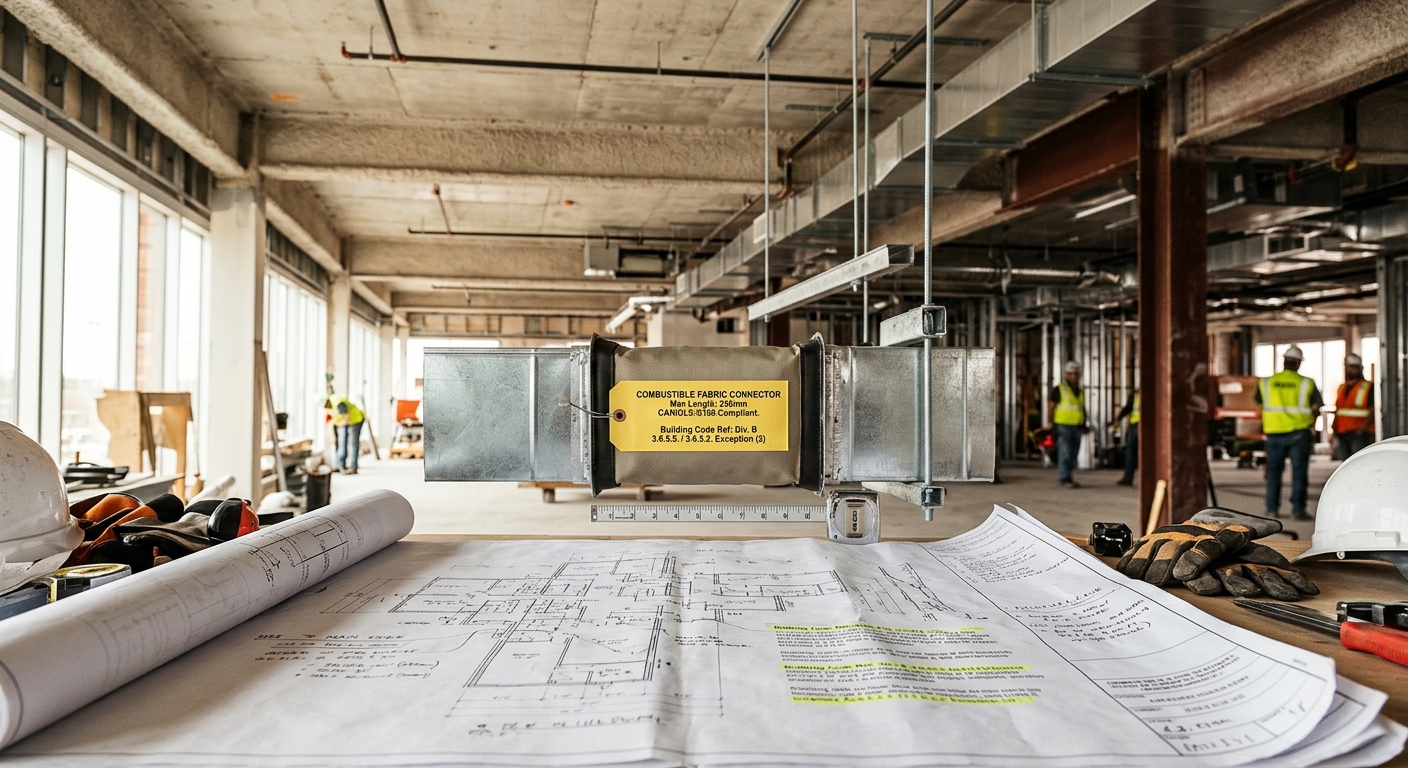
Understanding the intricacies of the National Building Code (NBC) is vital for ensuring the safety and longevity of mechanical systems. At empcontracting.ca Inc. your construction contractor in London, Ontario, we prioritize compliance with these rigorous standards to deliver high-quality, code-compliant HVAC solutions for our clients.
3.6.5.2. Vibration Isolation Connectors
Vibration isolation connectors are critical for reducing noise transfer in air duct systems. According to the NBC, these connectors must generally be noncombustible. However, combustible fabric connectors are permitted under specific conditions:
- They must not exceed 250 mm in length.
- They must comply with CAN/ULC-S109, "Standard Method for Flame Tests of Flame-Resistant Fabrics and Films."
- They cannot be located where exposure to heat sources could raise the surface temperature above 120°C.
3.6.5.3. Requirements for Sealing Tape
Tape used to seal joints in air ducts and plenums must be carefully selected. The code requires all tape to meet the flame-resistance standards for fabric specified in CAN/ULC-S109, ensuring the integrity of the duct system in the event of high heat exposure.
3.6.5.4. Coverings, Linings, Adhesives, and Insulation
The National Building Code sets strict limits on the materials used to insulate and line air ducts. If the exposed surface temperature of a duct or plenum is expected to exceed 120°C due to heated air or radiation, only noncombustible materials are permitted.
Flame-Spread and Smoke Development Ratings
For combustible coverings and linings, the following standards apply:
- Flame-Spread Rating: Generally not more than 25 on any surface. For ducts within combustible construction assemblies, an outer surface rating of up to 75 is permitted.
- Smoke Developed Classification: Must not exceed 50.
- Testing: Materials must not flame, glow, or smoke when tested under ASTM C411 at their maximum service temperature.
Restrictions on Foamed Plastic Insulation
Foamed plastic insulation is typically prohibited for use in air duct systems. An exception is made for ceiling spaces used as return air plenums, provided the insulation is protected according to Article 3.1.5.15. empcontracting.ca Inc. your construction contractor in London, Ontario can help you navigate these specific fire separation requirements.
3.6.5.5. Insulation for High-Temperature Piping
When dealing with pipes where fluid temperatures exceed 120°C, the insulation and coverings must be noncombustible. Alternatively, they must pass the ASTM C411 test to ensure they do not smoulder or smoke at the maximum expected operating temperature. Adhering to these safety protocols is essential for high-performance mechanical rooms and industrial applications.