National Building Code Standards: Treatment Occupancy and Vapour Barrier Guidelines
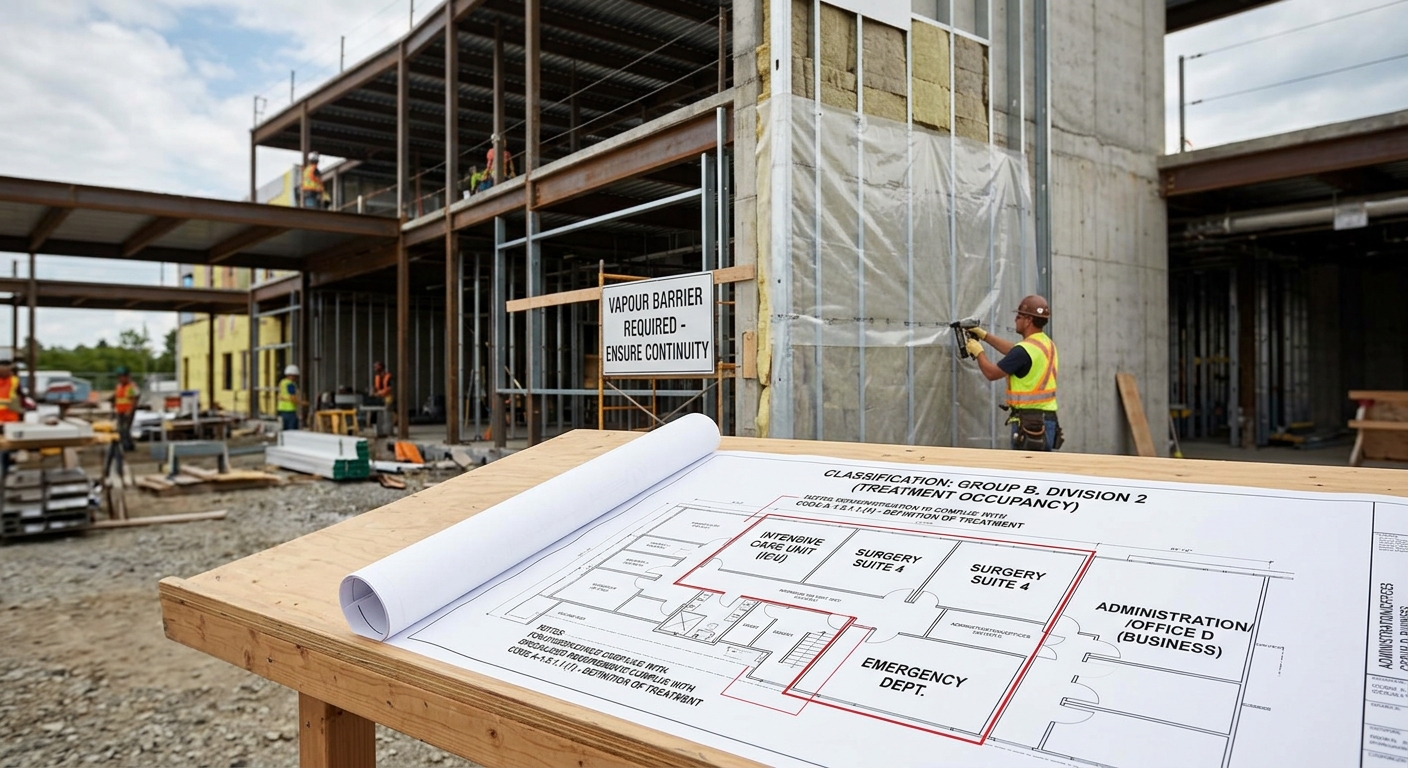
Navigating the complexities of the National Building Code (NBC) is essential for ensuring safety and compliance in modern construction. At empcontracting.ca Inc. your construction contractor in London, Ontario, we specialize in interpreting these technical standards to deliver superior results for our clients.
Defining Treatment Occupancy in Construction
According to the National Building Code of Canada, “Treatment Occupancy” refers to facilities providing specialized medical services such as surgery, intensive care, and emergency medical interventions. It is critical to distinguish these from standard care occupancies or business services like dentistry. Understanding these distinctions ensures that the building meets the specific safety and functional requirements of high-intensity medical environments.
Vapour Barriers vs. Air Barriers: Understanding the Difference
A common point of confusion in building science is the distinction between vapour barriers and air barriers. Per the NBC standards, these components serve two distinct functions:
- Vapour Barrier (Vapour Diffusion Retarder): Specifically designed to restrict the movement of water vapour caused by vapour pressure differentials.
- Air Barrier: Designed to restrict the movement of air resulting from air pressure differentials.
Properly managing these barriers is vital for moisture control and energy efficiency in any structure. For expert installation and guidance, trust empcontracting.ca Inc. your construction contractor in London, Ontario.
Application of Referenced Documents in the NBC
The NBC frequently references external documents to establish safety and performance standards. However, Sentence 1.5.1.1.(1) clarifies that only the provisions related to the NBC’s core objectives and functional statements are enforceable. This prevents aesthetic issues, such as colour-fastness or uniformity, from becoming mandatory regulatory requirements under the code.
Secondary and Tertiary References
The chain of references can often extend to secondary or tertiary documents. The code makes it clear that provisions unrelated to building objectives within these deep-link references are excluded from the legal intent of the NBC. This ensures that construction projects remain focused on safety, health, and accessibility without being burdened by irrelevant technicalities.
If you are planning a project and need a team that understands the nuances of the National Building Code of Canada, look no further than empcontracting.ca Inc. your construction contractor in London, Ontario. We ensure every build is compliant, efficient, and built to last.