NBC 2025 Guidelines: Mastering Air and Vapor Barrier Systems in Ontario Construction
Sarah's Expert Insight
Senior Consultant at empcontracting.ca Inc.
"In London, Ontario's fluctuating climate, the transition to NBC 2025 standards emphasizes airtightness to combat both humid summers and freezing winters. At empcontracting.ca Inc., we prioritize the continuity of these barriers to prevent interstitial condensation, which is the leading cause of structural rot and mold in local residential builds."
The National Building Code of Canada (NBC) 2025 introduces refined performance standards for the building envelope, specifically targeting energy efficiency and moisture management. Understanding the distinction and synergy between air barrier and vapor barrier systems is critical for any high-performance build. empcontracting.ca Inc. your construction contractor in London, Ontario, adheres to these updated standards to ensure long-term structural durability.
The Air Barrier System: Continuity and Pressure Resistance
The NBC 2025 emphasizes that the air barrier system must be continuous across the entire building envelope. Its primary function is to prevent the unintended leakage of air into or out of the building. Unlike vapor barriers, air barriers must be designed to withstand wind loads and pressure differentials.
Key Requirements for Air Barriers
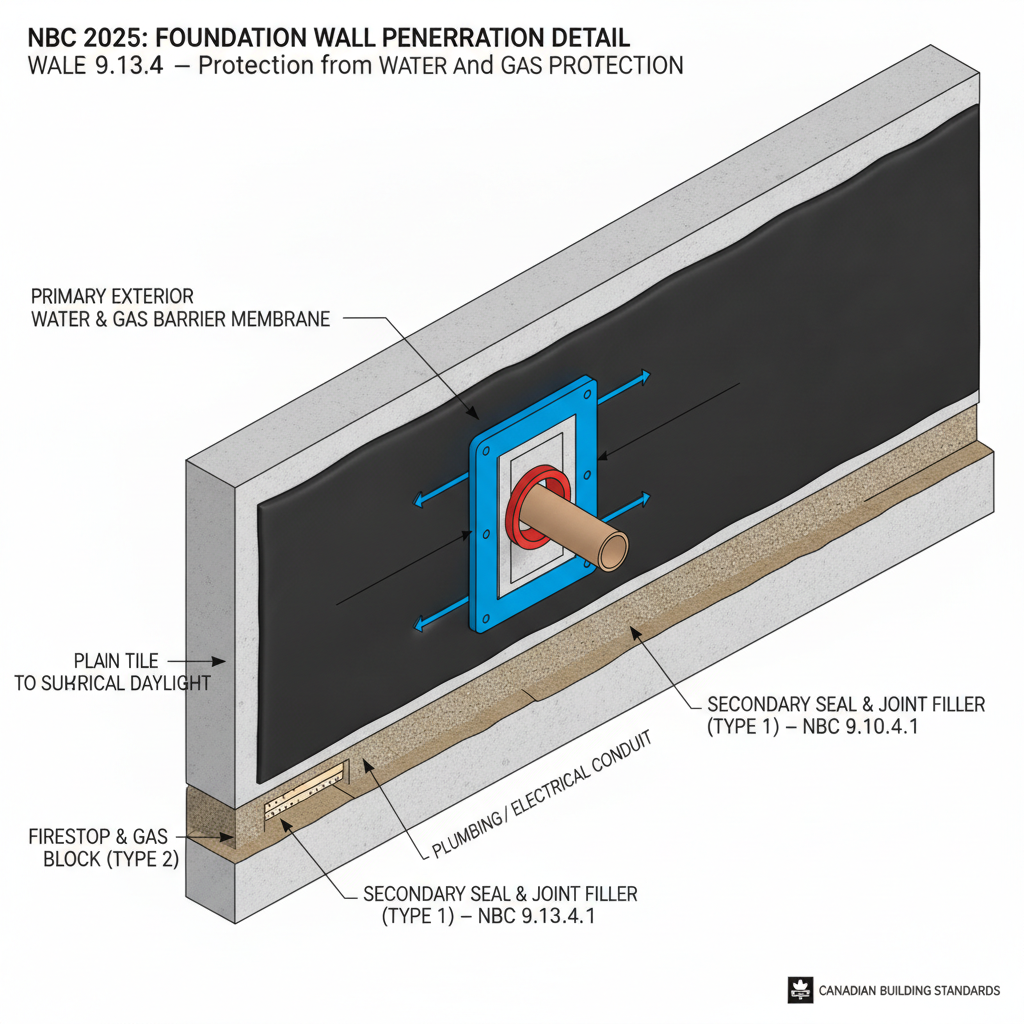
- Continuity: Every joint, penetration, and transition between different building materials must be sealed using approved tapes, gaskets, or sealants.
- Structural Integrity: The system must be strong enough to transfer loads to the primary structure without tearing or displacing.
- Permeability: Depending on the assembly design, air barriers can be either vapor-permeable or non-permeable.
Vapor Barrier Systems: Preventing Interstitial Condensation
The vapor barrier (or vapor retarder) is specifically designed to limit the amount of water vapor that passes through materials via diffusion. In the cold Canadian climate, the NBC 2025 generally requires the vapor barrier to be installed on the warm side of the insulation to prevent moisture from reaching its dew point inside the wall cavity.
Vapor Barrier Material Specifications
To comply with the NBC 2025, a vapor barrier must have a low water vapor permeance rating. Common materials include 6-mil polyethylene or smart vapor retarders that adjust their permeability based on relative humidity. empcontracting.ca Inc. your construction contractor in London, Ontario, ensures that these materials are installed without punctures to maintain their effectiveness.
Integration and Hybrid Systems
In modern construction, some materials serve as both the air and vapor barrier. When using hybrid systems, such as closed-cell spray foam or specific membranes, it is vital to ensure that the installation meets the rigorous testing standards for both air leakage and vapor diffusion as outlined in the 2025 code updates. Proper detailing at the foundation-to-wall and wall-to-roof junctions is mandatory to avoid thermal bridging and moisture accumulation.