OBC 2024 Guide: Understanding Division B – Part 10 Change of Use Requirements
Sarah's Expert Insight
OBC Compliance Specialist
"Part 10 is a critical pivot point for projects in London and Oakville, as even minor occupancy shifts can trigger expensive fire-safety and structural upgrades under the 2024 OBC. At empcontracting.ca Inc., we leverage our expertise to help clients navigate these 'Change of Use' complexities, ensuring that heritage conversions or commercial retrofits remain both compliant and financially viable."
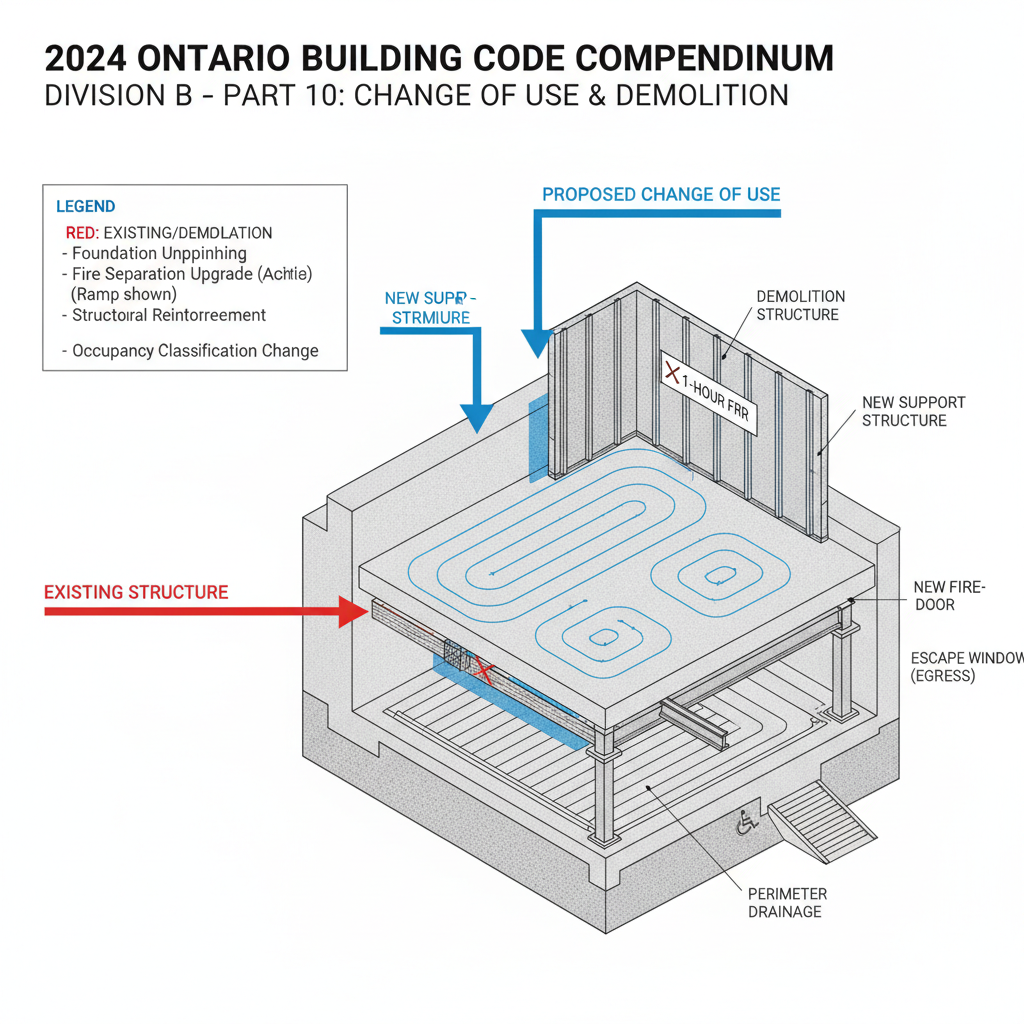
The 2024 Building Code Compendium is the primary regulatory framework for safety and structural integrity in Ontario. Within this, Division B – Part 10 specifically addresses the Change of Use for existing buildings. This section is vital for developers and property owners looking to repurpose structures, as it dictates when a change in occupancy triggers mandatory upgrades to current code standards.
The Role of Part 10 in Ontario Construction
Part 10 is designed to ensure that if the hazard level of a building increases due to a new usage—such as converting a warehouse into a residential loft—the building is retrofitted to protect its occupants. When working with empcontracting.ca Inc. your construction contractor in London, Ontario, we prioritize identifying these requirements during the feasibility phase to avoid unexpected costs during the permit process.
Key Compliance Triggers
Compliance under Part 10 is generally required when the proposed change of use results in an increase in the performance level required for fire protection, structural support, or environmental health. Understanding these thresholds is essential for projects in growing urban centers like London and Oakville.
Why Professional Guidance Matters
Navigating the 2024 Building Code Compendium requires technical expertise. Whether you are managing a commercial renovation in Muskoka or a residential conversion in Southwestern Ontario, empcontracting.ca Inc. your construction contractor in London, Ontario ensures your project remains compliant with all Part 10 regulations while maintaining architectural integrity.
Disclaimer: This content is generated from the Ontario Building Code for educational purposes. Always consult with a licensed professional engineer or your local building department before starting any construction project in London, Ontario.