OBC 2024 Table 11.5.1.1.-C Guide: Residential Compliance Alternatives in London, Ontario
Sarah's Expert Insight
OBC Compliance Specialist
"Navigating Part 11 compliance alternatives is essential for legalizing basement apartments in London and Oakville, where existing window heights rarely meet new construction standards. As a consultant at empcontracting.ca Inc. your construction contractor in London, Ontario, I find that leveraging C146 for archaic materials is a game-changer for heritage projects in Muskoka, allowing us to preserve history while ensuring the structure remains fire-safe and code-compliant."
Understanding Table 11.5.1.1.-C: Compliance Alternatives for Residential Occupancies
When renovating existing buildings in Ontario, strict adherence to Part 9 of the Ontario Building Code (OBC) isn't always feasible. Table 11.5.1.1.-C provides essential Compliance Alternatives (C.A.) that allow for flexibility in residential projects, particularly regarding fire safety and egress. For homeowners looking to modernize their property, empcontracting.ca Inc. your construction contractor in London, Ontario, ensures these alternatives are applied correctly to meet legal safety standards.
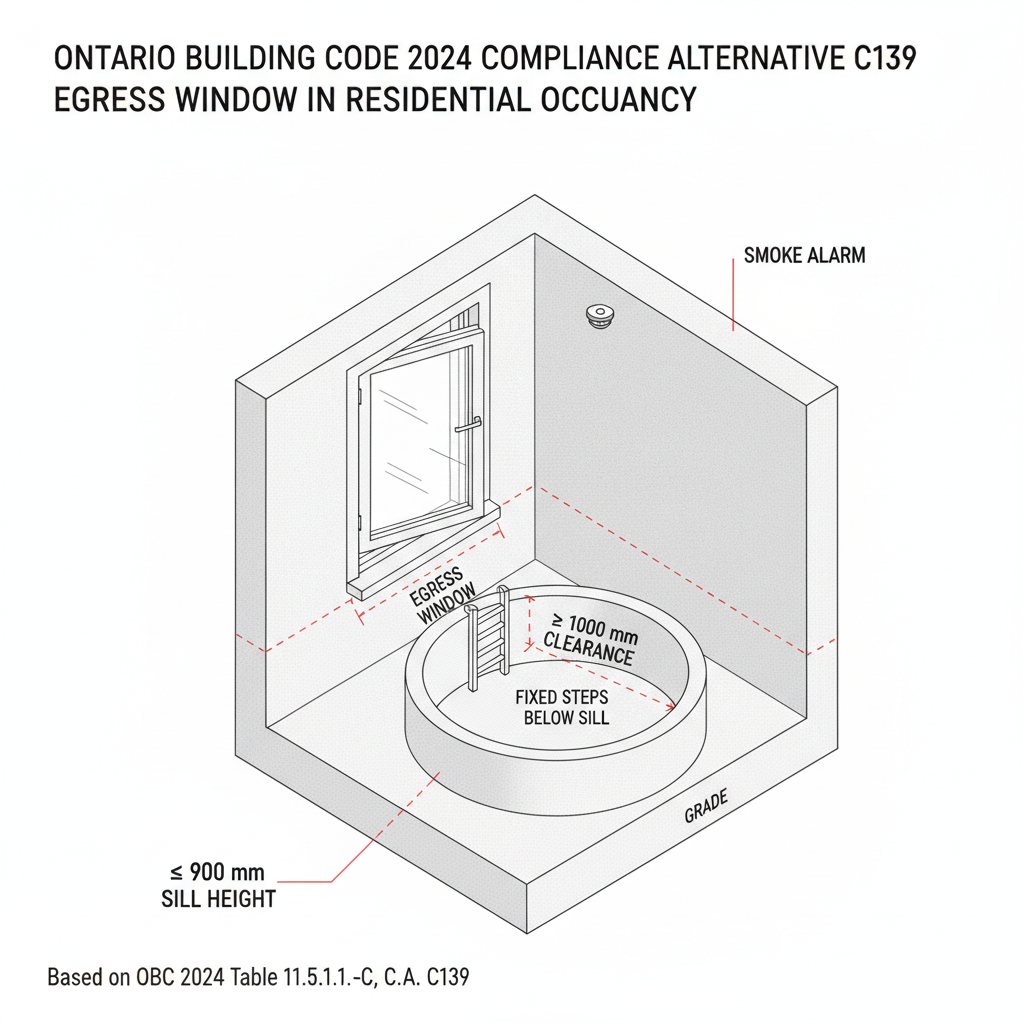
Egress Windows and Safety Requirements (C139 - C143)
The code outlines specific alternatives for emergency escapes in residential units:
- Sill Heights: Under C139, window sill heights should not exceed 900 mm above the floor or fixed steps to ensure safe exit.
- Window Wells: A minimum clearance of 1,000 mm is required in front of windows opening into wells.
- Secondary Suites: Requirements for exit signs and additional means of escape are often modified for single dwelling units or houses with secondary suites (C140-C143), provided direct exterior access is available.
- Smoke Alarms: Interconnected smoke alarms are mandatory in every dwelling unit and common area to utilize these compliance alternatives.
Fire-Resistance and Material Standards (C144 - C149)
Renovating older structures often involves dealing with "archaic" materials that do not have modern fire ratings. The OBC allows several alternatives:
- Archaic Materials: C146 permits fire-resistance ratings based on recognized guidelines like the HUD Rehabilitation Guidelines or DBR Technical Papers for masonry, steel, and light-framed assemblies.
- Noncombustible Construction: Assemblies required to be noncombustible may be supported by combustible construction, provided the support has an equivalent fire-resistance rating (C144).
- Heritage Buildings: Existing conditions in heritage buildings are often acceptable under C149, subject to the approval of the Chief Building Official (CBO).
Openings and Heavy Timber Construction
The code also provides leniency for existing openings in walls or ceilings (C147) and heavy timber construction (C148), provided they meet specific structural and fire-separation criteria during the renovation process.
Disclaimer: This content is generated from the Ontario Building Code for educational purposes. Always consult with a licensed professional engineer or your local building department before starting any construction project in London, Ontario.