2024 Ontario Building Code: Residential Renovation Compliance Alternatives in London
Sarah's Expert Insight
OBC Compliance Specialist
"These compliance alternatives are vital for homeowners in London and Oakville looking to add legal secondary suites or renovate older multi-unit dwellings without the prohibitive cost of replacing every door and duct. By utilizing C.A. C171 for shared HVAC systems, empcontracting.ca Inc. your construction contractor in London, Ontario, can help you maintain the architectural integrity of your property while meeting the highest safety standards through strategic smoke detection upgrades."
When renovating existing residential properties, navigating Part 11 of the Ontario Building Code (OBC) is essential for cost-effective and compliant construction. Table 11.5.1.1.-C provides critical Compliance Alternatives (C.A.) that allow for the retention of existing building elements in residential occupancies, provided specific safety conditions are met.
OBC Compliance for Doors and Fire Separations
Fire-Rated Doors and Glazing (C161 - C166)
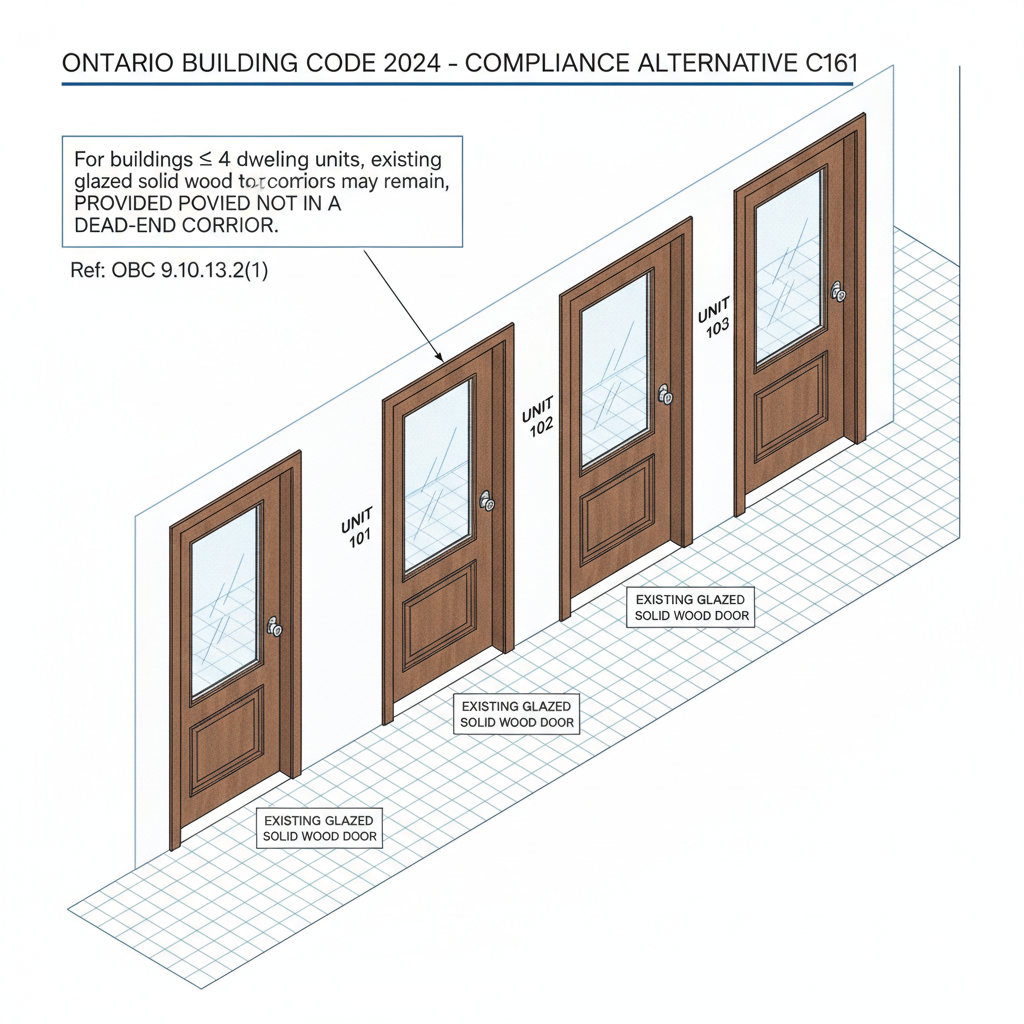
For buildings with no more than four dwelling units, existing glazed solid wood doors in corridors may be retained instead of installing new 20-minute fire-rated doors, provided they are not in dead-end corridors. Additionally, existing wired glass (at least 6mm thick) and transoms may remain if securely fixed to 50mm wood frames with steel stops. This is a significant benefit for heritage-style renovations managed by empcontracting.ca Inc. your construction contractor in London, Ontario.
Hardware and Frame Requirements (C167 - C170)
The code permits the use of existing steel door frames, glass blocks, and even existing door swings and operable latches. Functional self-closing devices and electromagnetic hold-open devices (except in hotels) are also acceptable compliance alternatives under this section of the 2024 Building Code Compendium.
HVAC and Secondary Suite Safety Standards
Shared Heating and Air-Conditioning (C171 - C174)
In small residential buildings (up to four units) or houses with secondary suites, the existing HVAC system can often be altered to serve multiple units. However, this is contingent upon the installation of smoke alarms in every dwelling unit and a specialized smoke detector in the supply or return air duct system. This detector must be configured to automatically shut off the fuel supply and electrical power to the heating system upon activation, ensuring smoke does not migrate between units during a fire.
Disclaimer: This content is generated from the Ontario Building Code for educational purposes. Always consult with a licensed professional engineer or your local building department before starting any construction project in London, Ontario.