Essential Guide to 2024 Ontario Building Code Functional Statements: Insights from empcontracting.ca Inc. your construction contractor in London, Ontario
Sarah's Expert Insight
OBC Compliance Specialist
"These functional statements serve as the foundational 'why' behind every regulation in the 2024 Ontario Building Code, ensuring that projects in areas like Muskoka can withstand heavy snow loads while urban builds in London prioritize acoustics and accessibility. As empcontracting.ca Inc. your construction contractor in London, Ontario, we leverage these objectives to mitigate risks during the design-build phase, ensuring your investment is not only compliant but built to endure the unique Ontario climate."
Understanding the 2024 Ontario Building Code Functional Statements
The Ontario Building Code (OBC) outlines specific functional statements that every construction project must meet to ensure safety, health, and structural integrity. At empcontracting.ca Inc. your construction contractor in London, Ontario, we prioritize these standards to deliver superior craftsmanship and full legal compliance.
Structural Integrity and Movement (F20–F23)
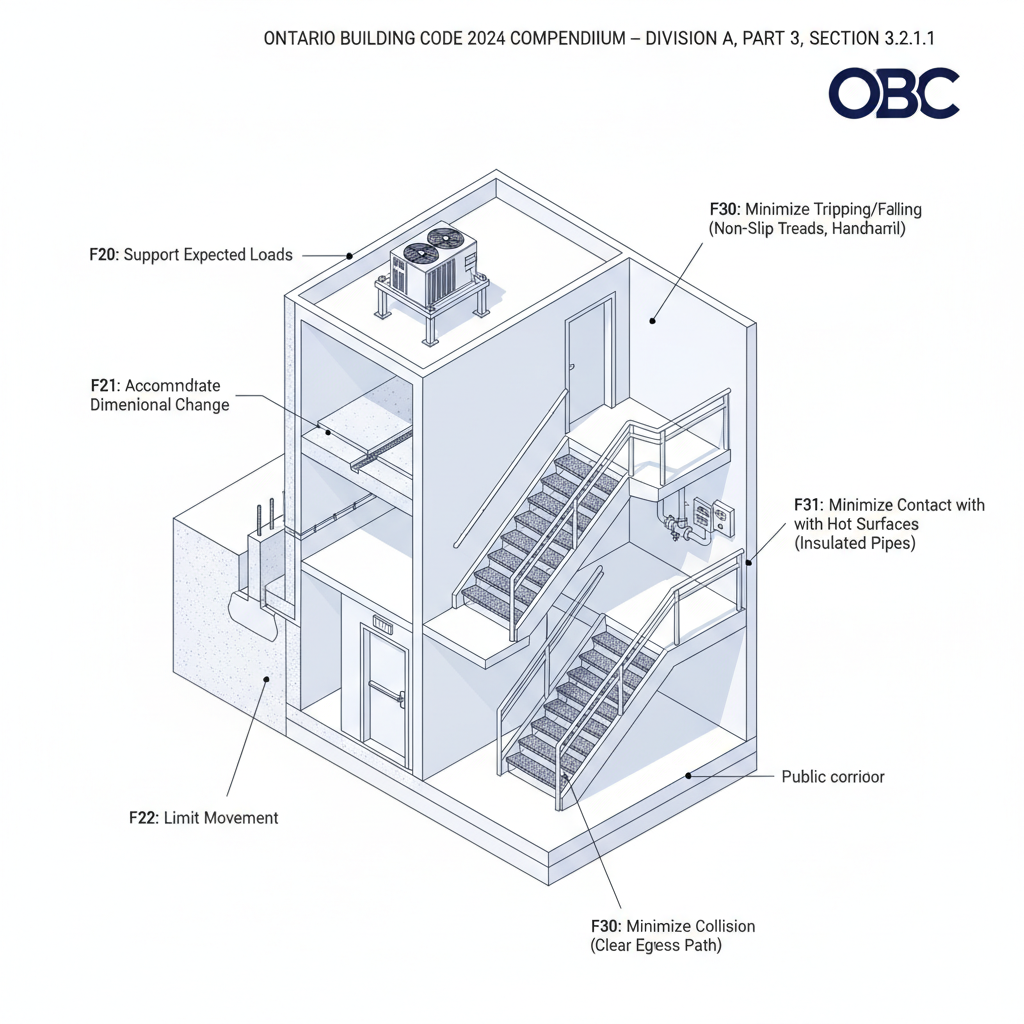
To ensure a building's longevity, it must support expected loads and forces while accommodating dimensional changes. This includes maintaining equipment placement during movement and limiting structural vibrations or displacements that could compromise the build.
Safety and Injury Prevention (F30–F36)
Public safety is paramount. The OBC mandates measures to minimize risks related to tripping, slipping, and falling. It also addresses contact with hot surfaces, energized equipment, and ensuring fire alarm audibility. Security and emergency egress (preventing persons from being trapped) are also critical functional requirements.
Contaminant Control and Health (F40–F46)
Ensuring indoor air quality and water safety involves limiting contaminants, resisting vermin, and preventing the spread of hazardous substances. Special attention is given to communal facilities and the protection of potable water systems from contamination.
Indoor Environmental Quality (F50–F56)
Functional statements F50 through F56 focus on creating a habitable environment. This includes providing breathable air, maintaining temperature and humidity, and limiting the transmission of sound between dwelling units—a crucial factor for multi-residential builds in London and Oakville.
Moisture and Water Protection (F60–F63)
Effective water management involves controlling groundwater pressure and resisting the ingress of precipitation. Our team ensures that buildings facilitate the dissipation of moisture to prevent condensation and structural rot.
Facilities, Accessibility, and Sanitation (F70–F74 & F110–F113)
Modern construction must be inclusive. This includes providing adequate hygiene facilities, sanitary waste disposal, and ensuring full accessibility for persons with physical or sensory limitations. Furthermore, sewage systems must be designed to treat effluent effectively without risking public health.
Durability and Maintenance (F80–F82)
A building must resist deterioration under expected service conditions. The code emphasizes the importance of design that minimizes the risk of malfunction or damage due to lack of maintenance.
Privacy and Visual Standards (F101–F102)
The OBC also considers occupant comfort by limiting unwanted visual exposure and ensuring access to outdoor views, which enhances the overall living experience in any Ontario community.
Disclaimer: This content is generated from the Ontario Building Code for educational purposes. Always consult with a licensed professional engineer or your local building department before starting any construction project in London, Ontario.