2024 Ontario Building Code Guide: Concrete, Fire Safety, and Cold Weather Standards for London Contractors
Sarah's Expert Insight
OBC Compliance Specialist
"As a senior consultant at empcontracting.ca Inc., I consistently find that improper management of Section 9.3.1.9 (Cold weather concrete) is the leading cause of foundation issues in London and Muskoka; local temperature swings require aggressive thermal protection strategies. By partnering with empcontracting.ca Inc. your construction contractor in London, Ontario, you are guaranteed that critical elements like column anchorage and fire-rated combustible cladding are executed to exceed 2024 OBC standards."
Understanding the complexities of the 2024 Ontario Building Code (OBC) is the first step toward a successful and compliant build. At empcontracting.ca Inc. your construction contractor in London, Ontario, we specialize in translating these technical requirements into high-quality structural reality.
Cold Weather Construction Requirements
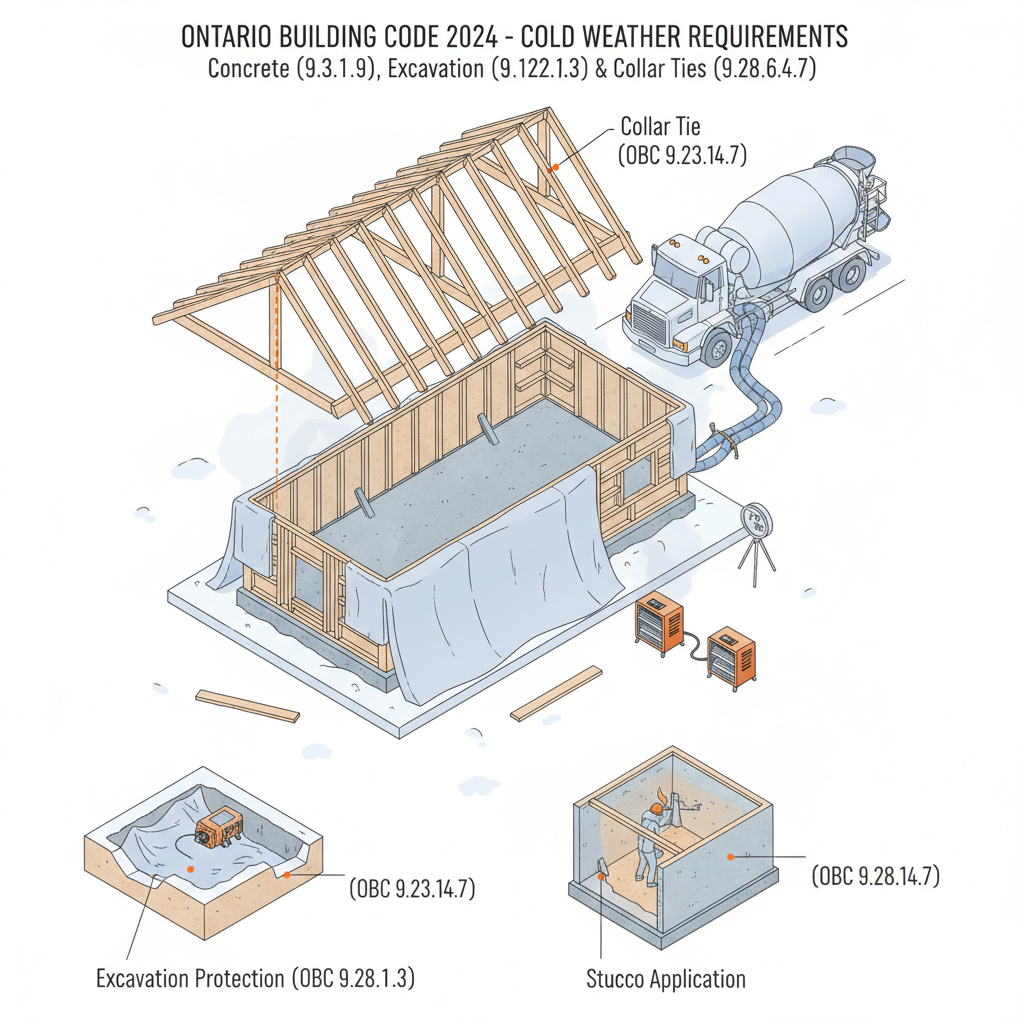
Working in the Ontario climate requires strict adherence to cold weather protocols to ensure the longevity of the structure. The OBC specifies requirements for various materials:
Critical Cold Weather Sections
- Concrete (9.3.1.9): Guidelines for pouring and curing in low temperatures to prevent structural weakness.
- Masonry (9.20.14) and Stucco (9.28.6.1): Protective measures to ensure proper bonding and prevent freezing during installation.
- Excavations (9.12.1.3): Preventing frost heave and managing soil stability during winter months.
Structural Support and Columns
Section 9.17 of the OBC provides the framework for columns in housing and small buildings, ensuring they can withstand both vertical and lateral loads.
Materials and Anchorage
- Wood and Steel Columns (9.17.3, 9.17.4): Requirements for lateral support and proper anchorage to concrete foundations.
- Garages and Carports (9.35.4.2): Enhanced anchorage standards to protect against wind uplift and shifting.
- Fire-Resistance (9.10.8.3): Necessary ratings for columns based on their location and building type.
Fire Safety and Combustible Materials
The distinction between combustible and non-combustible construction is a pillar of Ontario's fire safety strategy.
Cladding and Piping Standards
The code restricts the use of combustible cladding (3.1.5.5) and combustible piping (7.2.5.11) in specific building types. Fire-stopping in concealed spaces (3.1.11) and the use of fire-retardant treated wood (3.1.4.5) are critical for projects in high-density areas like Oakville and London.
Concrete Standards for Foundations and Slabs
From admixtures (9.3.1.8) to compressive strength (9.3.1.6), concrete must meet specific standards to be deemed compliant. This includes the use of insulating forms (9.15.4.1) and sulphate-resistant concrete (9.3.1.3) where soil conditions dictate, ensuring the foundation of your project is built to last.
Disclaimer: This content is generated from the Ontario Building Code for educational purposes. Always consult with a licensed professional engineer or your local building department before starting any construction project in London, Ontario.