OBC 2024 Guide: Fire Alarm System Requirements for Ontario Farm Buildings
Sarah's Expert Insight
OBC Compliance Specialist
"When upgrading agricultural facilities in the London, Oakville, or Muskoka regions, balancing high-decibel exterior alarms with animal-safe visual signals is a nuanced requirement of the 2024 OBC. At empcontracting.ca Inc. your construction contractor in London, Ontario, we specialize in integrating these complex fire safety systems to ensure your project meets all provincial standards while protecting your specific operational assets."
Understanding Fire Alarm Standards for Group G Occupancies
Compliance with the 2024 Ontario Building Code (OBC) is vital for agricultural and farm-related projects. Sections 2.2.3.2 through 2.2.3.7 outline the specific mandates for fire alarm systems in Group G major occupancies, ensuring the safety of personnel, livestock, and property.
Types and Design of Fire Alarm Systems
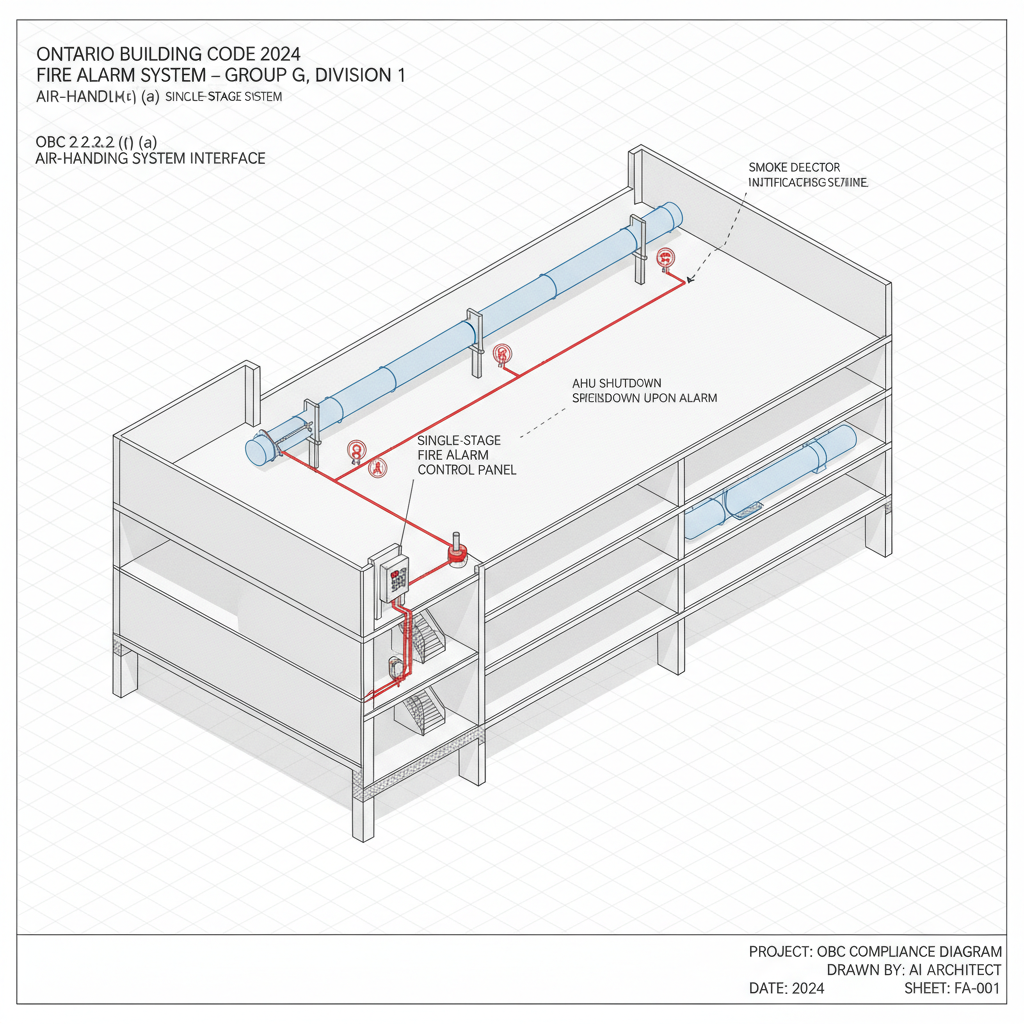
According to OBC 2.2.3.2, fire alarm systems must be tailored to the occupancy division. Group G, Division 1 buildings require a single-stage system, while Divisions 2 and 3 may utilize either single- or two-stage systems. Additionally, manual stations must be strategically installed near every exit, and air-handling systems serving multiple storeys must be designed to prevent smoke circulation upon detection.
Audible and Visual Signaling Requirements
One of the most distinct features of farm building codes is Section 2.2.3.4. While exterior audible signals must reach at least 110 dBA, there are specific provisions for animal welfare. In areas where animals are present, loud audible signals may be omitted provided that visible signal devices (strobes) are installed. This ensures compliance without causing undue distress to livestock in the London or Muskoka agricultural sectors.
Fire Detection and Sprinkler Integration
Section 2.2.3.7 mandates that fire detectors be installed throughout the farm building and connected to the central fire alarm system. However, an exemption exists for floor areas that are fully sprinklered. When sprinklers are provided, they must be electrically supervised to provide immediate status updates to the fire alarm annunciator.
Alarm Silencing and Electrical Supervision
To prevent premature deactivation, OBC 2.2.3.5 dictates that alarm signals cannot be automatically silenced for at least 20 minutes. Manual silencing is restricted to switches located strictly within the fire alarm control unit, ensuring that emergency protocols are followed by authorized personnel only.
Disclaimer: This content is generated from the Ontario Building Code for educational purposes. Always consult with a licensed professional engineer or your local building department before starting any construction project in London, Ontario.