2024 Ontario Building Code: Expert Guide to Major Occupancy Fire Separations
Sarah's Expert Insight
OBC Compliance Specialist
"In rapidly growing areas like London, Oakville, and Muskoka, mixed-use developments are becoming the norm, making Table 3.1.3.1 the most critical reference for project feasibility. At empcontracting.ca Inc. your construction contractor in London, Ontario, we emphasize that miscalculating a fire separation rating—such as the 2-hour requirement for specific Group C and A-2 combinations—can result in devastating budget overruns during the inspection phase."
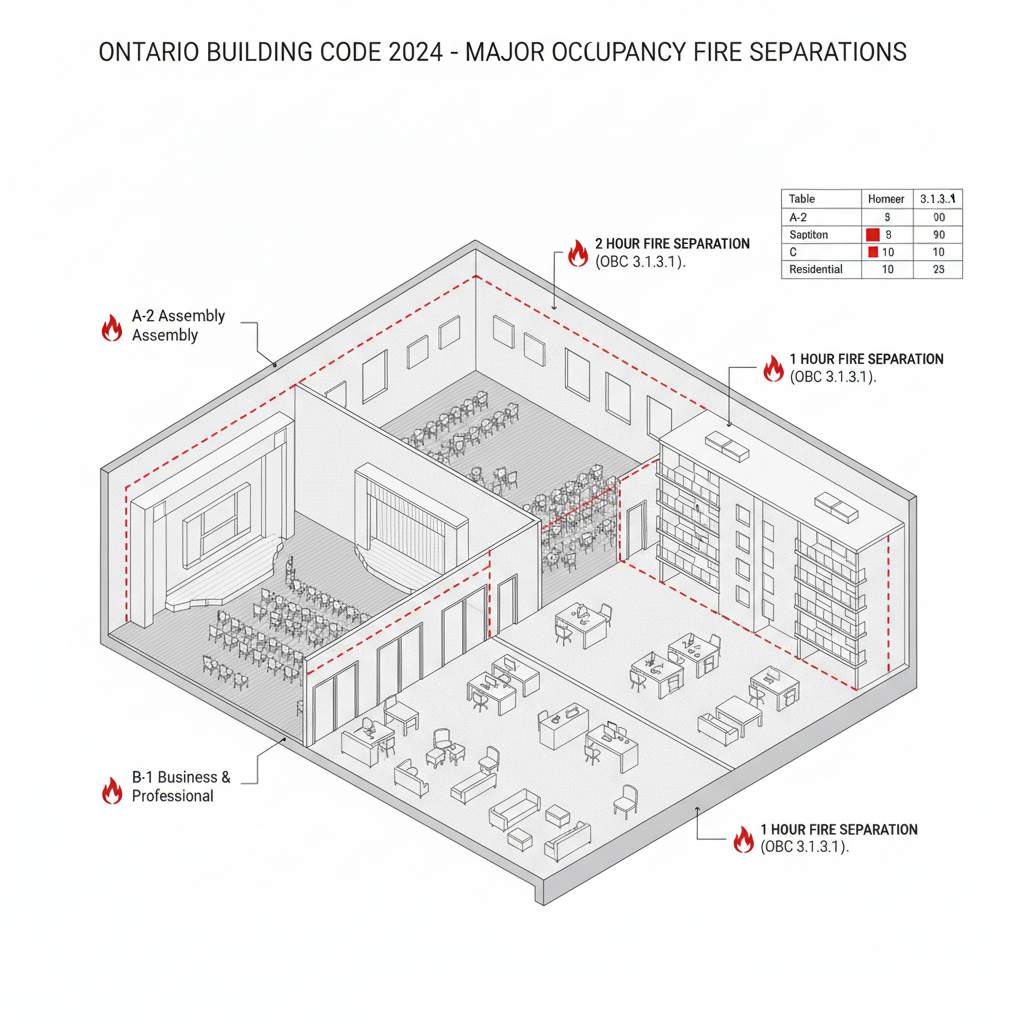
In the 2024 Ontario Building Code (OBC) Compendium, Table 3.1.3.1 establishes the critical safety standard for fire-resistance ratings between adjoining major occupancies. Ensuring your project meets these standards is essential for legal compliance and occupant safety in modern Ontario developments.
Understanding OBC Table 3.1.3.1: Fire-Resistance Ratings
Table 3.1.3.1 dictates the minimum fire-resistance rating (measured in hours) required to separate different building uses. For example, separating a Group C (Residential) occupancy from a Group A-1 (Assembly) occupancy requires a specific firewall performance to prevent the spread of fire. empcontracting.ca Inc. your construction contractor in London, Ontario, ensures that these barriers are correctly implemented during the framing and drywall phases of construction.
Prohibited Occupancy Combinations and Limitations
Section 3.1.3.2 of the OBC clearly defines which occupancies cannot coexist within the same structure. Most notably, High-hazard industrial occupancies (Group F, Division 1) are strictly prohibited from being contained within buildings that house Assembly (Group A), Care (Group B), or Residential (Group C) uses. This is a fundamental rule for developers in areas like London and Oakville to consider during the site selection and feasibility stages.
The Impact of Residential Suites in Industrial Zones
OBC 3.1.3.2.(2) limits residential suites within Group F, Division 2 (Medium-hazard industrial) buildings to no more than one, except under specific conditions. Furthermore, the code mandates that sleeping areas must not open directly into food preparation or storage areas (3.1.3.2.(3)), a detail that is often overlooked in boutique live-work conversions.
Why Fire Separation Compliance Matters
Failure to adhere to these fire-resistance ratings can lead to failed inspections, increased insurance premiums, and potential life-safety hazards. Whether you are building a commercial warehouse or a multi-unit residential property, empcontracting.ca Inc. your construction contractor in London, Ontario provides the expertise needed to navigate these complex 2024 code updates.
Disclaimer: This content is generated from the Ontario Building Code for educational purposes. Always consult with a licensed professional engineer or your local building department before starting any construction project in London, Ontario.