2024 Ontario Building Code: Essential Guide to Cladding and Noncombustible Construction
Sarah's Expert Insight
OBC Compliance Specialist
"Meeting the 90% noncombustible cladding threshold is a critical compliance hurdle for mid-rise developments in London and Oakville. As your senior consultant at empcontracting.ca Inc. your construction contractor in London, Ontario, I advise clients that even minor combustible components like sealants must be strictly vetted against ULC S135 standards to ensure the integrity of the building envelope and pass municipal inspections in regions like Muskoka."
Understanding OBC Section 3.1.4.8: Exterior Cladding Requirements
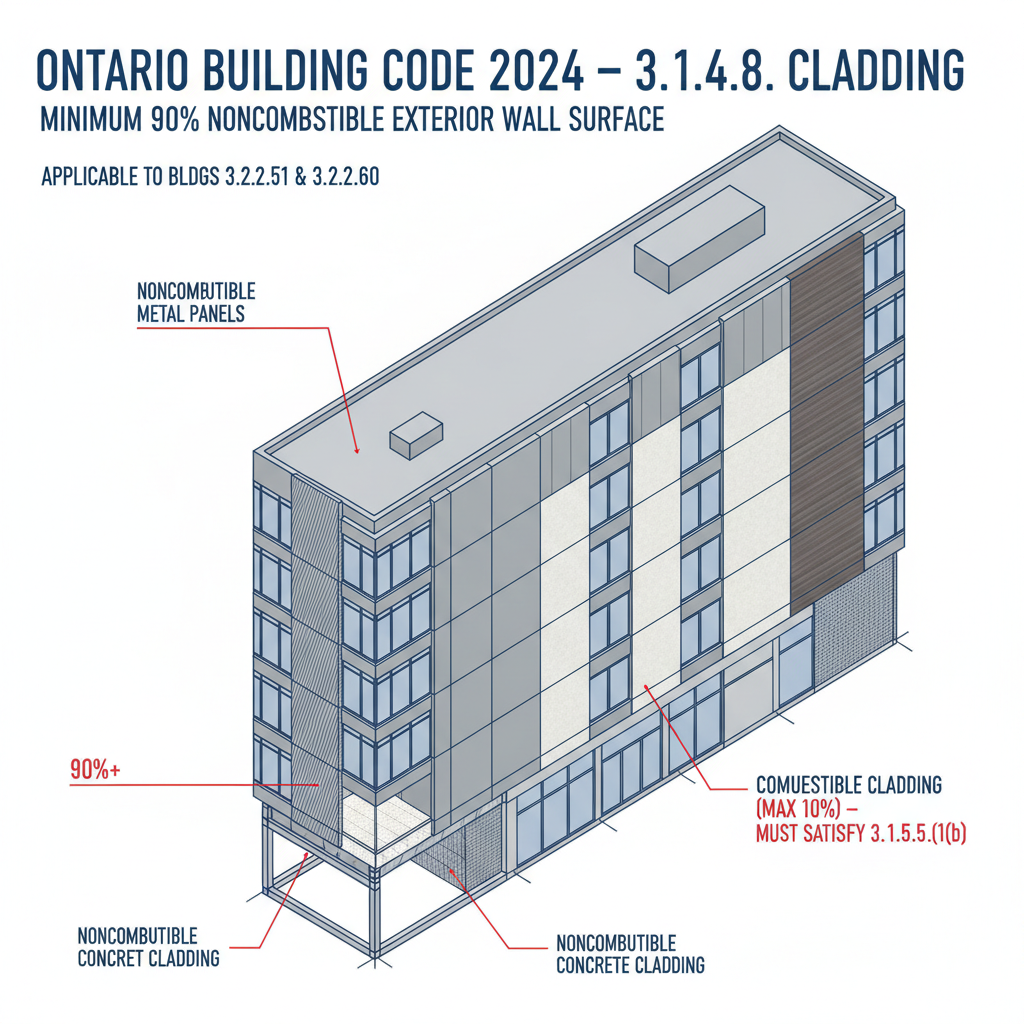
The 2024 Building Code Compendium mandates strict fire safety standards for exterior finishes. According to Article 3.1.4.8., at least 90% of exterior cladding on specific buildings must be noncombustible or meet stringent wall assembly criteria under Clause 3.1.5.5.(1)(b). This ensures that modern structures maintained by empcontracting.ca Inc. your construction contractor in London, Ontario, provide maximum fire resistance.
Fire-Retardant-Treated Wood and Weathering
When using combustible cladding treated with fire-retardants, the OBC requires testing under ASTM D2898 for accelerated weathering. This ensures that the fire protection does not degrade over time due to Ontario's diverse climate. Alternatively, assemblies meeting MMAH Supplementary Standard SB-2 are deemed compliant.
Section 3.1.5: Noncombustible Construction Standards
Buildings required to be of noncombustible construction must primarily use materials that do not support combustion. However, the code provides a pathway for innovative materials through ULC S135 testing.
ULC S135 Testing and Heat Release Criteria
A material may be permitted in noncombustible construction if it meets specific heat flux and smoke extinction parameters:
- Average total heat release must not exceed 3 MJ/m².
- Average total smoke extinction area must not exceed 1.0 m².
- Testing must be conducted at a heat flux of 50 kW/m².
Allowed Minor Combustible Components
Article 3.1.5.2. identifies exceptions for minor components in noncombustible buildings, including:
- Interior and exterior paint.
- Self-adhesive tapes and mastics.
- Caulking materials and foamed plastic air sealants for exterior wall seals.
Disclaimer: This content is generated from the Ontario Building Code for educational purposes. Always consult with a licensed professional engineer or your local building department before starting any construction project in London, Ontario.