Ontario Building Code 3.1.5.7 & 3.1.5.8: Noncombustible Construction Standards | London, Ontario
Sarah's Expert Insight
OBC Compliance Specialist
"For my clients in London, Oakville, and Muskoka, navigating the requirements for insulated panels is a critical path for commercial cold storage and food processing projects. At empcontracting.ca Inc. your construction contractor in London, Ontario, we emphasize that verifying the CAN/ULC-S138 test data early in the design phase is essential to avoid costly permit delays and ensure occupant safety."
Understanding the 2024 Ontario Building Code (OBC) is vital for maintaining compliance in industrial and commercial developments. At empcontracting.ca Inc. your construction contractor in London, Ontario, we ensure that every assembly, from insulation panels to interior finishes, aligns with provincial safety regulations.
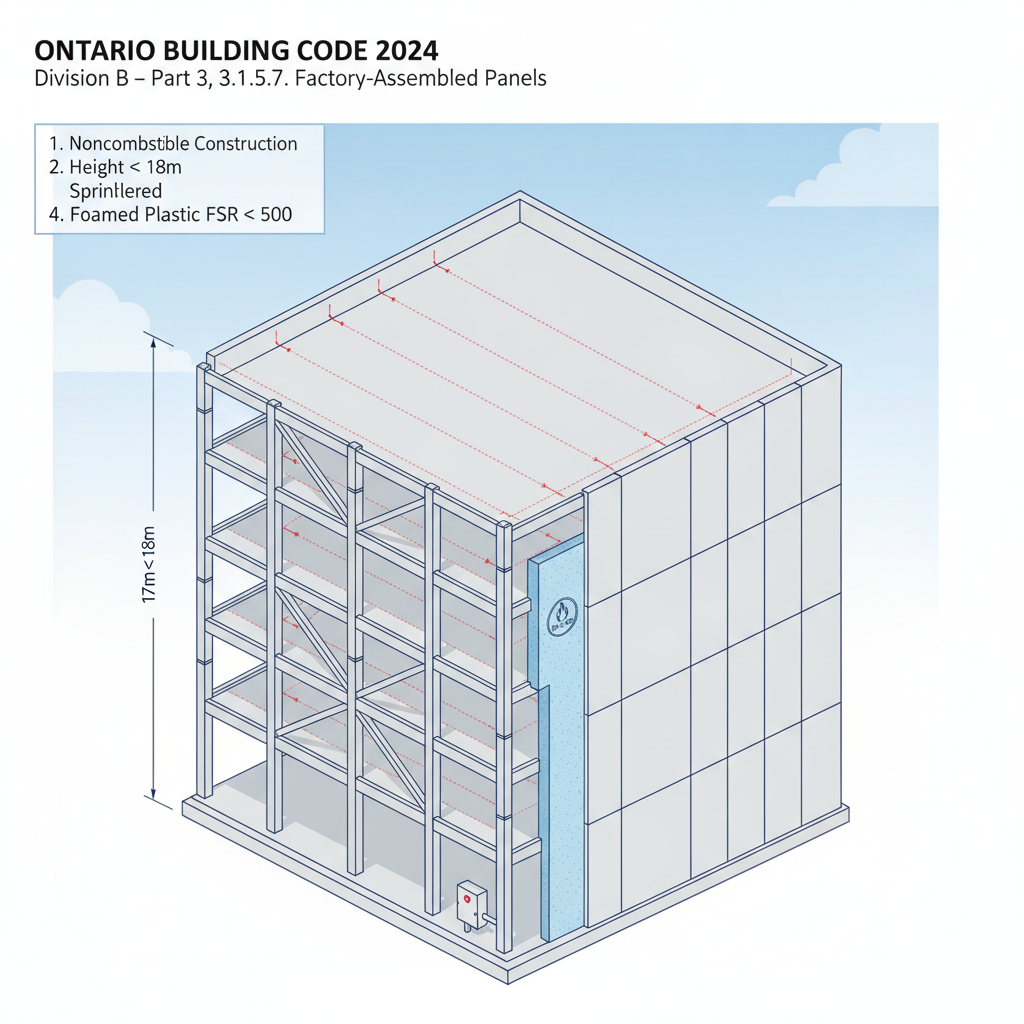
3.1.5.7. Factory-Assembled Panels and Foamed Plastic Insulation
In buildings required to be of noncombustible construction, the use of factory-assembled wall and ceiling panels containing foamed plastic insulation is strictly regulated. Under OBC 3.1.5.7., these panels are permitted if the building is sprinklered, under 18 meters in height, and does not house Group A, B, or C major occupancies.
Panel Testing and Fire Safety Standards
- Flame-Spread Ratings: Panels must not exceed a flame-spread rating of 500 and must meet the criteria of CAN/ULC-S138 for fire growth in full-scale room configurations.
- Assembly Integrity: Exterior wall panels containing thermosetting foamed plastic must be protected by sheet steel at least 0.38 mm thick and demonstrate at least 10 minutes of fire endurance when tested under CAN/ULC-S101.
Regulations for Walk-in Coolers and Freezers
For cold storage applications, panels must be protected on both sides by sheet metal with a melting point of at least 650°C. These assemblies must not contain air spaces and must be tested to ensure the flame-spread rating is appropriate for the surrounding space.
3.1.5.8. Wood Nailing Elements
The code allows for wood nailing elements to be attached to noncombustible backing for the installation of interior finishes. However, to minimize fire risk in concealed voids, the space created by these wood elements must not exceed 50 mm in thickness.
For expert guidance on these technical requirements, trust empcontracting.ca Inc. your construction contractor in London, Ontario to manage your next noncombustible build with precision.
Disclaimer: This content is generated from the Ontario Building Code for educational purposes. Always consult with a licensed professional engineer or your local building department before starting any construction project in London, Ontario.