OBC 3.1.5.9-14: Guide to Combustible Materials in Noncombustible Buildings | empcontracting.ca Inc.
Sarah's Expert Insight
OBC Compliance Specialist
"Understanding these specific exemptions for combustible millwork and finishes is vital for high-rise residential projects in London and Oakville, where clients often desire the warmth of wood within a noncombustible concrete shell. At empcontracting.ca Inc., we ensure that every cabinet, floor, and trim detail meets these flame-spread requirements, particularly in the Muskoka region where luxury interiors must be balanced with rigorous fire safety standards."
Understanding the balance between safety and aesthetics is crucial for modern developments. As empcontracting.ca Inc. your construction contractor in London, Ontario, we specialize in navigating the 2024 Ontario Building Code (OBC) to ensure your project is both compliant and beautifully finished.
3.1.5.9. Combustible Millwork and Trim
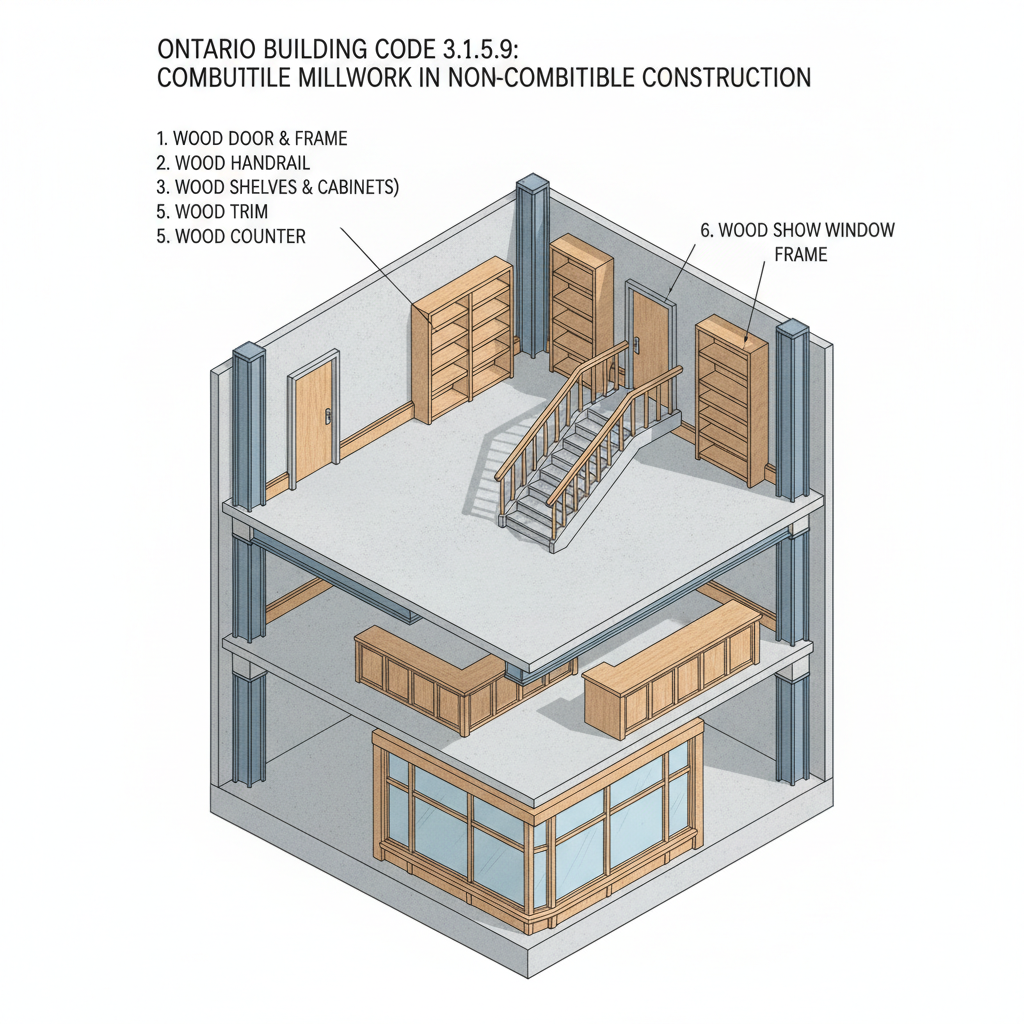
In buildings required to be of noncombustible construction, the OBC permits the use of certain combustible elements. This includes interior trim, doors, door frames, cabinets, counters, and shelving. This allowance ensures that high-quality wood finishes can still be integrated into modern commercial and multi-residential structures.
3.1.5.10. Combustible Flooring and Platforms
Combustible flooring elements are permitted under specific conditions within noncombustible buildings:
- Stage Flooring: Permitted when supported by noncombustible structural members.
- Raised Platforms: Wood members between 50 mm and 300 mm high are allowed if applied to noncombustible slabs, provided concealed spaces are protected by fire blocks.
- Finished Flooring: Combustible finished flooring and subfloors are generally permitted throughout the building.
3.1.5.12. Interior Finishes and Flame-Spread Ratings
Wall and Ceiling Constraints
Combustible interior finishes (excluding foamed plastics) that are up to 25 mm thick are permitted provided they meet strict Flame-Spread Ratings (FSR):
- Wall Finishes: Must have an FSR not exceeding 150.
- Ceiling Finishes: Must have an FSR not exceeding 25, though 10% of the area may reach an FSR of 150.
- Fire-Retardant Wood: Ceiling finishes made of fire-retardant-treated wood are also permitted.
3.1.5.13. Gypsum Board Requirements
Gypsum board is a staple in noncombustible construction. To remain compliant, the paper covering must not exceed 1 mm in thickness, and the surface must maintain a flame-spread rating of 25 or less.
Disclaimer: This content is generated from the Ontario Building Code for educational purposes. Always consult with a licensed professional engineer or your local building department before starting any construction project in London, Ontario.