OBC 2024 Guide: Noncombustible Construction Requirements for Pipes, Fixtures, and Cables
Sarah's Expert Insight
OBC Compliance Specialist
"Navigating fire-safety ratings like FT4 and FT6 is critical for institutional projects in London and Oakville to ensure laboratory or healthcare facilities remain compliant with the 2024 OBC. At empcontracting.ca Inc. your construction contractor in London, Ontario, we emphasize that correct fire-stopping and raceway selection during the early stages of a build prevents costly retrofits and ensures rigorous life-safety performance."
Understanding Noncombustible Construction Requirements (OBC Part 3)
For large-scale commercial and institutional builds in Ontario, adhering to the 2024 Building Code Compendium is essential for safety and compliance. When working with noncombustible construction, specific materials like polypropylene pipes, combustible plumbing fixtures, and electrical wiring must meet rigorous fire-safety standards.
Polypropylene Pipes and Specialized Facilities
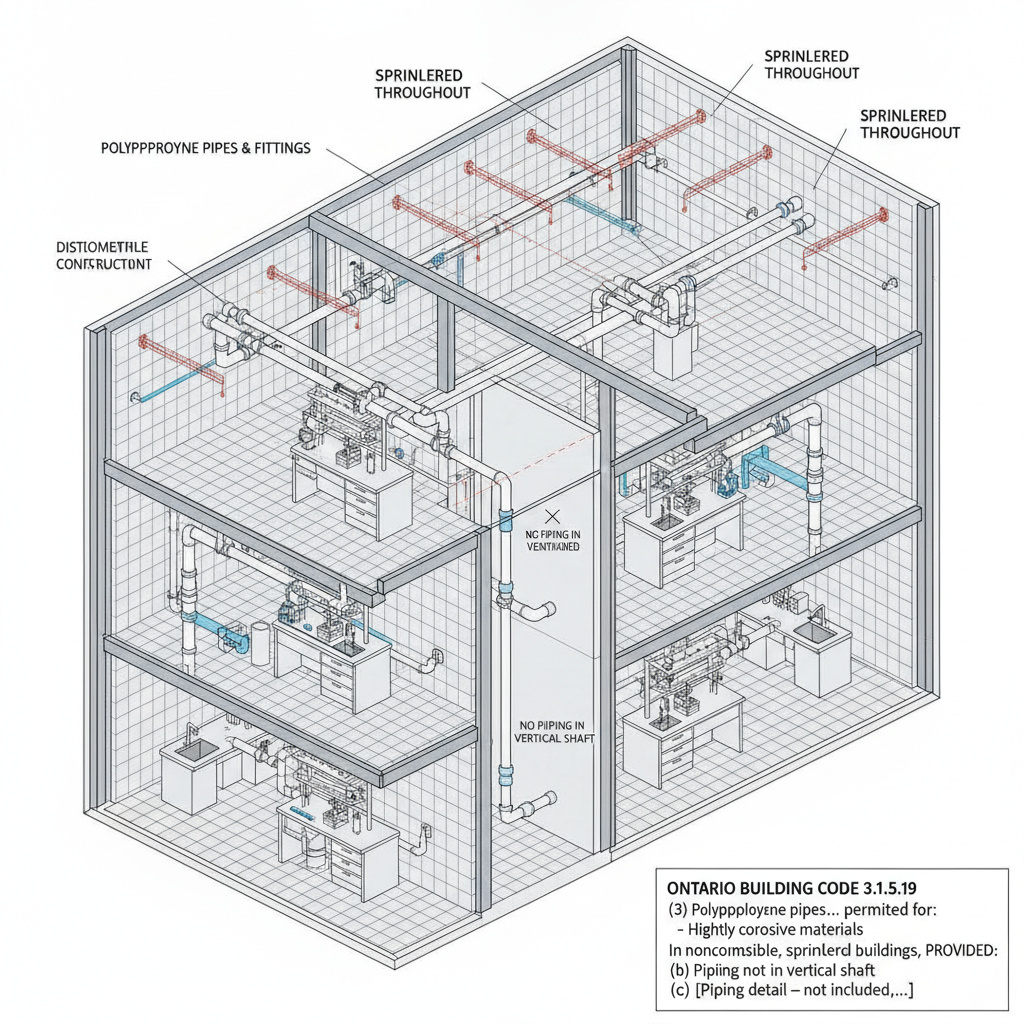
Under Section 3.1.5.19, polypropylene pipes and fittings are permitted for drain, waste, and vent systems carrying corrosive materials, as well as for distilled water distribution in laboratories and hospitals. However, strict conditions apply:
- The building must be fully sprinklered.
- Piping cannot be located within a vertical shaft.
- Penetrations through fire separations must be sealed with a firestop having an FT rating compliant with CAN/ULC-S115.
Combustible Plumbing Fixtures and Enclosures
According to Section 3.1.5.20, combustible plumbing fixtures, including wall and ceiling enclosures, are allowed in noncombustible buildings provided their flame-spread rating and smoke-developed classification do not exceed the limits permitted for the room's wall surfaces. This ensures that interior finishes do not contribute disproportionately to fire hazards.
Electrical Wires, Cables, and Fire Safety Ratings
Section 3.1.5.21 outlines the requirements for optical fibre and electrical cables. To mitigate fire risks, these components must generally meet the FT4 rating (vertical flame test) or be enclosed in noncombustible raceways, masonry, or concrete. In plenum spaces, cables often require an FT6 rating (horizontal flame and smoke density test) unless they are dedicated fire alarm signal wires or protected by specific raceways. For expert implementation of these standards, trust empcontracting.ca Inc. your construction contractor in London, Ontario.
Disclaimer: This content is generated from the Ontario Building Code for educational purposes. Always consult with a licensed professional engineer or your local building department before starting any construction project in London, Ontario.