OBC 2024 Guide: Fire Blocking and Flame-Spread Ratings in London, Ontario
Sarah's Expert Insight
OBC Compliance Specialist
"Mastering the nuances of fire blocking in double-stud walls and combustible roof systems is vital for the high-density residential developments we see in London and the custom luxury builds in Muskoka. At empcontracting.ca Inc. your construction contractor in London, Ontario, we prioritize CAN/ULC-S102 compliance to ensure that fire safety is baked into the structural DNA of every project we manage."
Understanding the complexities of the 2024 Ontario Building Code (OBC) is vital for any large-scale residential or commercial project. At empcontracting.ca Inc. your construction contractor in London, Ontario, we ensure that every combustible construction assembly adheres to the strictest fire safety protocols.
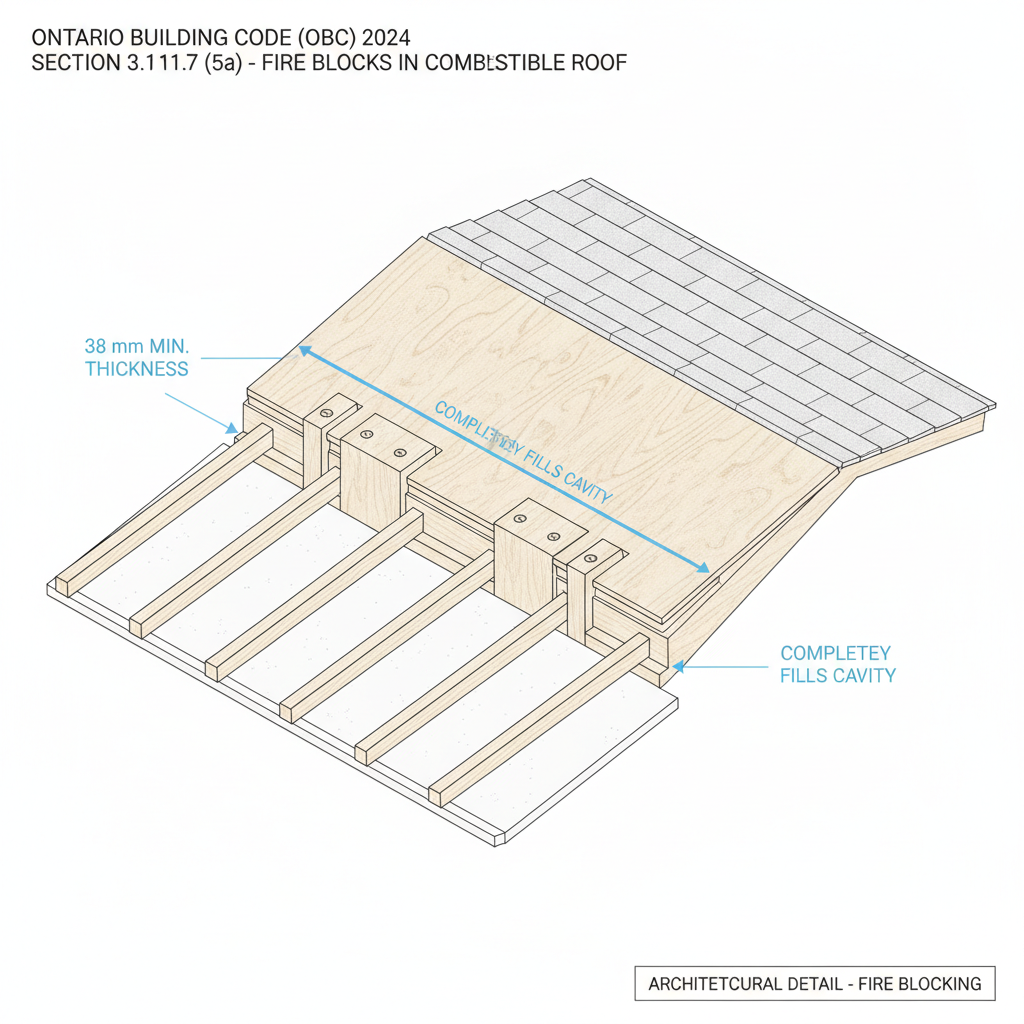
Section 3.1.11.7: Fire Blocking Requirements
Fire blocking is essential to prevent the rapid spread of flames within concealed spaces. For buildings permitted to be of combustible construction, the code identifies specific materials and methods to seal these cavities.
Permitted Fire Blocking Materials
- Solid Lumber: Must be at least 38 mm thick or a structural composite lumber product conforming to ASTM D5456.
- Sheet Materials: Phenolic bonded plywood, OSB, or waferboard at least 12.5 mm thick with supported joints.
- Layered Lumber: Two thicknesses of 19 mm lumber with staggered joints can be used in larger concealed spaces.
Integrity and Service Penetrations
The integrity of fire blocks must never be compromised. If service equipment or construction elements penetrate these barriers, the OBC requires a firestop to be used to seal the penetration effectively. This ensures that the fire safety rating of the assembly remains intact.
Double Stud Wall Assemblies
Specific allowances are made for double stud walls. Semi-rigid fibre insulation (glass, rock, or slag) with a density of at least 45 kg/m³ can be used to block vertical spaces, provided it is securely fastened and fills the cavity between headers and plates.
Section 3.1.12: Flame-Spread and Smoke Developed Classification
Materials used in construction must be tested for how they contribute to fire growth and smoke production.
Standardized Testing Procedures
Ratings must generally be determined based on three tests conducted in accordance with CAN/ULC-S102. For materials intended for horizontal use or thermoplastics, the CAN/ULC-S102.2 standard is applied to ensure accurate surface burning characteristics.
MMAH Supplementary Standards
Alternatively, the code allows for fire performance ratings to be assigned based on the MMAH Supplementary Standard SB-2, providing a reliable baseline for traditional building materials.
Disclaimer: This content is generated from the Ontario Building Code for educational purposes. Always consult with a licensed professional engineer or your local building department before starting any construction project in London, Ontario.