2024 Ontario Building Code: Flame-Spread Ratings for Interior Finishes in London Construction
Sarah's Expert Insight
OBC Compliance Specialist
"As a senior consultant at empcontracting.ca Inc., your construction contractor in London, Ontario, I cannot overstate the importance of the 10% area exception for designers aiming for high-end wood finishes in Oakville offices or Muskoka retreats. Navigating the corridor flame-spread requirements (OBC 3.1.13.6) is particularly vital for our institutional clients in London to ensure that safety never compromises the functionality of public thoroughfares."
Understanding the complexities of the 2024 Ontario Building Code (OBC) is essential for any successful commercial or residential development. At empcontracting.ca Inc. your construction contractor in London, Ontario, we prioritize fire safety compliance to ensure your project meets all regulatory standards.
Flame-Spread Rating Exceptions for Walls and Ceilings
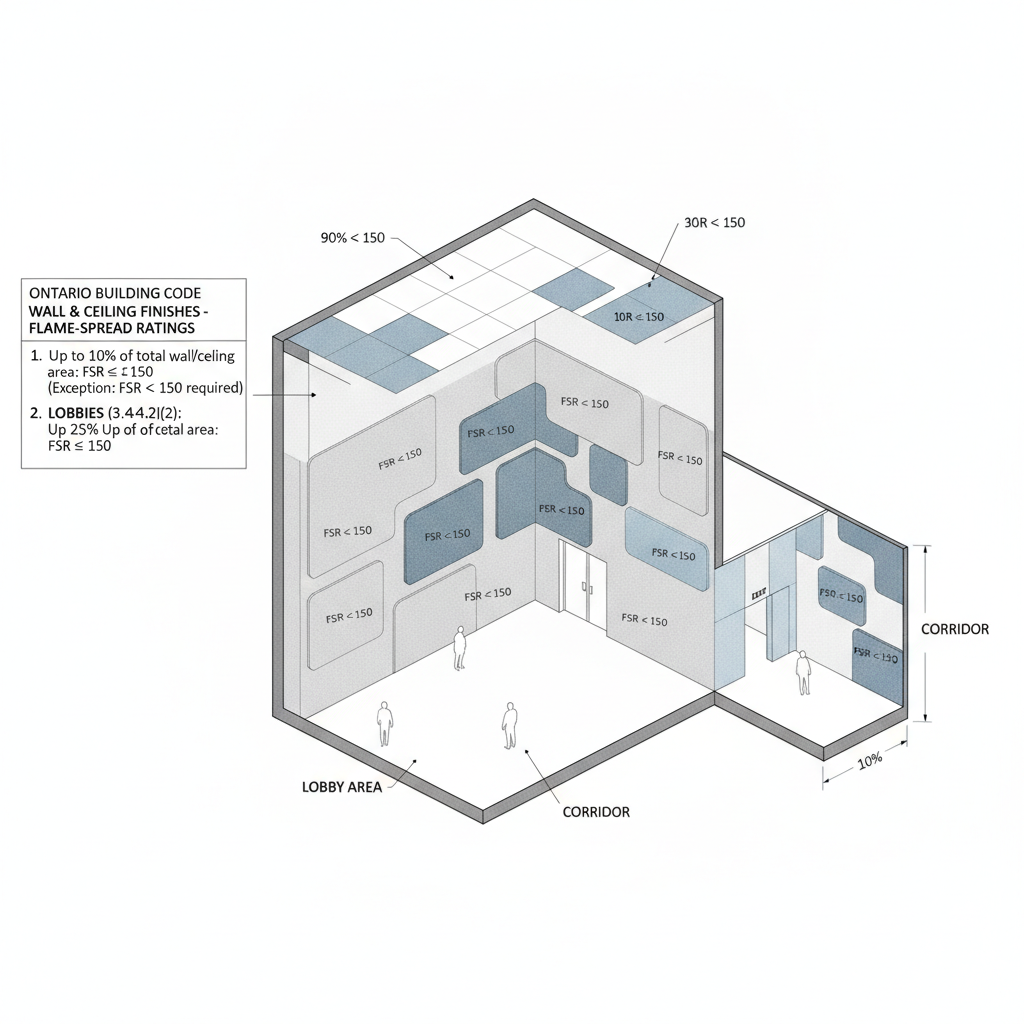
According to OBC 3.1.13.2, there are specific allowances for wall and ceiling finishes that do not meet the standard flame-spread ratings. Generally, up to 10% of the total wall and ceiling area is permitted to have a flame-spread rating of up to 150. However, for specific lobbies, this allowance increases to 25% of the total wall area, providing more flexibility for architectural finishes.
Occupancy Considerations
Except for Group A, Division 1 occupancies, items such as combustible doors, skylights, and light diffusers are excluded from these area calculations, allowing for greater design freedom in most building types.
Flame-Spread Standards for Residential Bathrooms
For residential suites, the OBC 3.1.13.3 mandates that interior wall and ceiling finishes in bathrooms must have a flame-spread rating not exceeding 200. This standard also extends to plumbing fixtures, ensuring a consistent level of fire protection within private living spaces.
Regulations for Light Diffusers, Lenses, and Skylights
Subsection 3.1.13.4 and 3.1.13.5 outline strict criteria for combustible elements in ceilings:
- Light Diffusers: Must have a flame-spread rating under 250 and a smoke-developed classification under 600. They must be designed to fall from the ceiling before igniting.
- Skylights: In protected corridors, individual combustible skylights are restricted to a maximum area of 1 m² and must be spaced at least 1.2 m apart.
Critical Requirements for Public Corridors
Corridors in assembly, care, or detention occupancies face the most stringent requirements. Generally, the interior wall finish must have a flame-spread rating of 75 or less.
Sprinkler System Impact on Ratings
If a floor area is fully sprinklered, the code allows for a higher flame-spread rating of up to 150 for corridor walls. This highlights the importance of integrated fire suppression systems in modern Ontario construction projects managed by empcontracting.ca Inc. your construction contractor in London, Ontario.
Disclaimer: This content is generated from the Ontario Building Code for educational purposes. Always consult with a licensed professional engineer or your local building department before starting any construction project in London, Ontario.