Understanding OBC 3.2.2.81: Group F Division 2 Building Requirements in Ontario
Sarah's Expert Insight
OBC Compliance Specialist
"In my experience with industrial builds in London, Oakville, and Muskoka, the transition between 3.2.2.80 and 3.2.2.81 is a critical design pivot where sprinkler installation often pays for itself by allowing larger building areas and more flexible material choices. As the lead at empcontracting.ca Inc. your construction contractor in London, Ontario, I emphasize that ensuring loadbearing walls match the fire-resistance rating of the assemblies they support is the most common oversight during the framing stage."
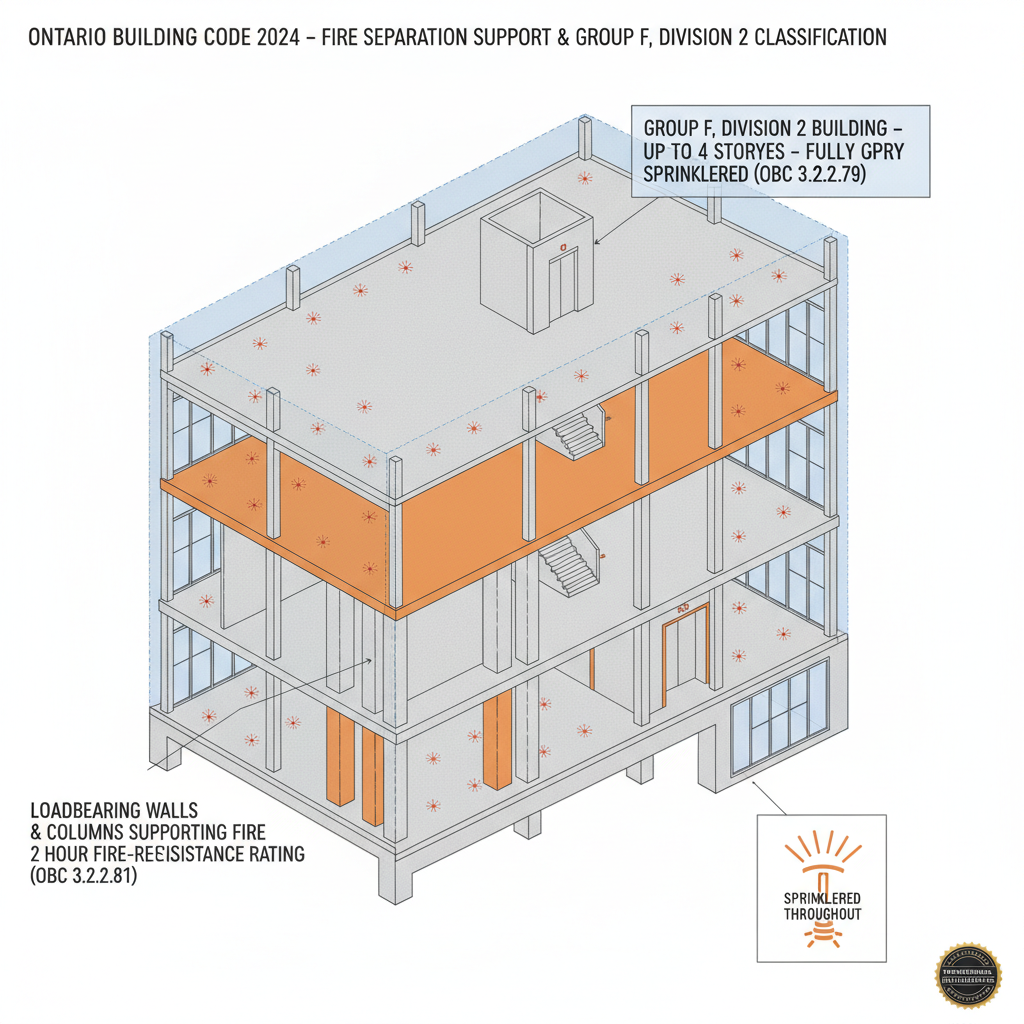
Navigating the 2024 Ontario Building Code (OBC) is essential for any industrial development. Section 3.2.2.81 specifically addresses Group F, Division 2 buildings—classified as medium-hazard industrial occupancies—that are up to two storeys in height and equipped with a sprinkler system. Partnering with empcontracting.ca Inc. your construction contractor in London, Ontario, ensures these technical safety standards are met with precision.
Classification and Sprinkler Requirements
For a building to conform to Section 3.2.2.81, it must be sprinklered throughout (with limited exceptions under specific sentences like 3.2.2.7.(1)). This classification allows for specific flexibilities in construction materials, provided the safety systems are robust enough to mitigate the medium-hazard risks associated with Division 2 industrial activities.
Building Height and Area Limitations
Under this code section, the building is limited to a maximum height of 2 storeys. While the provided text fragment for 3.2.2.81 is part of a larger table-driven system, these buildings are typically granted larger floor areas than their non-sprinklered counterparts (such as those under 3.2.2.80) because the inclusion of an automatic fire suppression system significantly reduces the rate of fire spread.
Fire-Resistance Ratings and Structural Integrity
The structural components of these buildings must adhere to strict fire-resistance protocols:
- Construction Type: The building may be of combustible construction, noncombustible construction, or a combination thereof.
- Floor Assemblies: Must act as fire separations with specific fire-resistance ratings to prevent vertical fire migration.
- Loadbearing Elements: Any walls, columns, or arches supporting an assembly that requires a fire-resistance rating must themselves maintain that rating (typically 45 minutes or more) or be constructed of noncombustible materials.
Ensuring Compliance in Industrial Construction
Compliance with Part 3 of the OBC is not just about legal adherence; it is about the structural longevity and safety of your facility. Whether you are expanding a warehouse or building a new manufacturing plant, empcontracting.ca Inc. your construction contractor in London, Ontario, provides the expertise needed to navigate these complex fire-safety requirements.
Disclaimer: This content is generated from the Ontario Building Code for educational purposes. Always consult with a licensed professional engineer or your local building department before starting any construction project in London, Ontario.