Ontario Building Code 2024: Fire Alarms and Underground Safety in London, Ontario
Sarah's Expert Insight
OBC Compliance Specialist
"Understanding the nuanced triggers for fire alarm systems is essential for commercial developers in London and the Muskoka region, especially when balancing occupant load against sprinkler requirements. At empcontracting.ca Inc., we provide the technical oversight necessary to integrate these fire safety and gas line encasement measures seamlessly into your project's architectural design to avoid costly retrofits."
Navigating the 2024 Ontario Building Code (OBC) requires a precise understanding of life safety systems and structural requirements. As empcontracting.ca Inc. your construction contractor in London, Ontario, we prioritize compliance with Part 3 requirements to ensure every build is safe, legal, and built to last.
Regulations for Underground Walkways
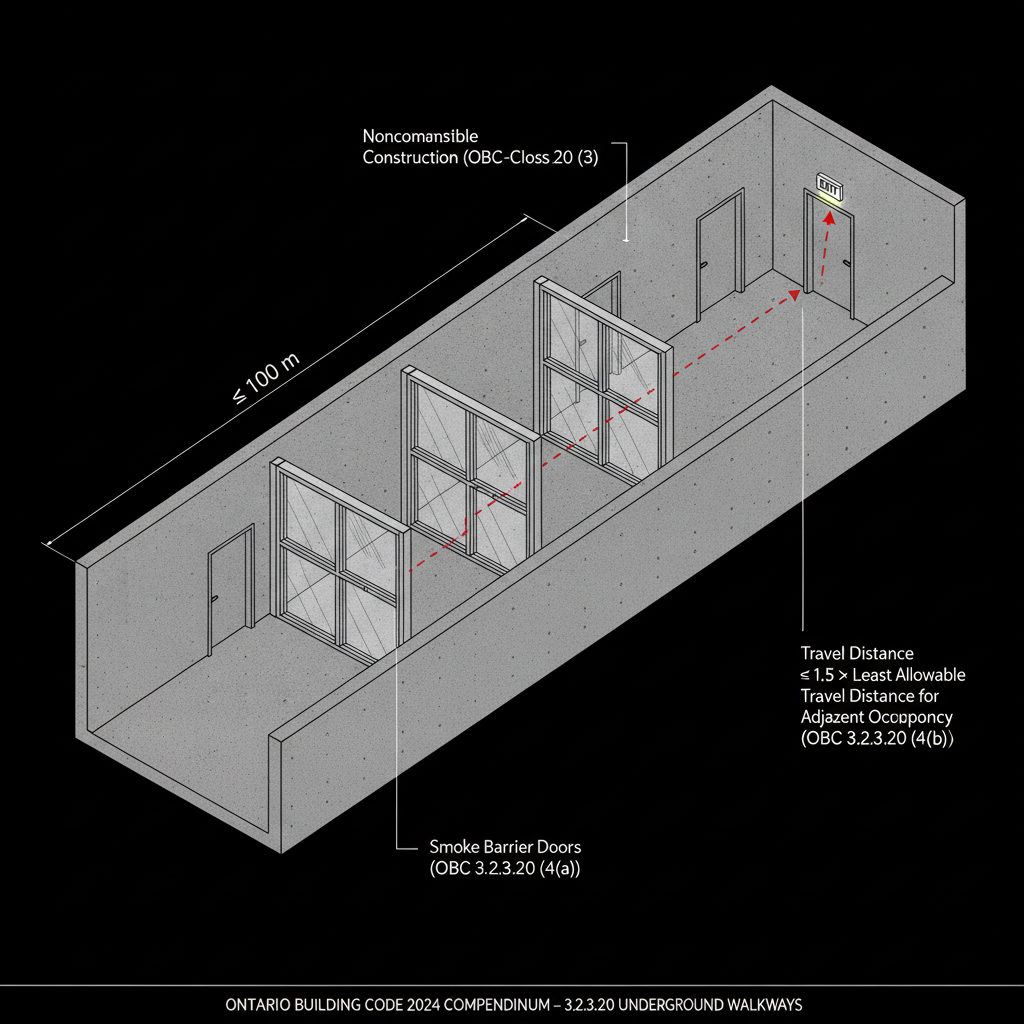
According to Section 3.2.3.20, underground walkways must be built using noncombustible construction. This is essential for maintaining structural integrity in subterranean environments. Key safety measures include:
- Smoke Barriers: Doors must be installed at intervals of no more than 100 meters to control smoke migration.
- Travel Distances: Exit distances are strictly regulated, often limited to 1.5 times the allowable distance of adjacent occupancies.
- Width Limitations: To manage occupant flow and safety, these walkways cannot exceed 9 meters in width.
Service Lines and Gas Main Safety
Protecting Structures Over Gas Mains
Section 3.2.3.22 highlights a critical safety protocol: buildings must not be constructed over existing buried flammable gas mains. The only exception is if the main is encased in a gas-tight conduit that conforms to the CAN/CSA-Z662 standard for oil and gas pipeline systems. This is a vital consideration for infill projects in urban centers like London or Oakville.
Fire Alarm and Detection System Requirements
Mandatory Fire Alarm Installations
In the 2024 Building Code Compendium, fire alarm systems are generally mandatory for all buildings equipped with an automatic sprinkler system, with specific exceptions for small-scale residential systems (NFPA 13D). For non-sprinklered buildings, requirements are triggered by specific occupancy and load factors:
- Occupant loads exceeding 300 persons total.
- Schools, colleges, or child care facilities with more than 40 occupants.
- Licensed restaurants or beverage establishments with over 150 occupants.
- Residential occupancies providing sleeping accommodations for more than 10 people.
- Any building exceeding three storeys in height.
Residential and Hotel Exceptions
The code provides relief for smaller residential buildings and certain hotels. For instance, a fire alarm may not be required in a residential occupancy if no more than four suites share a common exit or if each suite has direct exterior access at ground level. Understanding these nuances can significantly impact project budgets and design timelines.
Disclaimer: This content is generated from the Ontario Building Code for educational purposes. Always consult with a licensed professional engineer or your local building department before starting any construction project in London, Ontario.