OBC 2024 Guide: Air Duct Systems, Service Spaces, and Crawl Space Access | empcontracting.ca Inc.
Sarah's Expert Insight
OBC Compliance Specialist
"Strict adherence to duct material ratings and access dimensions is vital for passing mechanical inspections in high-growth areas like London, Oakville, and Muskoka. At empcontracting.ca Inc. your construction contractor in London, Ontario, we emphasize these fire-safety details during the design-build phase to prevent costly delays and ensure the longevity of your HVAC systems."
Navigating the 2024 Ontario Building Code (OBC) requires a deep understanding of mechanical and service space regulations. As empcontracting.ca Inc. your construction contractor in London, Ontario, we ensure that every project—from commercial retrofits to residential builds—strictly adheres to these safety and accessibility standards.
3.6.4. Requirements for Service and Crawl Space Access
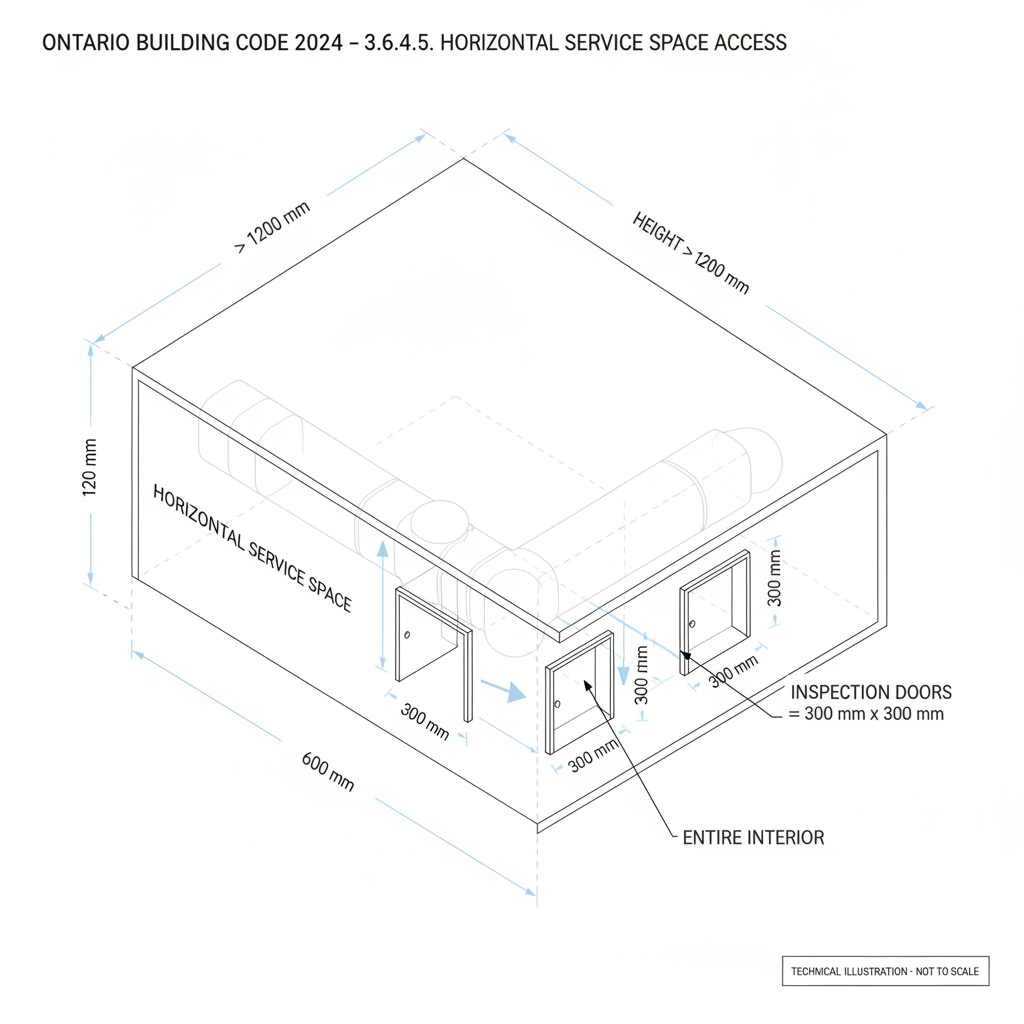
3.6.4.5. Horizontal Service Space Access
Per the OBC, any horizontal service space (including ceiling and duct spaces) exceeding 1,200 mm in height and 600 mm in width must be equipped with inspection doors. These doors must be at least 300 mm in both dimensions and positioned to allow a full view of the interior space for maintenance and safety audits.
3.6.4.6. Crawl Space Access Standards
Accessibility is a key safety metric in the OBC. Every crawl space must provide at least one access opening with minimum dimensions of 550 mm by 900 mm to ensure safe entry for inspections and repairs.
3.6.5. Air Duct and Plenum System Regulations
3.6.5.1. Approved Duct Materials
In most scenarios, ducts, fittings, and plenums must be constructed from noncombustible materials such as steel, aluminum alloy, or copper. The code does allow for combustible materials in specific instances, provided they meet CAN/ULC-S110 Class 1 standards and do not penetrate fire separations. Additionally, duct sealants are strictly regulated, requiring a flame-spread rating of no more than 25 and a smoke-developed classification of 50 or less.
3.6.5.2. Vibration Isolation Connectors
To mitigate noise and mechanical wear, vibration connectors are often used. While these should generally be noncombustible, combustible fabric connectors are permitted if they are less than 250 mm long, comply with CAN/ULC-S109 flame-resistance tests, and are not exposed to temperatures exceeding 120°C.
For expert implementation of these codes on your site, trust empcontracting.ca Inc. your construction contractor in London, Ontario.
Disclaimer: This content is generated from the Ontario Building Code for educational purposes. Always consult with a licensed professional engineer or your local building department before starting any construction project in London, Ontario.