OBC 2024 Standards: Ductwork Tape, Insulation, and Fire Safety Requirements for Ontario Construction
Sarah's Expert Insight
OBC Compliance Specialist
"Adhering to the strict flame-spread and smoke development ratings in Section 3.6.5 is a critical safety measure for high-density builds in Oakville and custom residential projects in London or Muskoka. At empcontracting.ca Inc. your construction contractor in London, Ontario, we ensure all HVAC tapes and insulation materials exceed the 2024 CAN/ULC-S109 and ASTM C411 standards to guarantee both inspection approval and occupant safety."
Understanding the 2024 Ontario Building Code (OBC) requirements for air duct systems and piping is essential for maintaining fire safety and structural integrity. Sections 3.6.5.3 through 3.6.5.5 outline specific material standards for tapes, adhesives, and insulation used in modern HVAC systems.
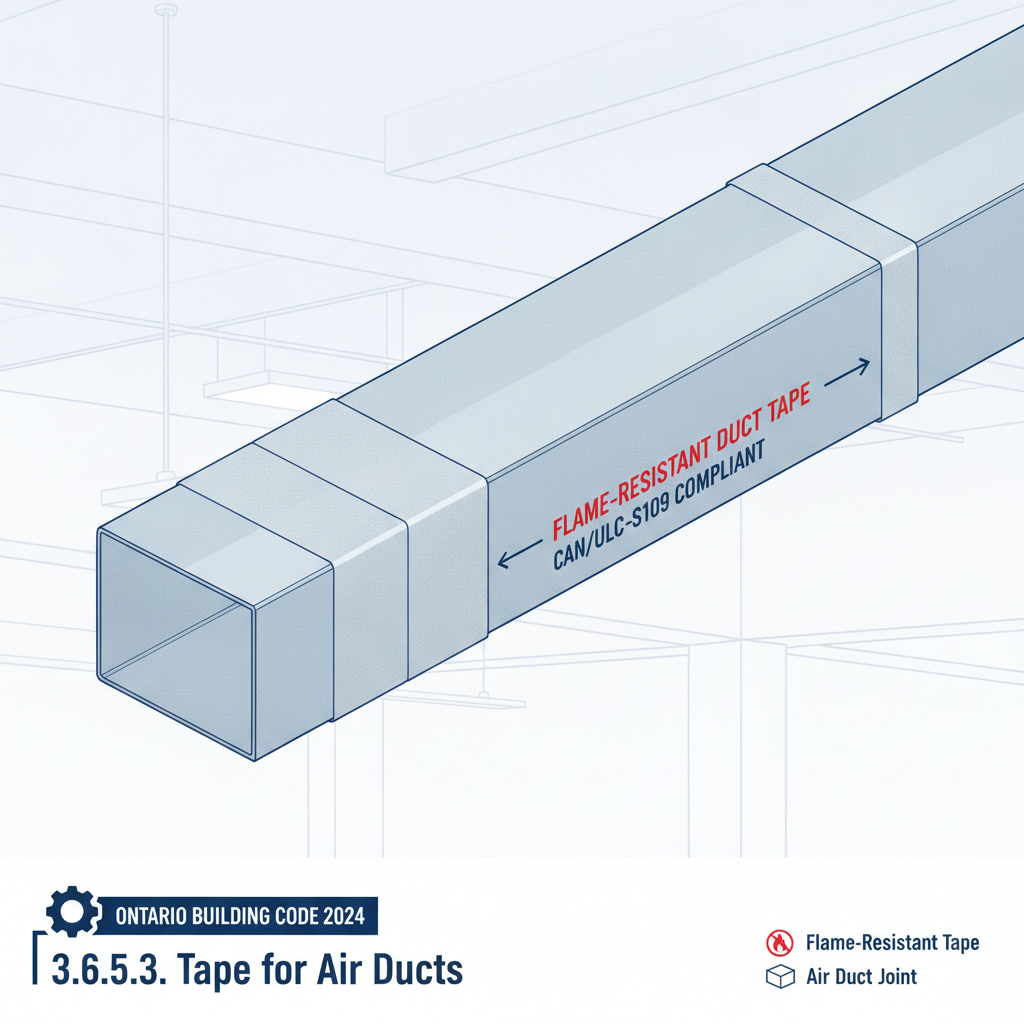
OBC 3.6.5.3: Standards for Air Duct Tape
Compliance begins with the smallest details. Any tape used to seal joints in air ducts, plenums, or other system components must meet the flame-resistance requirements of CAN/ULC-S109, “Standard Method for Flame Tests of Flame-Resistant Fabrics and Films.” This ensures that the sealing mechanism does not contribute to the spread of fire within the ventilation system.
OBC 3.6.5.4: Coverings, Linings, and Adhesives for Ducts
The materials surrounding your ductwork are strictly regulated based on operating temperature and material combustibility to prevent smoke and flame propagation.
Temperature and Combustibility Limits
If an air duct component is exposed to surface temperatures exceeding 120°C, noncombustible materials are mandatory. For combustible coverings and linings, the code mandates a flame-spread rating of no more than 25 and a smoke developed classification of no more than 50. An exception exists for combustible construction, where the outer covering may have a flame-spread rating of up to 75.
Foamed Plastic and Fire Separations
Foamed plastic insulation is generally prohibited from air duct systems unless specifically protected within a ceiling space used as a return air plenum. Furthermore, all combustible linings must be interrupted where a duct penetrates a fire separation or near heat sources like electric resistance heaters to maintain the fire-rated boundary.
OBC 3.6.5.5: Piping Insulation and Coverings
Piping insulation must also meet rigorous safety benchmarks. When fluid temperatures exceed 120°C, materials must be noncombustible or pass ASTM C411 testing. In vertical or horizontal service spaces, flame-spread ratings are capped at 25 for noncombustible buildings and 75 for combustible buildings, ensuring localized fire containment across residential and commercial builds.
Disclaimer: This content is generated from the Ontario Building Code for educational purposes. Always consult with a licensed professional engineer or your local building department before starting any construction project in London, Ontario.