2024 Ontario Building Code: Fire Safety and Construction Standards for Rapid Transit Stations
Sarah's Expert Insight
OBC Compliance Specialist
"The transition points between transit hubs and commercial buildings are high-risk zones, making the 2-hour fire separation and vestibule requirements in Section 3.13.3.6 absolutely non-negotiable for safety. For our clients in London and Oakville, we focus heavily on the integration of these fire-rated assemblies during the early design phase to avoid costly retrofits and ensure seamless compliance with the 2024 OBC standards."
Navigating the complexities of the 2024 Building Code Compendium is essential for large-scale infrastructure projects. At empcontracting.ca Inc. your construction contractor in London, Ontario, we specialize in interpreting and implementing these vital safety standards to ensure your projects are fully compliant and safe for the public.
3.13.3.4. Regulations for Leased Areas Within Transit Stations
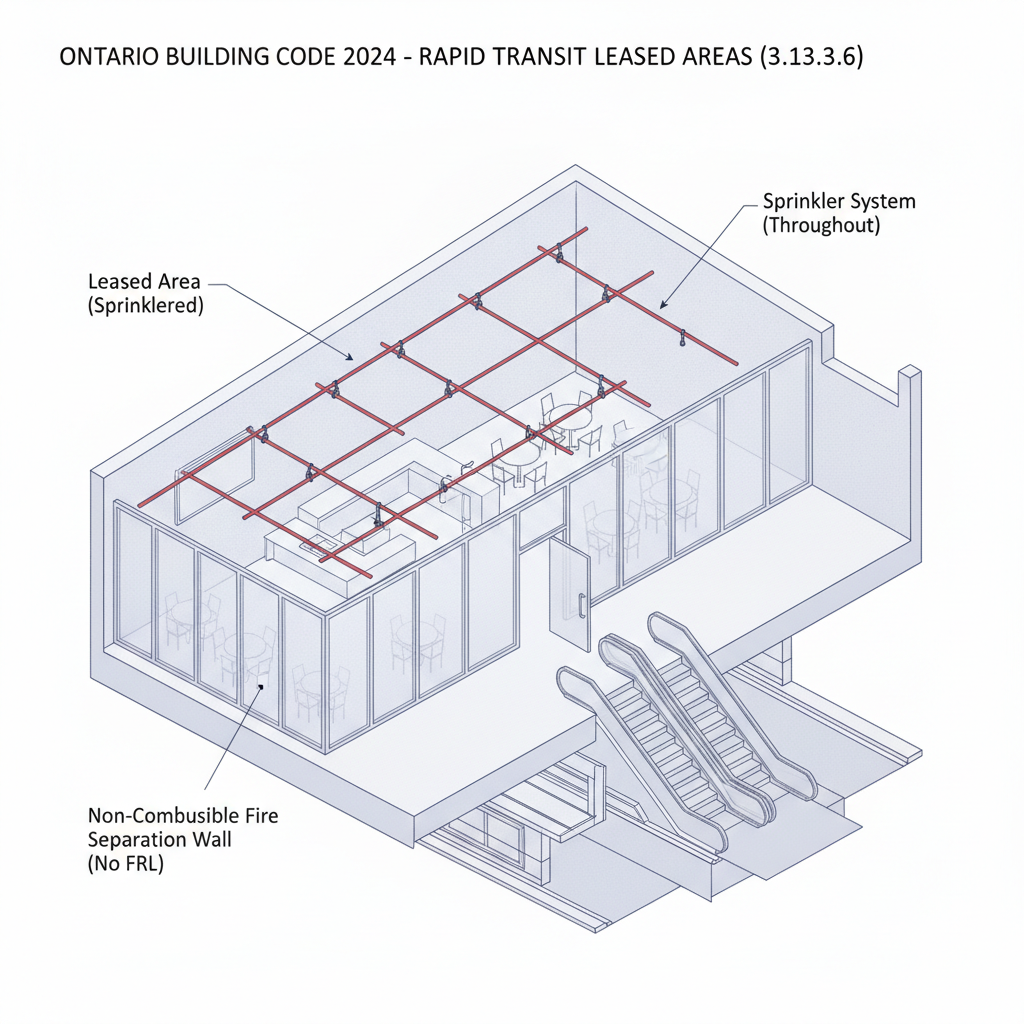
Leased spaces within rapid transit stations must adhere to strict fire suppression and separation guidelines to protect commuters and commercial assets.
Fire Suppression and Sprinkler Requirements
All leased areas must be equipped with automatic sprinklers and separated from the main floor area by noncombustible fire separations. While these separations do not always require a specific fire-resistance rating, doors within them are not required to be self-closing under Clause (1)(b). However, if leased areas exceed 15% of the total public area (or 20% for stand-alone buildings above ground), the entire public area must be sprinklered.
Egress and Platform Restrictions
To maintain safe traffic flow, the width of means of egress between leased areas must never be less than 5 meters. Furthermore, leased areas on platform levels are strictly regulated: they must be at least 5 meters from the platform edge and egress facilities, and they cannot be located in dead-end portions of the platform.
3.13.3.5. Fire Safety for Vehicle Terminals
Enclosed terminals serving vehicles powered by combustible fuels that connect to a transit station require high-level protection. These terminals must be sprinklered and separated by a 1-hour fire-resistance rating or specialized wired glass assemblies conforming to MMAH Supplementary Standard SB-2. If close-spaced sprinklers are provided on the station side, doors in these separations do not require latches.
3.13.3.6. Connecting Stations to Adjacent Buildings
When a rapid transit station is integrated with or adjacent to another building, a robust 2-hour fire separation is required. Access between the two structures must be facilitated through a vestibule. This vestibule must maintain its own fire separation of at least 1 hour or utilize approved wired glass assemblies with self-closing devices to prevent the spread of fire between the transit hub and the neighboring occupancy.
For expert guidance on these regulations, trust empcontracting.ca Inc. your construction contractor in London, Ontario, to manage your commercial transit-related builds with precision.
Disclaimer: This content is generated from the Ontario Building Code for educational purposes. Always consult with a licensed professional engineer or your local building department before starting any construction project in London, Ontario.