2024 Ontario Building Code: Fire Safety and Communication Standards for Rapid Transit Stations
Sarah's Expert Insight
OBC Compliance Specialist
"Compliance with Section 3.13.5 is non-negotiable for high-traffic transit hubs in regions like London and Oakville, where public safety and rapid emergency response are paramount. At empcontracting.ca Inc. your construction contractor in London, Ontario, we emphasize that the integration of standpipe risers and intelligible communication systems requires precision engineering to meet the rigorous 2024 OBC standards for passenger protection."
Navigating the complexities of the 2024 Building Code Compendium is essential for large-scale infrastructure and public transit projects. Below is a detailed breakdown of Section 3.13.5 regarding emergency systems and fire protection.
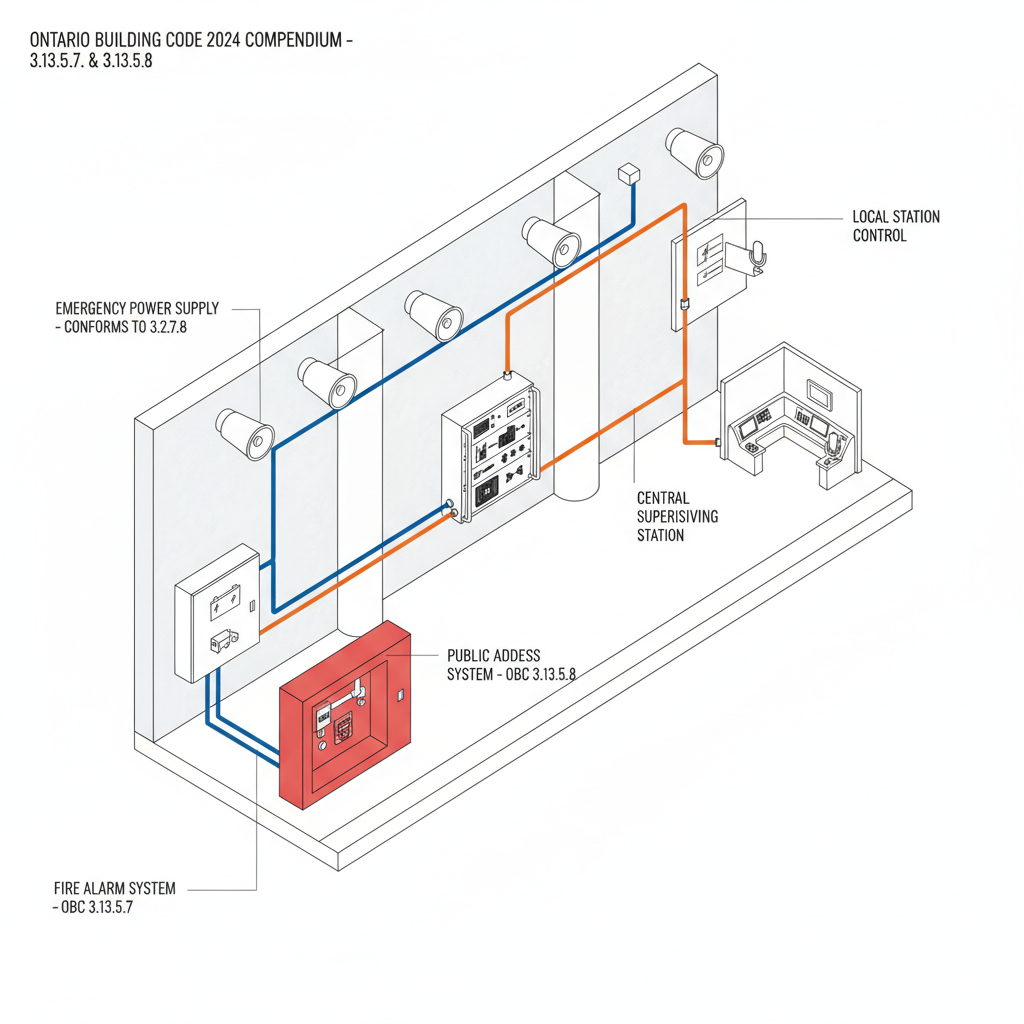
3.13.5.7. Emergency Power and 3.13.5.8. Communication Systems
In accordance with Article 3.2.7.8., an emergency power supply must be provided for all fire alarm systems within transit facilities. Furthermore, rapid transit stations require robust public address systems operable from both central and local stations, designed for maximum voice intelligibility.
Two-Way Communication Requirements
Every station must feature a two-way communication system. These telephones are strategically located at the collector’s booth and both ends of every platform, ensuring a direct link to the central supervising station.
3.13.5.9. Emergency Reporting Devices
To ensure passenger safety, emergency reporting devices must be distributed so that the travel distance from any public area does not exceed 90 meters. These may include public telephones with no-charge emergency capabilities, clearly marked with appropriate signage.
3.13.5.10. Sprinkler and Fire Suppression Systems
All sprinkler systems must conform to Articles 3.2.5.12. through 3.2.5.15. A critical requirement for first responders is the specific identification on fire department connections, indicating they are part of the station-specific system.
3.13.5.11. Standpipe and Hose Systems
Rapid transit stations must be equipped with standpipe and hose systems conforming to OBC standards. Key specifications include:
- Cross-Connections: If multiple risers exist, a cross-connection pipe (minimum 100 mm diameter) is required to ensure water flow across all risers from a single connection.
- Hose Placement: Every part of the station must be reachable by a hose stream, within 3 meters of a nozzle.
- Tunnel Safety: Hose stations must be located in tunnels no more than 20 meters from the platform end.
- Connection Sizes: Each station requires both 38 mm and 65 mm hose connections with 100 mm minimum supply piping.
For expert implementation of these complex safety codes, trust empcontracting.ca Inc. your construction contractor in London, Ontario.
Disclaimer: This content is generated from the Ontario Building Code for educational purposes. Always consult with a licensed professional engineer or your local building department before starting any construction project in London, Ontario.