Ontario Building Code 2024: Rapid Transit Sanitary and Accessibility Standards for London Projects
Sarah's Expert Insight
OBC Compliance Specialist
"When developing transit-oriented infrastructure in London, Oakville, or Muskoka, the integration of NFPA 130 ventilation and stringent barrier-free paths is critical for passing municipal inspections. As empcontracting.ca Inc. your construction contractor in London, Ontario, we specialize in translating these complex 2024 Compendium requirements into functional, compliant transit and commercial spaces."
Navigating the 2024 Building Code Compendium is essential for specialized infrastructure and municipal projects. At empcontracting.ca Inc. your construction contractor in London, Ontario, we ensure every project adheres to the latest Division B – Part 3 requirements for safety and public use.
3.13.6. Required Sanitary Facilities in Transit Stations
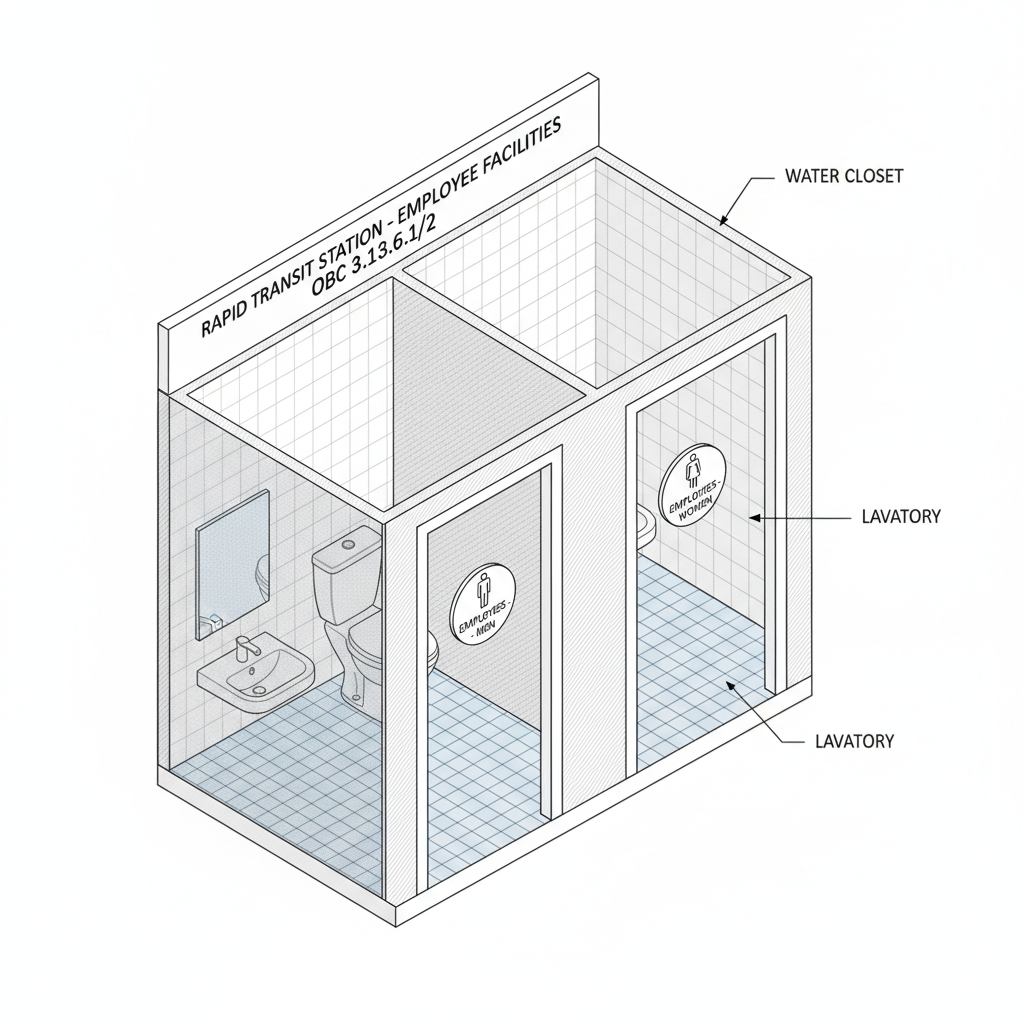
The OBC mandates specific washroom configurations based on station staffing and location. Rapid transit stations must provide facilities for employees, with specific allowances for single-user lockable rooms when staff counts are five or fewer. Crucially, stations located at the end of a line are held to a higher standard for public utility.
Employee vs. Public Washroom Requirements
- Staffed Stations: Require at least one water closet and one lavatory per sex for employees.
- Small Staff Allowance: If five or fewer employees are present, a single unisex washroom is permitted if it can be locked from the inside.
- End-of-Line Stations: These must include public washrooms containing no fewer than three water closets and two lavatories per sex.
3.13.7. Emergency Ventilation Systems
Life safety is a priority in subterranean or enclosed transit design. Every rapid transit station must be equipped with an emergency ventilation system that conforms to NFPA 130, the Standard for Fixed Guideway Transit and Passenger Rail Systems.
3.13.8. Barrier-Free Design and Accessibility
Accessibility is a non-negotiable pillar of the Ontario Building Code. Rapid transit stations must comply with Section 3.8 standards, ensuring at least one barrier-free entrance and a continuous barrier-free path of travel to fare-paid areas and all boarding platforms.
Elevator and Vertical Access Standards
Where elevators are utilized to meet accessibility requirements, they must provide direct and functional transportation from each platform to the designated barrier-free entrance, ensuring equal access for all commuters in accordance with Article 3.13.8.3.
Disclaimer: This content is generated from the Ontario Building Code for educational purposes. Always consult with a licensed professional engineer or your local building department before starting any construction project in London, Ontario.