Ontario Building Code 2024: Demountable Stages and Support Structures Requirements
Sarah's Expert Insight
OBC Compliance Specialist
"Navigating the 2024 OBC requirements for temporary event structures is essential for liability management in high-traffic regions like London, Oakville, and Muskoka. At empcontracting.ca Inc., your construction contractor in London, Ontario, we emphasize that proper egress separation—at least half the diagonal dimension—is the most frequently overlooked safety detail in festival stage builds."
Understanding OBC Section 3.17: Application and Scope
As part of the 2024 Building Code Compendium, Section 3.17 governs the design, erection, and installation of temporary structures. empcontracting.ca Inc. your construction contractor in London, Ontario, ensures all demountable stages meet these rigorous safety standards to protect public users and event staff.
When Does Section 3.17 Apply?
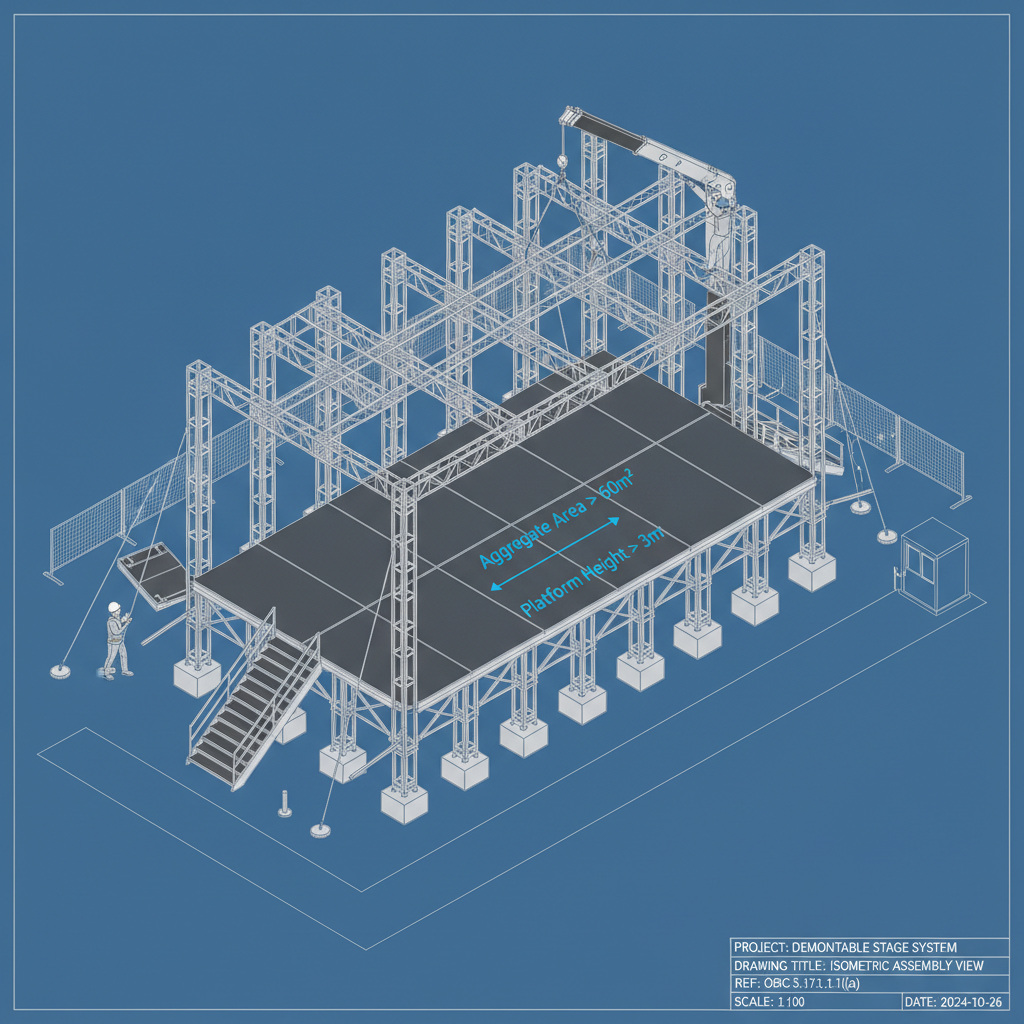
Regulations for demountable stages are triggered if the platform aggregate area exceeds 60 m² with a height over 3 m, or if the total area exceeds 225 m². Additionally, any structure with an attached roof or wall reaching 5 m or more above ground level must comply. For support structures, compliance is required if the height exceeds 3 m or the superimposed load is greater than 115 kg.
Construction and Safety: Occupant Load and Egress
Under Section 3.17.2.1, a demountable stage is classified as a floor area for the purpose of calculating occupant load. This classification is vital for determining the necessary safety infrastructure for public gatherings.
Means of Egress Standards
Section 3.17.2.2 dictates that platforms must generally provide at least two means of egress. However, a single exit is permitted if the occupant load is under 60 persons and the area is less than 150 m² (or travel distance is under 30 m). For larger stages, the maximum travel distance to an exit is 45 m, and the distance between required exits must be at least half of the platform's diagonal dimension to prevent bottlenecks during emergencies.
Disclaimer: This content is generated from the Ontario Building Code for educational purposes. Always consult with a licensed professional engineer or your local building department before starting any construction project in London, Ontario.