2024 Ontario Building Code Guide: Building Importance and Limit States Design
Sarah's Expert Insight
OBC Compliance Specialist
"Accurately identifying a building's importance category is the first step in cost-effective and safe engineering, particularly for institutional projects in London or high-exposure builds in Oakville and Muskoka. At empcontracting.ca Inc., we leverage these limit states definitions to prevent common issues like excessive floor vibration or structural cracking, ensuring your investment stands the test of time while meeting the stringent 2024 OBC standards."
Navigating the complex structural requirements of the 2024 Ontario Building Code (OBC) is essential for any successful development. Whether you are planning a residential build or a community facility, partnering with empcontracting.ca Inc. your construction contractor in London, Ontario, ensures your project meets all regulatory standards for safety and performance.
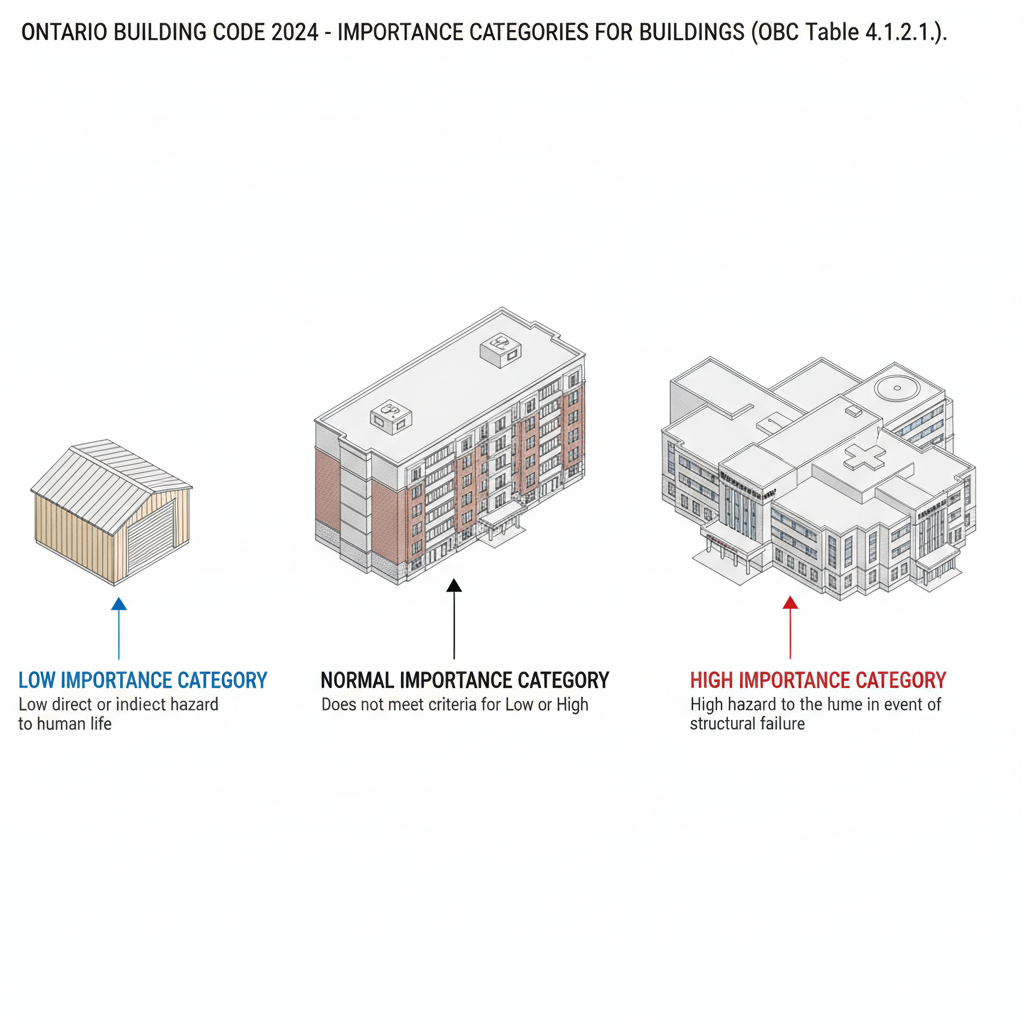
Building Importance Categories: Table 4.1.2.1.
The OBC classifies buildings based on the level of hazard structural failure poses to human life. This classification determines the specific safety factors and design criteria used during the engineering phase:
Low Importance Category
Buildings that represent a low direct or indirect hazard to human life in the event of structural failure.
Normal Importance Category
Standard buildings that do not meet the criteria for low, high, or post-disaster categories. Most residential and commercial projects fall here.
High Importance Category
Structures that require a greater degree of safety for human life. This includes community centres and all levels of elementary and secondary schools.
Post-Disaster Category
Facilities that must remain operational in the event of an emergency or natural disaster.
Understanding Limit States Design (Section 4.1.3.1.)
Structural design in Ontario is governed by 'limit states'—the conditions under which a building structure ceases to fulfill its intended function. This is a critical framework used by empcontracting.ca Inc. your construction contractor in London, Ontario, to ensure structural integrity.
Ultimate Limit States (ULS)
These concern the primary safety of the structure and include factors such as load-carrying capacity, overturning, sliding, and fracture. Exceeding these limits can lead to structural failure.
Serviceability Limit States (SLS)
These restrict the intended use and occupancy of the building. Design considerations here focus on preventing excessive deflection, vibration, permanent deformation, and local structural damage like cracking.
Specified and Factored Loads
The code defines 'specified loads' (such as snow, wind, and dead loads) and applies 'principal-load factors' to account for variability. This ensures that the 'factored resistance' of the materials used always exceeds the 'factored load' applied to the structure.
Disclaimer: This content is generated from the Ontario Building Code for educational purposes. Always consult with a licensed professional engineer or your local building department before starting any construction project in London, Ontario.