Understanding OBC 2024 Structural Standards: Deflection, Vibration, and Dead Loads
Sarah's Expert Insight
OBC Compliance Specialist
"In my experience overseeing projects in London and Oakville, failing to account for specific vibration frequencies in floor systems is a common cause of post-occupancy complaints. At empcontracting.ca Inc., your construction contractor in London, Ontario, we emphasize the importance of 1/500 drift limits to protect expensive interior finishes, particularly in high-wind zones like Muskoka. These OBC standards are not just rules—they are the blueprint for building durable, high-performance structures that withstand Ontario's diverse climate."
Navigating the complexities of the 2024 Ontario Building Code (OBC) is essential for ensuring the safety and longevity of any structural project. At empcontracting.ca Inc., your construction contractor in London, Ontario, we specialize in interpreting these technical requirements to deliver superior build quality.
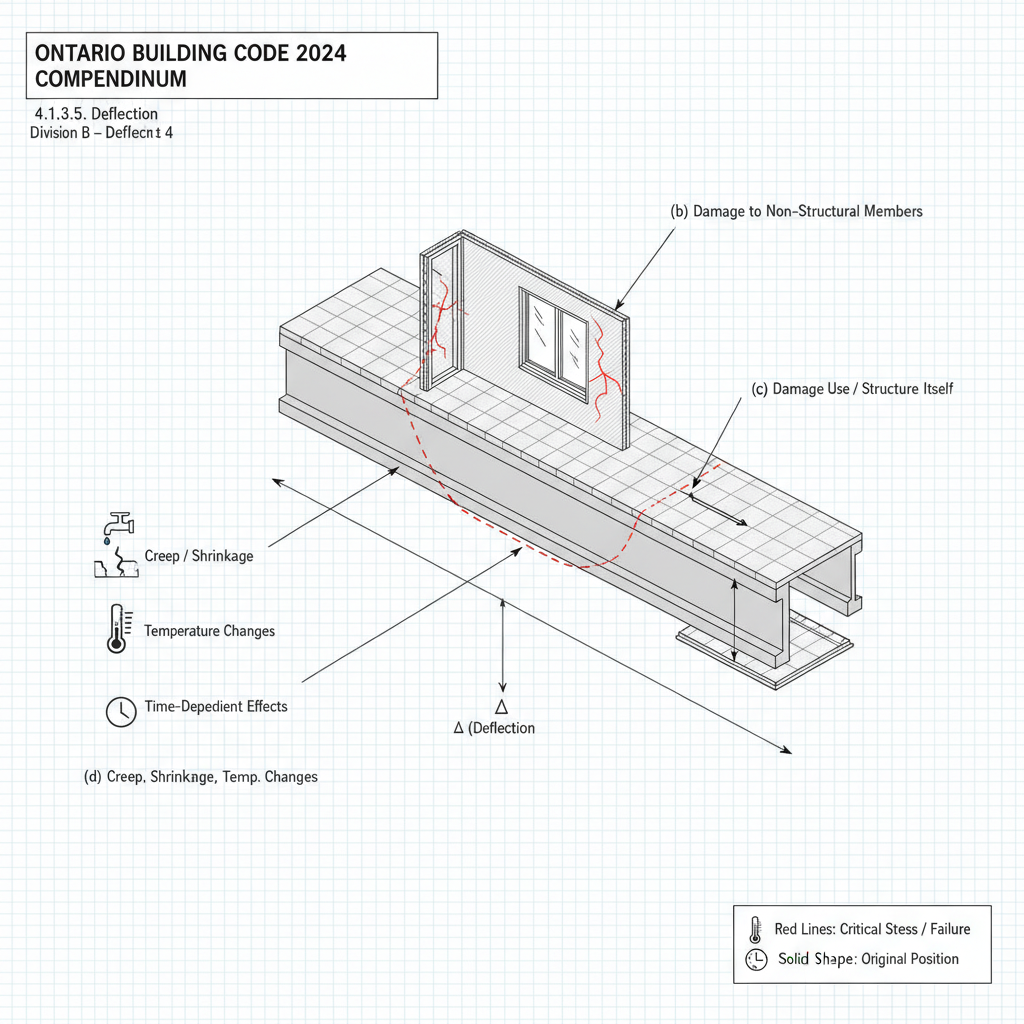
4.1.3.5. Structural Deflection and Serviceability
Deflection standards are designed to limit serviceability problems that can arise from structural movement. This section of the OBC requires that members be proportioned with consideration for the building's intended use and the prevention of damage to non-structural components.
Lateral Drift and Storey Height Limits
For most buildings, the total drift per storey under service wind and gravity loads must not exceed 1/500 of the storey height. These limits ensure that structural and non-structural elements remain intact. While industrial buildings may have different allowances based on functional needs, residential and commercial projects in urban centers must strictly adhere to these drift limits to prevent cracking and structural fatigue.
4.1.3.6. Managing Floor and Lateral Vibrations
Floor systems must be engineered to minimize vibrations that could negatively impact the occupancy experience. This is especially critical for spaces housing operating machinery or those used for rhythmic activities such as dancing, gyms, or concerts. If a system's vibration frequency is less than 6 Hz, a comprehensive dynamic analysis is required to prevent resonance issues.
4.1.4.1. Accurate Dead Load Calculation
Dead loads represent the permanent weight supported by structural members. According to the OBC, these include:
- The weight of the structural member itself.
- All permanent construction materials.
- Partitions and permanent equipment.
- Vertical loads from soil, earth, and landscaping elements like trees.
Precision in calculating these loads is a hallmark of the professional services provided by empcontracting.ca Inc., your construction contractor in London, Ontario.
Disclaimer: This content is generated from the Ontario Building Code for educational purposes. Always consult with a licensed professional engineer or your local building department before starting any construction project in London, Ontario.