OBC 2024 Wind Load Standards: Dynamic Sensitivity and Static Procedures for Ontario Construction
Sarah's Expert Insight
OBC Compliance Specialist
"In high-wind exposure areas like the Muskoka waterfront or the rising urban density in London, understanding dynamic sensitivity is vital for building safety and cladding longevity. At empcontracting.ca Inc., your construction contractor in London, Ontario, we prioritize these Part 4 structural standards to ensure every project is resilient against the specific atmospheric pressures of the Great Lakes region."
Understanding the complexities of wind loads is essential for the structural integrity of any modern building. Under the 2024 Ontario Building Code (OBC), Section 4.1.7 provides the framework for how wind pressure is calculated and applied to structures. At empcontracting.ca Inc. your construction contractor in London, Ontario, we ensure every project adheres to these rigorous engineering standards.
Classification of Buildings by Dynamic Sensitivity
Before determining wind loads, a building must be classified based on its response to wind forces. The OBC distinguishes between standard, dynamically sensitive, and very dynamically sensitive structures.
Determining Building Sensitivity
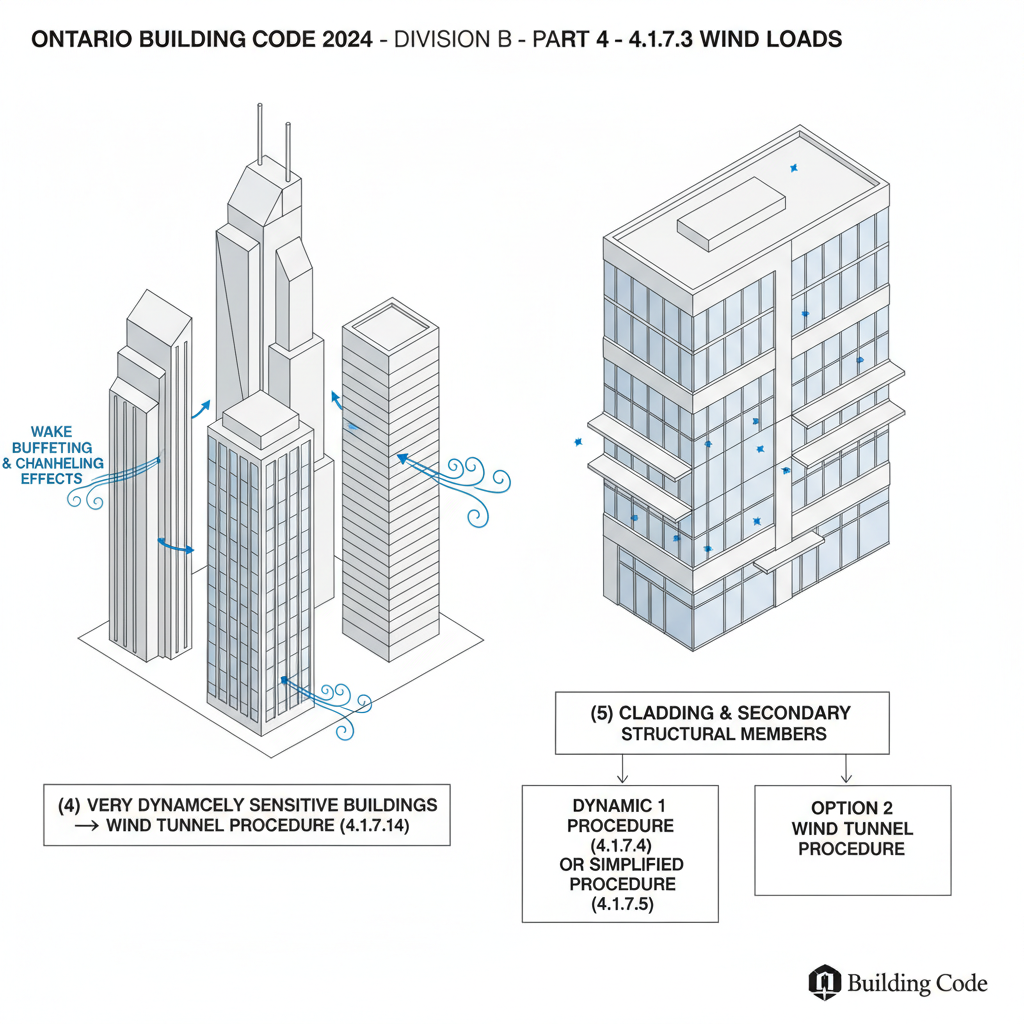
A building is classified as dynamically sensitive if its height exceeds 60 meters or if its height is more than four times its minimum effective width. If the lowest natural frequency falls below 0.25 Hz, or the height-to-width ratio exceeds 6:1 for human occupancy, it is classified as very dynamically sensitive, requiring more advanced testing methods.
The Static Procedure for Wind Load Calculation
For most standard structures, the OBC permits the Static Procedure to calculate external pressure or suction. This is determined by the formula: p = Iw q Ce Ct Cg Cp.
Key Variables in Wind Pressure Formulas
- Iw (Importance Factor): Adjusted based on the building's use and safety requirements.
- q (Reference Velocity Pressure): Localized wind data specific to Ontario regions.
- Ce (Exposure Factor): Accounts for the surrounding terrain and height of the structure.
- Cg (Gust Effect Factor): Measures the impact of sudden wind bursts on the building.
Wind Tunnel Testing and CFD Limitations
For buildings subject to "wake buffeting" or those located near other tall structures that channel wind, the Wind Tunnel Procedure is mandatory. It is important to note that under Sentence 4.1.7.2.(6), Computational Fluid Dynamics (CFD) cannot be used as a primary method for determining specified wind loads for a building and its components; physical or static testing remains the gold standard for compliance.
Disclaimer: This content is generated from the Ontario Building Code for educational purposes. Always consult with a licensed professional engineer or your local building department before starting any construction project in London, Ontario.