OBC 2024 Guide: Dynamic Analysis Procedures for Seismic Design in Ontario Construction
Sarah's Expert Insight
OBC Compliance Specialist
"With the 2024 OBC updates, mid-rise wood construction in growing hubs like London and Oakville requires sophisticated seismic modeling to ensure long-term structural resilience. At empcontracting.ca Inc., we prioritize early-stage Dynamic Analysis to accurately mitigate torsional moments, ensuring your project meets the highest safety standards while optimizing material efficiency."
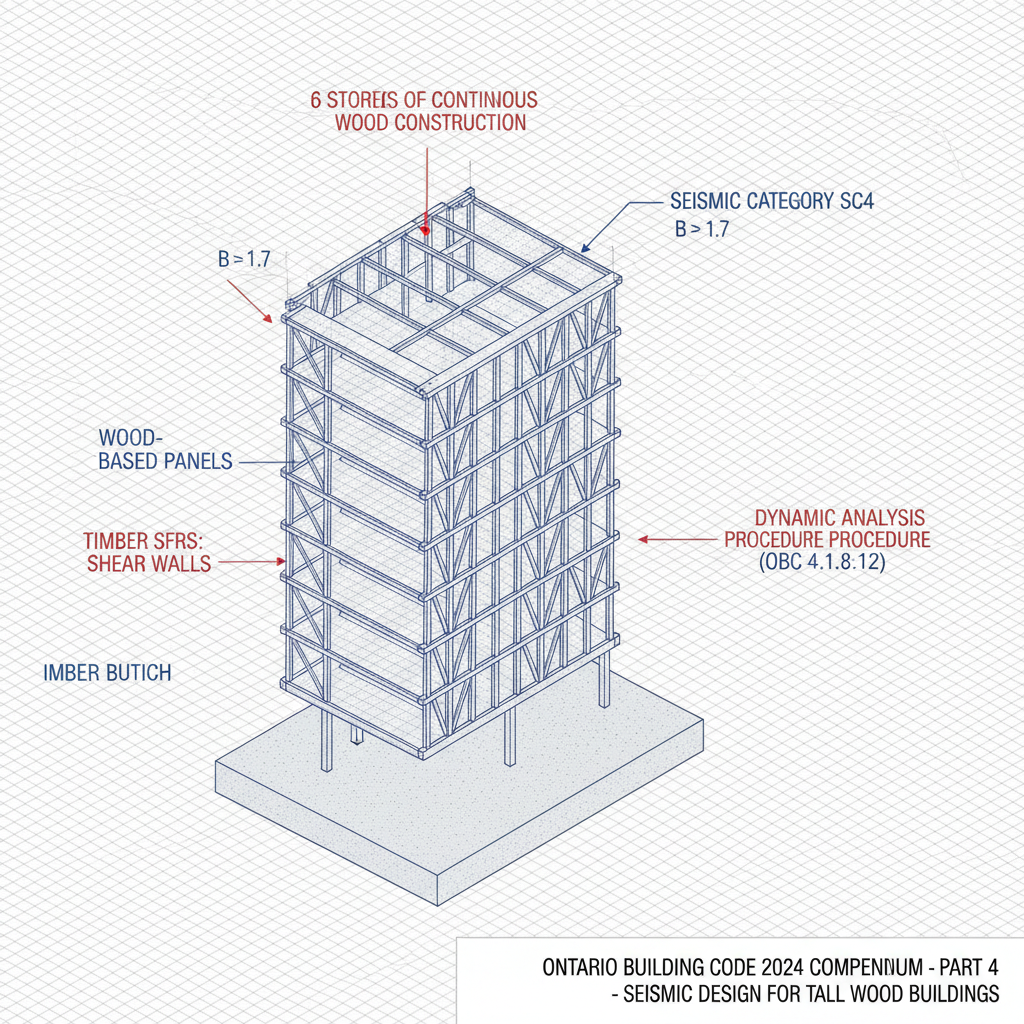
Understanding the complexities of the 2024 Ontario Building Code (OBC) is essential for large-scale structural projects. Article 4.1.8.12 outlines the rigorous requirements for the Dynamic Analysis Procedure, particularly concerning seismic safety and structural integrity in mid-rise and high-rise developments.
Seismic Category Requirements and Wood Construction
For buildings classified under Seismic Category SC3 or SC4 with a sensitivity factor (B) greater than 1.7, a Dynamic Analysis Procedure is mandatory. Specific provisions apply to continuous wood construction exceeding four storeys. In these cases, the specified lateral earthquake force (V) must be adjusted by a factor of 1.2 to account for the unique performance characteristics of timber SFRS (Seismic Force Resisting Systems) like shear walls and wood-based panels.
Linear and Non-linear Dynamic Analysis Methods
The OBC permits two primary methods for dynamic analysis:
- Linear Dynamic Analysis: Utilizing either the Modal Response Spectrum Method or the Numerical Integration Linear Time History Method.
- Non-linear Dynamic Analysis: Reserved for complex structures where a special study is required to ensure safety.
Accounting for Torsional Moments and Base Shear
Properly calculating the design base shear (Vd) is critical. The code stipulates that Vd generally must not be less than 80% of the lateral earthquake design force (V) determined by static methods. For irregular structures, this requirement increases to 100% of V. Furthermore, designers must account for accidental torsional moments—often by shifting the centers of mass—to prevent structural failure during seismic events.
For professional implementation of these complex standards, trust empcontracting.ca Inc. your construction contractor in London, Ontario, to navigate the engineering and compliance phases of your build.
Disclaimer: This content is generated from the Ontario Building Code for educational purposes. Always consult with a licensed professional engineer or your local building department before starting any construction project in London, Ontario.