2024 Ontario Building Code Section 5.1.4: Structural Loads & Resistance Guide | empcontracting.ca Inc.
Sarah's Expert Insight
OBC Compliance Specialist
"As the lead consultant at empcontracting.ca Inc. your construction contractor in London, Ontario, I focus on how these 2024 OBC updates prevent structural fatigue caused by London’s intense freeze-thaw cycles and Muskoka’s heavy snow loads. Strictly adhering to Section 5.1.4 ensures that we select compatible, durable materials that protect the building envelope from premature deterioration and environmental stress."
Understanding the latest standards in the 2024 Building Code Compendium is vital for any successful build. At empcontracting.ca Inc. your construction contractor in London, Ontario, we specialize in implementing these complex requirements to ensure every project is built for durability and safety.
Section 5.1.4.1: Structural and Environmental Loads
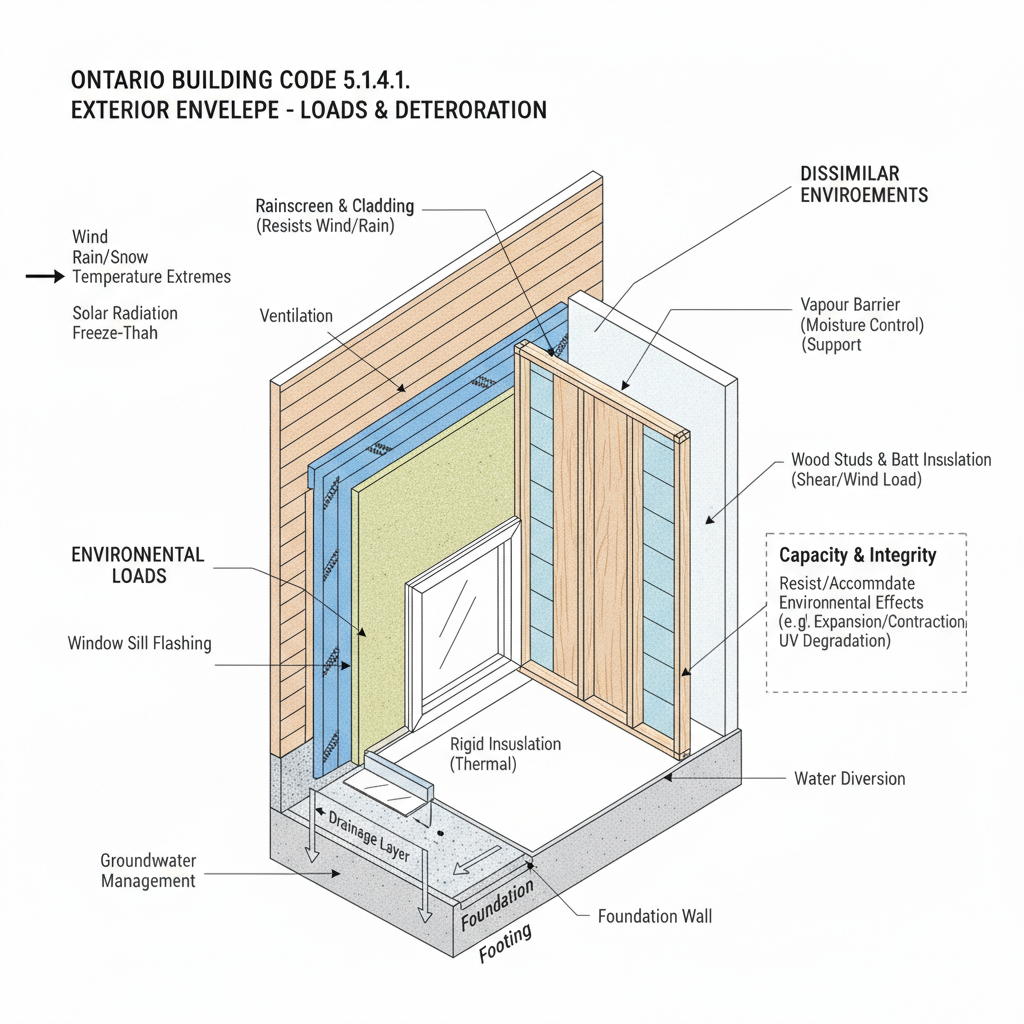
The Ontario Building Code (OBC) requires that all building materials and assemblies separating dissimilar environments or exposed to the exterior are designed to handle specific environmental and structural loads. This ensures the integrity of the building envelope against the diverse climate of the province.
Key Load Considerations
- Environmental Resistance: Systems must accommodate air pressure on barriers, wind uplift on roofs, and hydrostatic pressure on foundations.
- Load Transfer: Materials must transfer structural loads to the building’s frame without causing adverse effects on other components.
- Deflection Control: Assemblies must be designed to avoid excessive deflection that could compromise the performance of the overall structure.
Section 5.1.4.2: Resistance to Deterioration
Strength alone is not enough; longevity is determined by a material's resistance to decay. The OBC mandates that materials must be compatible with adjoining components and specifically resistant to deterioration mechanisms common to their installation environment.
Climatic Compatibility
When selecting materials, contractors must account for the nature of the materials, their exposure level, and the specific climatic conditions of the site to prevent premature failure or chemical incompatibility between parts.
Disclaimer: This content is generated from the Ontario Building Code for educational purposes. Always consult with a licensed professional engineer or your local building department before starting any construction project in London, Ontario.