OBC Structural Loads & Design Standards: Professional Insights by empcontracting.ca Inc. your construction contractor in London, Ontario
Sarah's Expert Insight
OBC Compliance Specialist
"At empcontracting.ca Inc. your construction contractor in London, Ontario, we find that Section 5.2.2 is particularly critical for projects in high-wind regions like Oakville or heavy snow zones like Muskoka. Ensuring that membrane roofing and exterior assemblies are designed for 100% wind load and thermal movement is the difference between a building that lasts and one that requires costly repairs within its first five years."
Understanding OBC Section 5.2.2: Structural Loads and Design Procedures
For any construction project in Ontario, adhering to the 2024 Building Code Compendium is crucial for safety and structural integrity. Section 5.2.2 focuses on how materials, components, and assemblies separating dissimilar environments must be designed to withstand various structural loads.
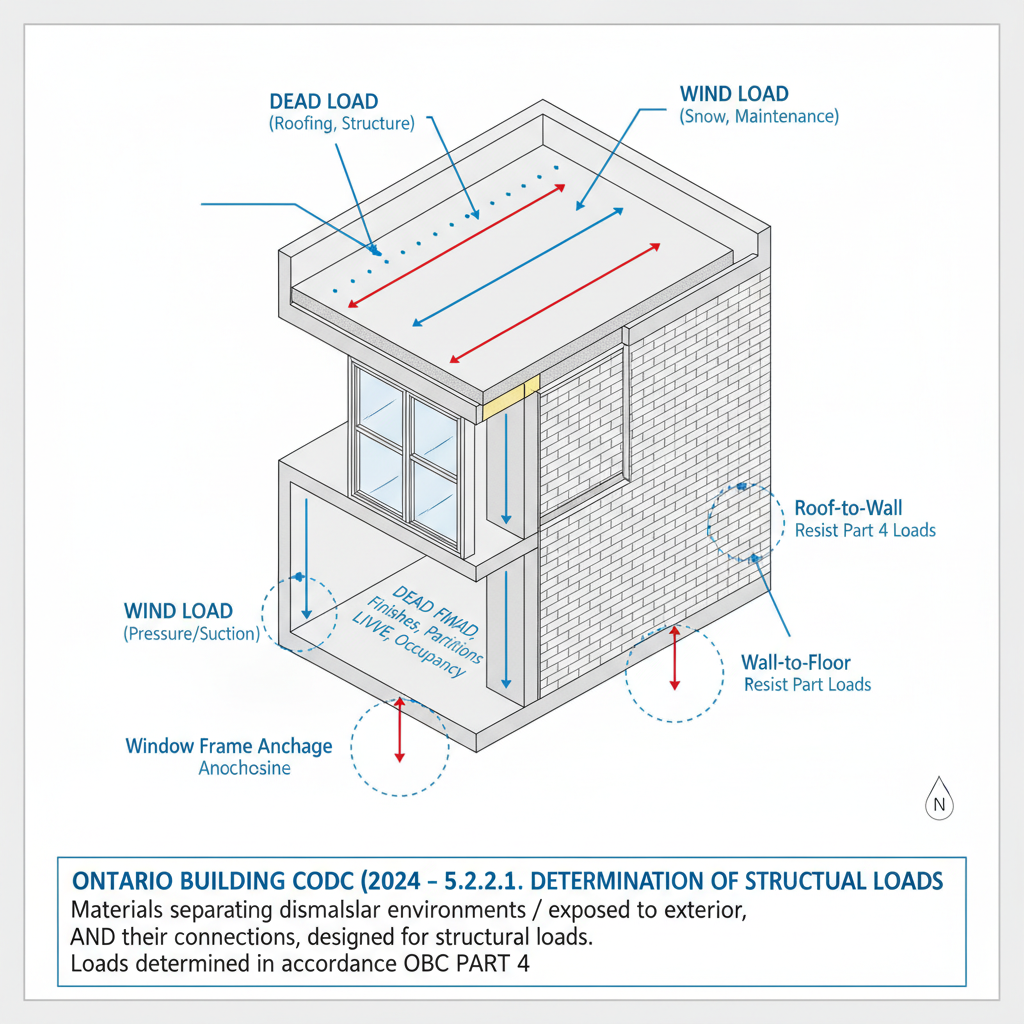
5.2.2.1. Determination of Structural Loads and Effects
Under the OBC, when materials or connections are exposed to the exterior or separate different environments, their design must comply with Part 4 structural load requirements. This includes:
- Dead Loads: Weight transferred from structural elements.
- Environmental Loads: Wind, snow, rain, hydrostatic, and earth pressures.
- Live Loads: Loads based on the intended use and occupancy of the building.
- Dynamic Effects: Earthquake effects for post-disaster buildings and movements caused by thermal expansion, moisture-related contraction, and settlement.
5.2.2.2. Specialized Wind Load Requirements
Article 5.2.2.2 specifically addresses wind load determination. In most cases, components must be designed for 100% of the specified wind load as determined by Article 4.1.7.1. However, exceptions are made if testing or detailed analysis proves a lower load is applicable. For roofing, membrane assemblies must generally meet the CAN/CSA A123.21 standard for dynamic wind uplift resistance, unless they have a proven track record of performance for the local environment.
5.2.2.3. Design Procedures
Final structural designs must be executed according to Subsection 4.1.3 and other applicable requirements within Part 4 of the Ontario Building Code, ensuring that every assembly is resilient enough for the harsh Ontario climate.
Disclaimer: This content is generated from the Ontario Building Code for educational purposes. Always consult with a licensed professional engineer or your local building department before starting any construction project in London, Ontario.