2024 Ontario Building Code: Air and Vapour Barrier Requirements for London and Muskoka Construction
Sarah's Expert Insight
OBC Compliance Specialist
"In the variable climates of London and Muskoka, the integrity of the building envelope is non-negotiable. At empcontracting.ca Inc., we emphasize that the correct placement of vapour barriers relative to the 'dew point' within the wall assembly is what prevents long-term moisture damage and ensures a healthy indoor environment for our clients."
Understanding the complexities of the 2024 Ontario Building Code (OBC) is vital for any successful build or renovation. At empcontracting.ca Inc. your construction contractor in London, Ontario, we specialize in ensuring your building envelope meets the highest standards for durability and safety.
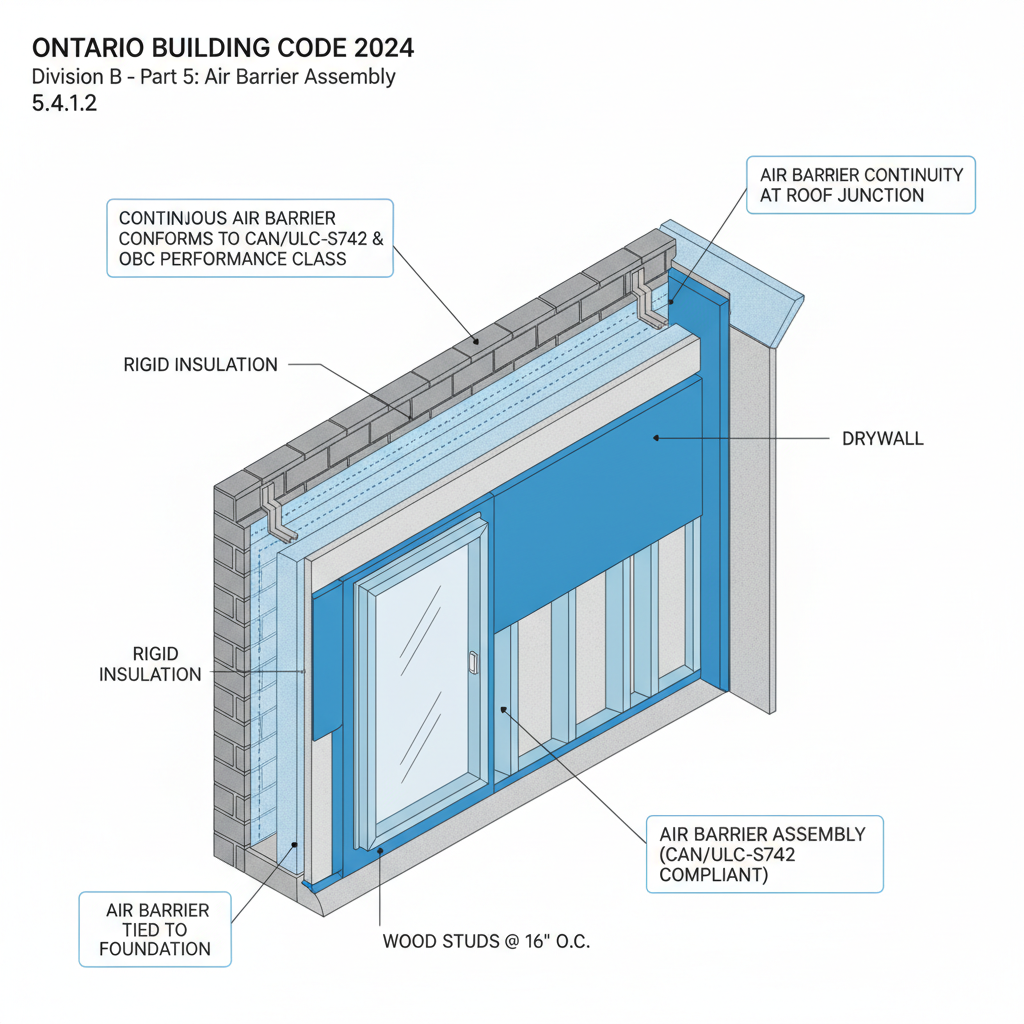
Section 5.4.1.2: Mastering Air Barrier Assemblies
Air barrier assemblies are critical for controlling air leakage and maintaining energy efficiency. According to the OBC, these assemblies must conform to CAN/ULC-S742, "Standard for Air Barrier Assemblies – Specification."
Standards and Performance Classes
If an assembly is not evaluated under CAN/ULC-S742, it must be designed to meet or exceed the selected Performance Class defined in Table 5.4.1.1. At least one material within the assembly must serve as the primary air barrier and meet the CAN/ULC-S741 standard.
Below-Grade Gas Mitigation
For below-grade assemblies in contact with the ground, the air barrier must serve a dual purpose: preventing air leakage and minimizing the ingress of airborne radon and other hazardous soil gases, which is a key safety requirement in modern Ontario construction.
Section 5.5.1: Controlling Vapour Diffusion
Required Resistance to Vapour Diffusion
When building components are exposed to temperature and water vapour pressure differentials, the materials used must be positioned to control vapour diffusion. This minimizes condensation accumulation, which can lead to mold and structural rot.
Vapour Barrier Properties and Installation
The 2024 OBC specifies that vapour barriers must have sufficiently low permeance. They must be positioned within the assembly to either eliminate moisture transfer to cold surfaces or reduce it to a rate that prevents the deterioration of building materials or risks to occupant health.
Disclaimer: This content is generated from the Ontario Building Code for educational purposes. Always consult with a licensed professional engineer or your local building department before starting any construction project in London, Ontario.