2024 Ontario Building Code: Waterproofing and Hydrostatic Pressure Standards for London Construction
Sarah's Expert Insight
OBC Compliance Specialist
"In regions like London and Oakville, where soil saturation and high water tables are common, strictly following Section 5.7.3.3 is non-negotiable for foundation longevity. At empcontracting.ca Inc., we ensure our waterproofing barriers are truly continuous, as even a minor oversight at an expansion joint can lead to significant hydrostatic failure in Ontario's climate."
Navigating the complexities of moisture management in the 2024 Ontario Building Code (OBC) is essential for any durable build. As empcontracting.ca Inc. your construction contractor in London, Ontario, we prioritize the integrity of building assemblies through strict adherence to these provincial standards.
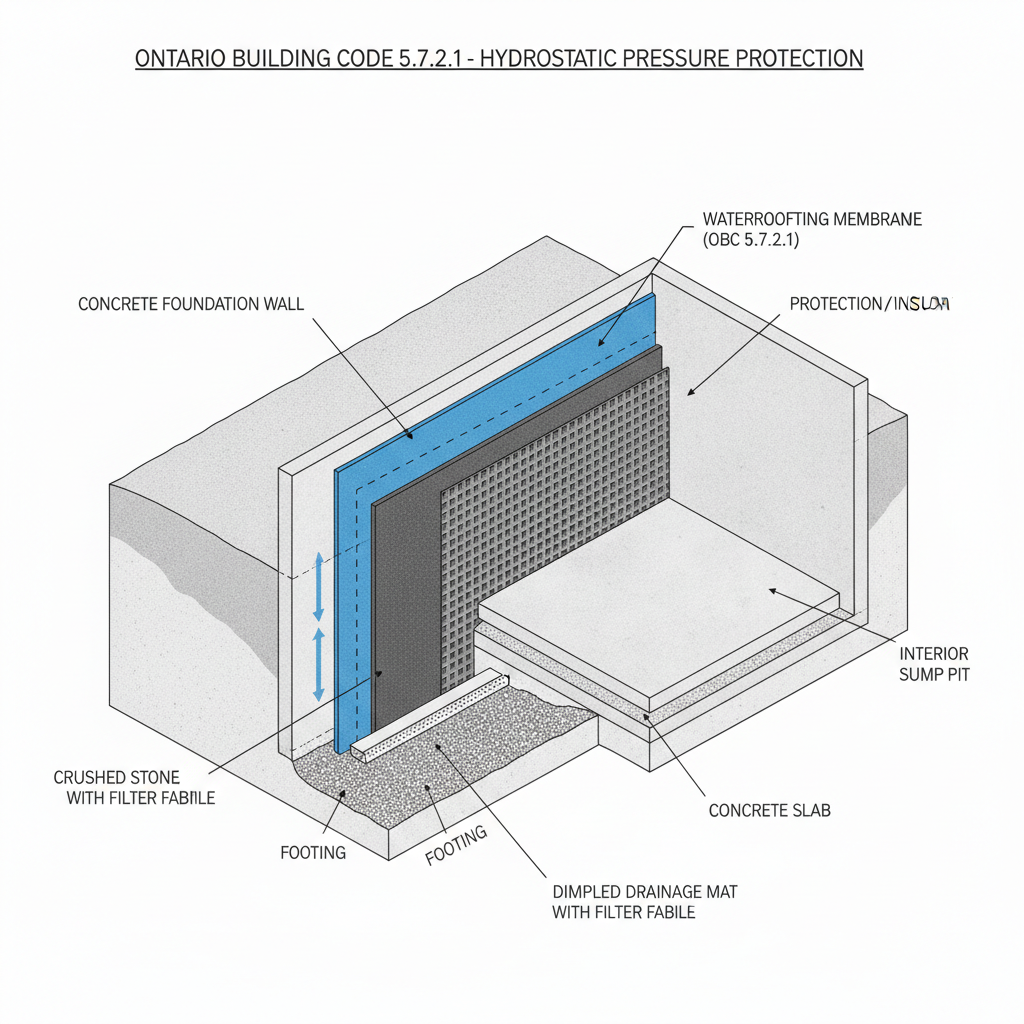
Section 5.7.2: Protection Against Hydrostatic Pressure
This subsection focuses on building assemblies subjected to hydrostatic pressure. It requires that waterproofing materials and systems be designed in accordance with Subsection 5.1.4 to ensure they can withstand environmental stresses and dissimilar conditions.
Hydrostatic Design Loads
Designers must determine hydrostatic loads according to Subsection 5.2.2. This ensures that the building elements are not only waterproof but also structurally capable of resisting the physical weight and pressure exerted by groundwater.
Section 5.7.3: Protection Against Ground Water
The OBC mandates that assemblies separating interior spaces from the ground must minimize water ingress. This is a critical factor in preventing mold, structural rot, and utility failures.
Mandatory Waterproofing Requirements
Under Article 5.7.3.2, waterproofing is required unless the building is specifically designed to handle water accumulation without compromising the health or safety of building users or the operation of building services.
OBC Standards for Waterproofing Systems
According to Article 5.7.3.3, an effective waterproofing system must form a continuous and impervious barrier. It must be capable of accommodating:
- Imperfections and various joints (construction, control, and expansion joints).
- Junctions between different building assemblies.
- Elements and utilities penetrating the building envelope.
Disclaimer: This content is generated from the Ontario Building Code for educational purposes. Always consult with a licensed professional engineer or your local building department before starting any construction project in London, Ontario.