2024 Ontario Building Code Standards for Exterior Environmental Separators: A Guide by empcontracting.ca Inc.
Sarah's Expert Insight
OBC Compliance Specialist
"As a senior consultant at empcontracting.ca Inc. your construction contractor in London, Ontario, I cannot overstate the importance of the 2024 updates to Table 5.9.1.1. Whether we are building luxury cottages in Muskoka or commercial spaces in Oakville, strict adherence to these specific CSA and ULC insulation standards is the difference between a building that merely passes inspection and one that truly survives Ontario’s extreme freeze-thaw cycles."
When planning a high-performance building envelope in Ontario, understanding the 2024 Building Code Compendium standards for environmental separators is crucial. At empcontracting.ca Inc. your construction contractor in London, Ontario, we ensure every assembly exposed to the exterior meets these rigorous CSA, ULC, and ASTM specifications to guarantee durability and compliance.
Overview of Table 5.9.1.1: Standards for Exterior Assemblies
Table 5.9.1.1 outlines the specific material and application standards required for building components that act as environmental separators. These standards cover everything from masonry and structural steel to advanced thermal insulation systems.
Masonry and Structural Components
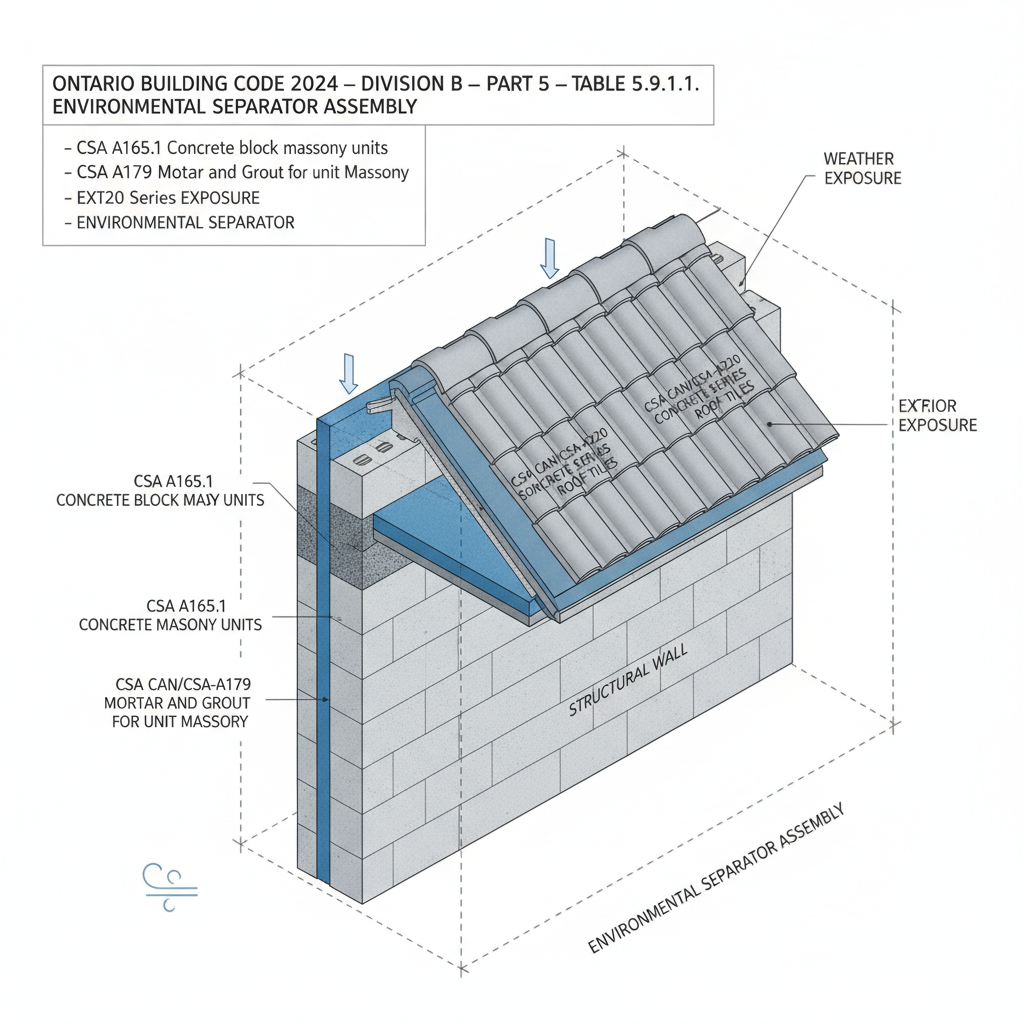
- Concrete Masonry: Compliance with CSA A165.1, A165.2, and A165.3 for blocks and bricks.
- Mortar and Grout: Must meet CSA CAN/CSA-A179 standards for unit masonry.
- Structural Steel: Standards like CSA G40.21 ensure the integrity of the building’s skeleton.
Wood and Sheathing Materials
For residential and commercial framing, the OBC mandates specific grading and preservation standards:
- Lumber and Plywood: Standards include CSA O141 (Softwood Lumber) and CSA O121/O151 (Plywood).
- Sheathing and OSB: Compliance with CSA O325 and O437.0 is required for structural rigidity.
- Wood Preservation: The CSA CAN/CSA-O80 Series is vital for materials exposed to moisture.
Thermal Insulation and Air Sealants
To meet Ontario's energy efficiency requirements, insulation must adhere to ULC specifications:
- Polystyrene and Mineral Fibre: CAN/ULC-S701.1 and S702.1.
- Spray Applied Rigid Polyurethane: Must follow CAN/ULC-S705.1 for material and S705.2 for application.
- ICF Units: Flat wall Insulating Concrete Form units must meet CAN/ULC-S717.1.
Critical Safety and Fire Ratings
The 2024 code places significant emphasis on fire safety. For instance, the flame-spread rating for gypsum board and glass mat gypsum panels must be determined using the CAN/ULC-S102 test method rather than standard ASTM E84 tests. This ensures a higher level of localized safety for Ontario structures.
Disclaimer: This content is generated from the Ontario Building Code for educational purposes. Always consult with a licensed professional engineer or your local building department before starting any construction project in London, Ontario.