2024 Ontario Building Code: Heating Appliance Installation & Thermal Insulation Standards
Sarah's Expert Insight
OBC Compliance Specialist
"As a senior consultant, I've seen how critical these clearances are in high-density areas like Oakville and London to prevent property-to-property fire spread. At empcontracting.ca Inc. your construction contractor in London, Ontario, we pay extra attention to Section 6.5.1.1's mold-resistance requirements, which is particularly vital for the humid environments of Muskoka lakeside properties where insulation deterioration can happen rapidly."
Navigating the complexities of the 2024 Building Code Compendium is essential for safety and compliance. At empcontracting.ca Inc. your construction contractor in London, Ontario, we specialize in ensuring every HVAC and insulation component meets the latest Part 6 standards for durability and fire protection.
Section 6.4: Heating Appliances and Installation Requirements
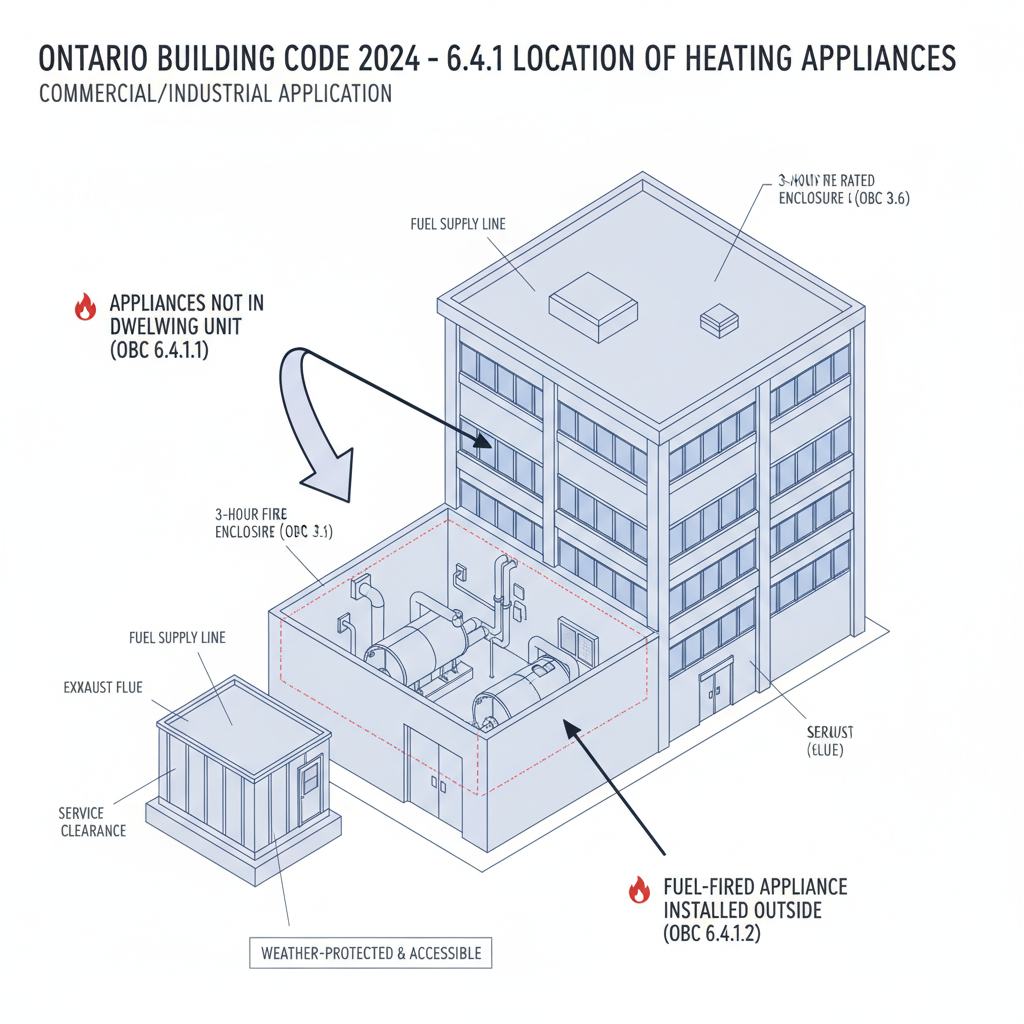
6.4.1. Appliance Location and Outdoor Compliance
Fuel-fired heating appliances must be strategically located to prevent fire spread. Except for single dwelling units, these appliances require separation from the rest of the building in accordance with Section 3.6. For appliances installed outside, the OBC mandates specific horizontal clearances:
- A minimum of 1,200 mm from the property line.
- A minimum of 3 m from building openings, unless those openings are protected by 45-minute fire-rated closures or wired glass.
6.4.2 & 6.4.3. Unit Heaters, Radiators, and Convectors
Installation of steam or hot water heaters requires strict adherence to clearance tables regarding combustible materials. Furthermore, any radiator or convector located in a concealed space or attached to combustible walls (including encapsulated mass timber) must feature a noncombustible lining or backing to mitigate heat transfer risks.
Section 6.5: Thermal Insulation Systems for Piping
6.5.1. Insulation Durability and Protection
Pipe insulation and coverings are not merely for efficiency; they are a matter of structural health. Under the 2024 code, materials must be able to withstand operating temperatures without softening or melting. Crucially, they must also resist the growth of mildew and mould, ensuring the indoor air quality remains uncompromised over the system's lifespan.
Disclaimer: This content is generated from the Ontario Building Code for educational purposes. Always consult with a licensed professional engineer or your local building department before starting any construction project in London, Ontario.