2024 Ontario Building Code Guide: HVAC Piping, Temperature Safety, and Equipment Access
Sarah's Expert Insight
OBC Compliance Specialist
"As a senior consultant at empcontracting.ca Inc. your construction contractor in London, Ontario, I see these regulations as vital for the high-density residential developments in Oakville and custom builds in Muskoka. Strict adherence to the 120°C sleeving rule and duct access requirements not only ensures OBC compliance but significantly reduces long-term liability and maintenance costs for property owners."
Understanding OBC Part 6: Piping and Surface Temperature Regulations
Compliance with the 2024 Building Code Compendium is essential for safe HVAC installations. Section 6.7 outlines strict parameters for heat distribution and protection of combustible materials.
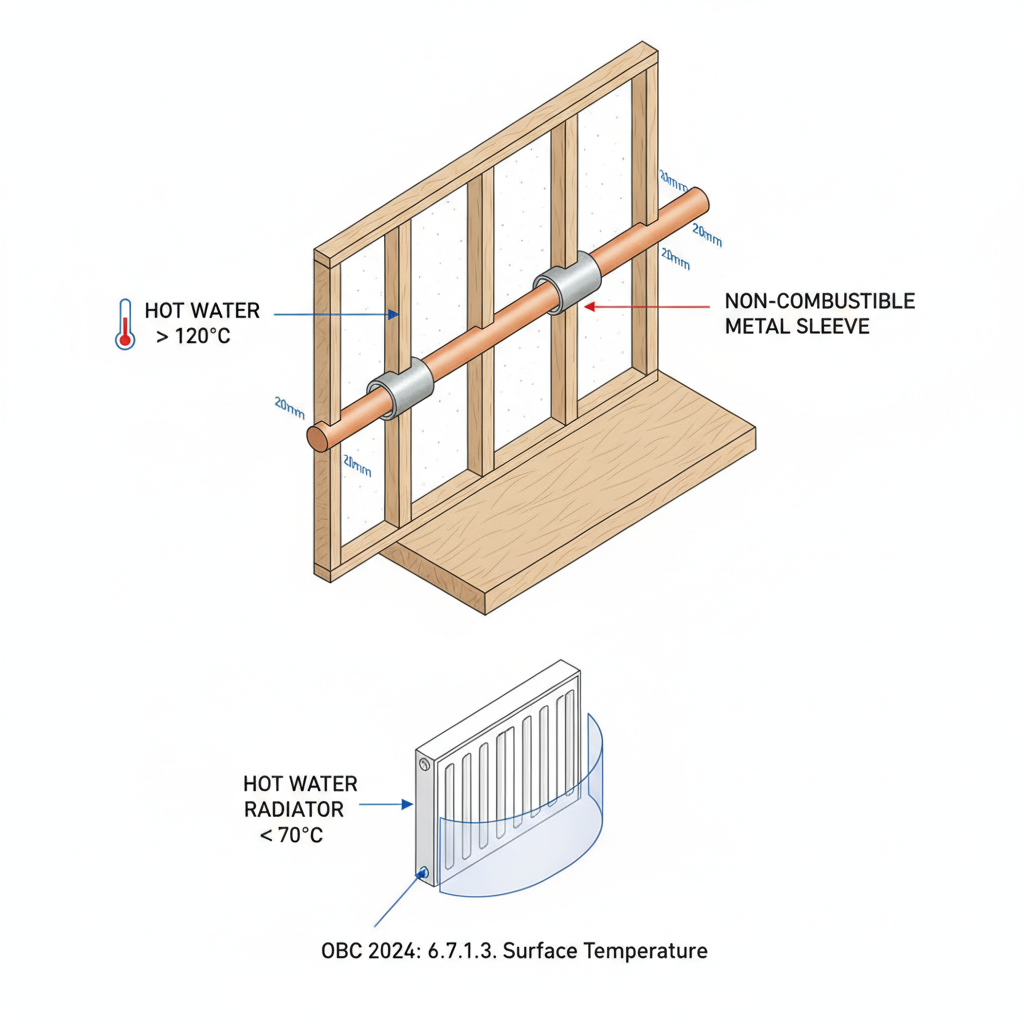
6.7.1.3 & 6.7.1.4: Surface Temperature and Piping Protection
To ensure occupant safety, the exposed surface temperature of steam or hot water radiators is capped at 70°C, unless specific contact prevention measures are installed. For high-temperature systems where piping exceeds 120°C, the OBC requires a protective metal sleeve or noncombustible material when passing through combustible floors, walls, or ceilings. This sleeve must be at least 50 mm larger in diameter than the pipe to prevent heat transfer and potential combustion.
6.7.1.5 & 6.7.2.1: Shafts and Storage Bin Safety
Piping within shafts must adhere to Article 3.6.3.1. Furthermore, service pipes located in solid fuel storage bins must be protected from mechanical damage. Any pipe designed to operate at 50°C or higher must be positioned so that fuel cannot come into direct contact with it, reducing fire risks in storage areas.
Section 6.8: Equipment Access and Duct Maintenance
Proper access is a cornerstone of building maintenance and life safety. The OBC mandates specific requirements for how technicians interact with HVAC systems.
6.8.1.1 Access Openings and Safety
Any access opening large enough for a person to enter must be openable from the inside without a key. This is a critical safety measure to prevent entrapment if an opening is accidentally closed during servicing.
6.8.1.2 Air Duct System Integrity
Air duct systems must remain sealed, with openings permitted only for operation and maintenance. The code specifically requires access openings to allow for the removal of accumulated debris and material within ducts and plenums, ensuring long-term indoor air quality and system efficiency.
For professional implementation of these standards, contact empcontracting.ca Inc. your construction contractor in London, Ontario.
Disclaimer: This content is generated from the Ontario Building Code for educational purposes. Always consult with a licensed professional engineer or your local building department before starting any construction project in London, Ontario.