2024 Ontario Building Code: Essential Plumbing Service Standards and Seismic Design for London Construction
Sarah's Expert Insight
OBC Compliance Specialist
"In the fast-growing regions of London and Oakville, ensuring that plumbing services remain accessible in multi-unit projects is the difference between a high-value asset and a maintenance nightmare. At empcontracting.ca Inc., we emphasize strict adherence to seismic restraint and structural movement codes to guarantee that our clients' infrastructure remains resilient and fully compliant with the 2024 standards."
Compliance with Separate Services and Piping Requirements
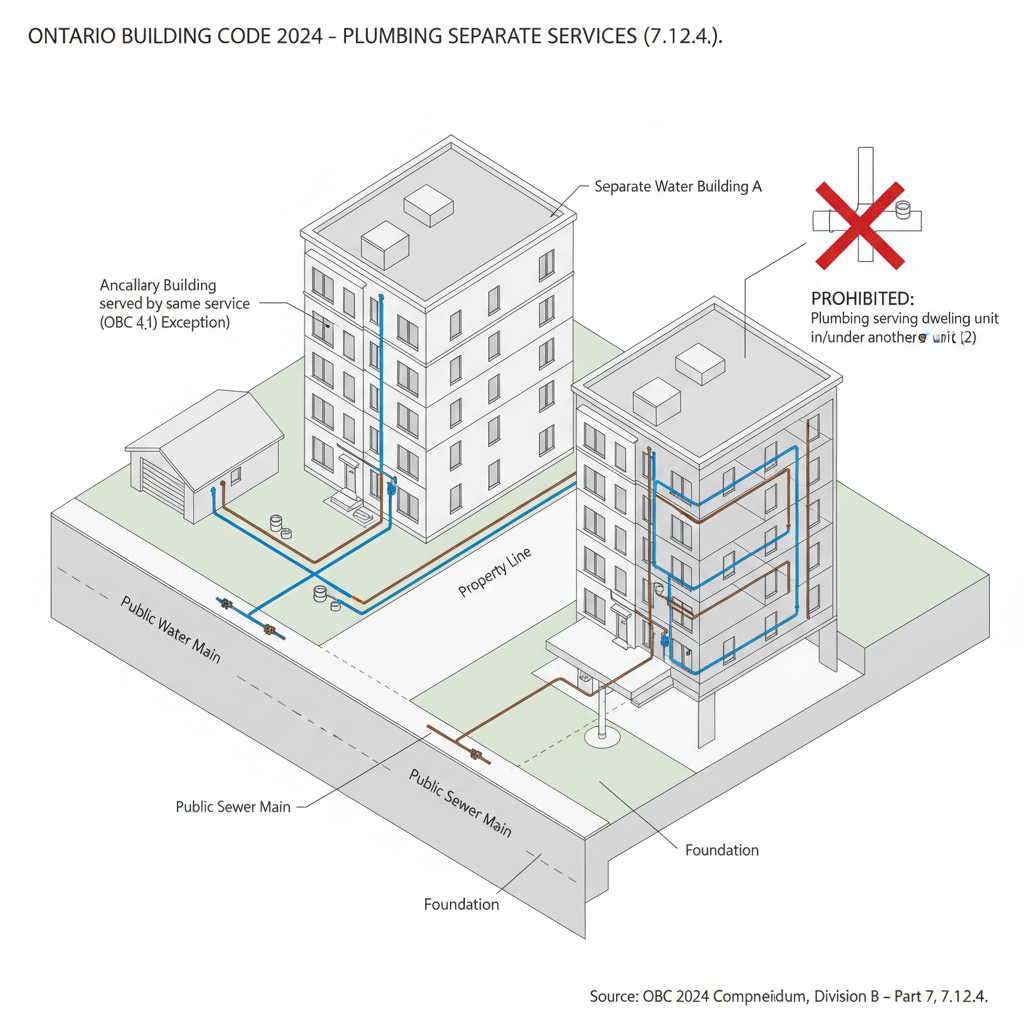
Under OBC section 7.1.2.4, ensuring that piping for any building is connected separately from other structures is a critical standard. As empcontracting.ca Inc. your construction contractor in London, Ontario, we specialize in implementing these separate service connections, ensuring that ancillary buildings are properly integrated while maintaining the integrity of the public service connection.
Multi-Unit Accessibility and Maintenance
Sentence (2) of this section is particularly vital for multi-unit developments. It prohibits installing plumbing for one dwelling unit under another unless it is located in a common corridor, tunnel, or basement. This ensures that repairs and maintenance can be performed without encroaching on private living spaces, a key design priority for modern residential builds in urban centers like London and Oakville.
Private Sewers and Water Supply Standards
When public services are not available, section 7.1.2.5 requires that private systems adhere to MOE guidelines for both drinking water and sewage. Whether you are building a custom home in the Muskoka region or a commercial facility on the outskirts of London, following these provincial design standards is mandatory for project approval and safety.
Optimizing Fixture Location and Accessibility
Lighting, Ventilation, and Ease of Access
Section 7.1.3 mandates that all plumbing fixtures be installed in environments with adequate lighting and ventilation as defined by the broader OBC Parts 3, 6, and 9. Furthermore, every valve, cleanout, and appliance must be situated for easy access, ensuring that future maintenance does not require invasive demolition or structural modification.
Structural and Seismic Resilience
As building designs evolve, accommodating structural movement (7.1.3A.1) and seismic forces (7.1.4.1) has become a primary focus. For Part 3 buildings, plumbing systems must be designed to withstand potential seismic activity, a safeguard that ensures the longevity and safety of the building's infrastructure during environmental events.
Disclaimer: This content is generated from the Ontario Building Code for educational purposes. Always consult with a licensed professional engineer or your local building department before starting any construction project in London, Ontario.