Expert Guide to 2024 OBC Plumbing Standards: Traps, Interceptors, and Lavatories in London, Ontario
Sarah's Expert Insight
OBC Compliance Specialist
"As a senior consultant at empcontracting.ca Inc. your construction contractor in London, Ontario, I cannot overstate the importance of strictly following CSA B481 standards for grease interceptors in commercial projects across Oakville and Muskoka. Failure to provide accessible cleanouts or using prohibited drum traps is one of the most common reasons for inspection delays, so we prioritize these technical details during the initial rough-in phase to ensure a seamless permit sign-off."
Navigating the 2024 Building Code Compendium is essential for any successful renovation or new build. As your partners at empcontracting.ca Inc. your construction contractor in London, Ontario, we ensure every plumbing component—from lavatory wastes to complex grease interceptors—meets the rigorous safety standards defined in Division B, Part 7 of the Ontario Building Code (OBC).
7.2.2. Lavatories and Fixture Restrictions
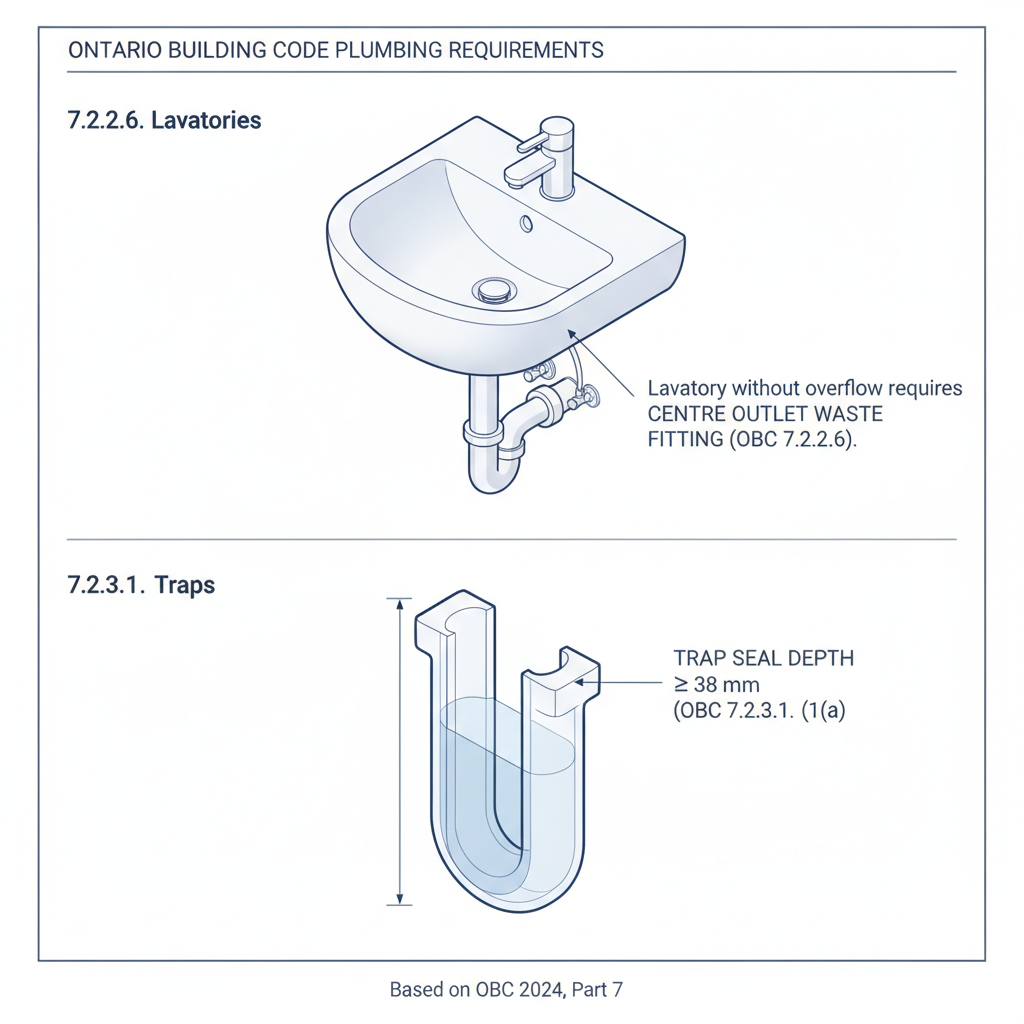
7.2.2.6. Lavatory Waste Fittings
According to OBC regulations, any lavatory designed without an overflow must be equipped with a centre outlet waste fitting. This ensures efficient drainage and hygiene in residential and commercial bathroom settings.
7.2.2.7. Prohibited Trough Urinals
It is important to note that the installation of trough urinals is strictly prohibited within any plumbing system in Ontario. These are deemed non-compliant due to sanitation and water conservation standards.
7.2.3. Plumbing Traps and Maintenance Standards
7.2.3.1. Requirements for Traps
Traps are critical for preventing sewer gases from entering a building. The OBC specifies that:
- Trap Seal Depth: Generally must be at least 38 mm, increasing to 50 mm for acid waste systems.
- Design: Traps must be designed so that any wall failure causes exterior leakage, making the fault visible, and must not rely on moving parts.
- Cleanouts: Most traps for sinks, lavatories, and laundry trays must feature a cleanout plug at the lowest point or be easily removable for maintenance.
Prohibited Trap Types
To maintain system integrity, the OBC forbids the use of bell traps and drum traps. Bottle traps are restricted to laboratory sinks or fixtures with corrosion-resistant fittings, while running traps require accessible handholes for cleaning.
7.2.3.2. Grease Interceptors and Compliance
Design and Maintenance
Interceptors must be designed for ready cleaning to prevent blockages. For commercial applications, grease interceptors must be properly vented to avoid becoming air-bound, which can impede flow and performance.
CSA Standard Alignment
Selection and installation of grease interceptors must conform to the CSA B481 series. This includes specific standards for material design (B481.0), sizing and location (B481.3), and testing using lard or oil (B481.1 and B481.2). Working with empcontracting.ca Inc. your construction contractor in London, Ontario, ensures your commercial kitchen remains fully compliant with these technical requirements.
Disclaimer: This content is generated from the Ontario Building Code for educational purposes. Always consult with a licensed professional engineer or your local building department before starting any construction project in London, Ontario.